
I was appalled to see the National Wildlife Federation publish on their Web site, without qualification or counter-point, a press piece by the "Brand Manager for American Beauties Native Plants." (Appalled, but unfortunately, not shocked, given NWF's mishandling of their Monsanto-Scotts-MiracleGro sell-out, and their ham-handed retraction only in the face of public outrage and opposition.)
The Brand Manager's puff piece includes this statement:
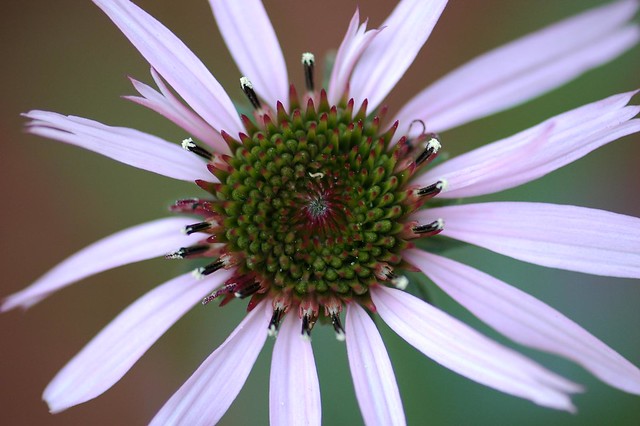
At American Beauties Native Plants, we take a slightly broader view in our definition of native plants–we include cultivars. A cultivar is a plant that has been selected and cultivated because of some unique quality, such as disease resistance, cold hardiness, height, flower form or color. Sometimes interesting varieties are found in nature and brought into cultivation making them cultivated varieties or cultivars. In my years as a research horticulturist I observed pollinators, birds and other wildlife interacting freely with cultivated plants.This paragraph is immediately followed by a photograph of "[Echinacea] ‘Tiki Torch’ is a hybrid of Echinacea paradoxa and a cultivar of Echinacea purpurea."
A cultivar is a vegetatively propagated selection - a clone - of an individual from a population. But a hybrid is not a cultivar. More than that, 'Tiki Torch' is a patented plant. By definition, anything that is patented must be man-made, NOT natural, not native. One cannot obtain a patent on something that occurs naturally in the wild, even if you select it, propagate, and promote it as a cultivar. American Beauties greenwashing "native" with so broad a brush that they include patented plants is deceptive marketing. NWF blindly supporting such an association by publishing it unchallenged on their Web site is, at best, cluelessness.
In my urban backyard native plant garden, I grow plants from a range of sources, including cultivars, unnamed straight species of unknown geographic origins, and - my most-prized specimens - local ecotypes propagated by the Greenbelt Native Plant Center from wild populations in and around New York City. I also grow in container a beautiful specimen of the patented Heuchera 'Caramel' in this (otherwise) native plant garden. I use it to illustrate what is NOT native.
Related Content
Greenbelt Native Plant CenterNative Plants

