Showing posts with label Backyard. Show all posts

2015-05-03

Native Plant Profile: Adlumia fungosa, allegheny vine, climbing fumitory

A species new to me that I picked up at yesterday's plant sale for the Manhattan Chapter of the North American Rock Garden Society (MCNARGS). Since I don't know anything about it, I researched it to figure out what it wants and find a place for it in my garden.

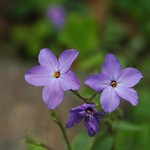
Adlumia fungosa, climbing fumitory, scrambling into Clethra in the backyard in July 2015


Adlumia fungosa is a biennial vine in the Fumariaceae, the fumewort family, or Papaveraceae, poppy family, depending on the accepted taxonomy. It can grow up to 12 feet in length by scrambling over other plants and rocks in the moist, wooded slopes it requires. Common names include allegheny vine, climbing fumitory, and mountain fringe.

Its primary native range is New England and northeastern United States. Following the mountains, its range extends as far south and west as Tennessee and North Carolina. It's also found in scattered counties as far west as Minnesota and Iowa.

Biota of North America Program (BONAP) floristic synthesis county-level distribution map for Adlumia fungosa. In this map, yellow and light green highlights counties where specimens have been recorded. Dark green shows state-/province-level nativity.
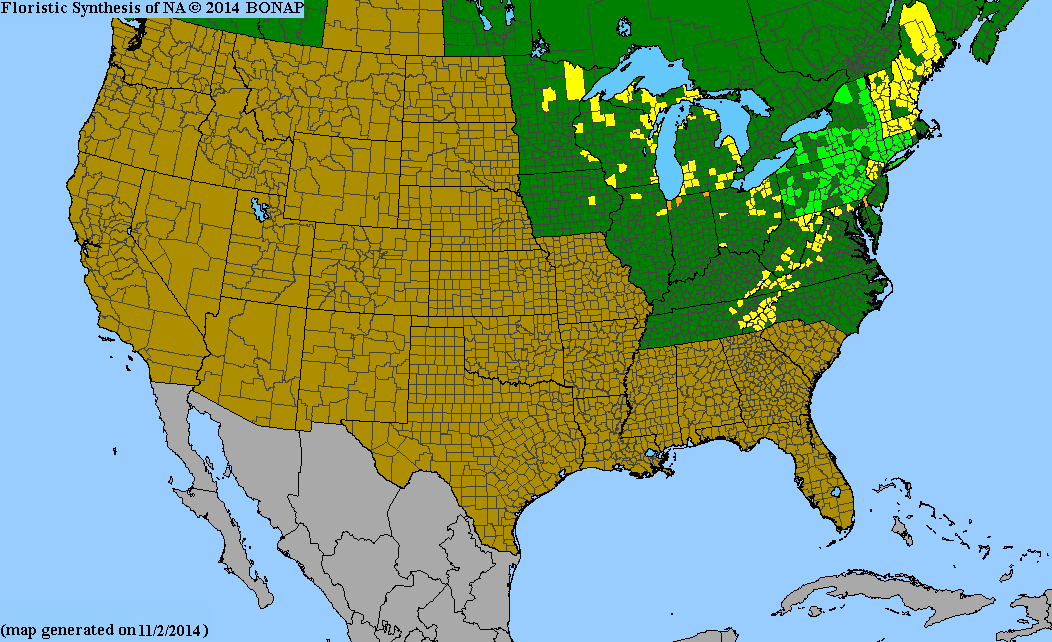

Although not native to New York City, it is native to adjacent and nearby counties in NY, New Jersey, and Connecticut. The New York Flora Association (NYFA) Atlas lists its endangered/threatened status as as S4: Apparently secure in New York State. Other sources, including the New England Wildflower Society (NEWFS), list it as threatened or endangered throughout its range.

I'm going to try this plant on the north side of my garage. That area is consistently moist from runoff from the garage roof. There's no slope there, but it's densely planted with shrubs and perennials, so this plant should have lots to scramble over. If it's really happy, there's also the nearby arbor.

Related Content

Links

2015-04-18

April 2015: Native Plants Planting Plan

2015-04-26 Update: Finally finished planting everything.

Took me most of the day to figure out where all of the 63 plants I received this week are going. Better late then never.

Bog Planters

Plant in the bog planters. I've only seen Iris versicolor, but never grown it. The other species are new to me.
  • Geum rivale, water avens
  • Iris prismatica, slender blue flag
  • Iris versicolor, blue flag
  • Mimulus alatus, winged monkey-flower
  • Mimulus ringens, square-stemmed monkey-flower

2014-11-08

Shrubberies

Update 2014-11-23:
  • Completed Step #4 today, nearly injuring myself in the exertion. Did I mention that established grasses have deep and extensive roots?
  • Also completed Step #5, replacing the Panicum.
  • Added Step #9. I'd overlooked this shrub, and need to find a place where it can be featured, while still kept in bounds with the garden. I think where the Aronia once stood, a transplant I did in the Spring of this year.
Update 2014-11-10:
  • I'm taking photos as the work progresses. See Before and After below.
  • Reordered based on the progress I'm making. Because the Rhododendron is shallow-rooted, I decided to leave that until the last weekend before Thanksgiving, when I'll visit my sister and deliver her plants.

It's a long weekend for me. The weather favors gardening.

I've got seven shrubs - and one or two mature perennials - to plant, transplant, and move out. Here's the plan.

2014-05-10

What's Blooming

Updated 2014-05-11: At the request of one of my readers, I started adding photos of the flowers.
Retracted Erythronium; I checked, and its petals have fallen. Hoping for seedset; I have plenty of ants to disperse them!

My backyard native plant garden is bursting with blooms right now. This is probably the peak bloom for the year. It happens to coincide with NYC Wildflower Week, which started today and runs through Sunday, May 18.

I will double-check this list tomorrow, but I think this is what I've got blooming:
  1. Anemonella thalictroides
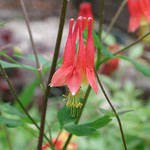
  2. Aquilegia canadensis, Eastern Red Columbine, Canadian Columbine
  3. Asarum canadense, Wild Ginger
  4. Carex, Sedge
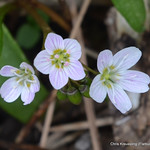
  5. Claytonia virginica, Spring Beauty
  6. Cornus sericea 'Cardinal', Red-Twig Dogwood
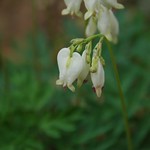
  7. Dicentra eximia
  8. Fothergilla gardenii
  9. Fragaria virginiana, Wild Strawberry
  10. Geranium maculatum, Spotted Geranium
  11. Mertensia virginiana, Virginia Bluebells
  12. Phlox stolonifera, Creeping Phlox
  13. Photinia pyrifolia (Aronia arbutifolia) 'Brilliantissima', Red Chokeberry
  14. Polemonium reptans, Jacob's Ladder
  15. Polygonatum biflorum, Solomon's Seal
  16. Podophyllum peltatum, Mayapple
  17. Stylophorum diphyllum, Celandine Poppy
  18. Vaccinium angustifolium, Lowbush Blueberry
  19. Vaccinium corymbosum, Highbush Blueberry
  20. Viola, white-flowering and "vigorously" self-seeding, either V. canadensis or V. striata
  21. Viola sororia, Dooryard Violet, the common "weed" of gardens
  22. Trillium, unsure of species
  23. Tiarella cordifolia, Foamflower
Not all of these photos were taken this weekend, but here are some of the flowers appearing in my backyard.

Aquilegia canadensis, Eastern red columbineAsarum canadense, Wild GingerClaytonia virginica blooming in my urban backyard native plant gardenDicentra eximia 'Aurora'Phlox stolonifera

2011-06-07

The Years Have Been Kind

This Spring has been a season of garden anniversaries for me. Six years ago, my partner and I bought our home in Flatbush. In the first month after closing, I began weeding, composting, and envisioning the gardens. Five years ago, I started this blog to document what I was doing and record my explorations.

It's also been a season to celebrate the gardens. Last month, for New York City Wildflower Week (NYCWW), I opened my native plant garden for a garden tour for the first time. This Sunday, June 12, the gardens will be opened again, this time for the Victorian Flatbush House Tour, to benefit the Flatbush Development Corporation (FDC). And in May, I registered my garden as a Certified Wildlife Habitat (#141,173) with the National Wildlife Federation.

My original vision for the backyard native plant garden is largely realized. I'm close to completing development of the planting beds. The shrubs and perennials have grown and spread; there is little bare ground. Unlike me, the garden looks better than it did six years ago. Take a look, and let me know what you think.

Slideshow


By view of the garden

2010-04-08

The Plight of NYC's Native Flora

Local ecotypes - propagated from local sources by the Staten Island Greenbelt - for sale by Oak Grove Farms (now Nature's Healing Farm) at the Union Square Greenmarket during the first annual NYC Wildflower Week in 2008. I bought one of each; two years later, all are thriving in my backyard native plant garden.
Native Plants at Oak Grove Farms

Earlier this week, the Brooklyn Botanic Garden issued a press release summarizing findings from 20 years of research through their New York Metropolitan Flora Project (NYMF). The results are not surprising, but disheartening nevertheless:
At least 50 varieties of native plants are locally extinct or nearing elimination, say project scientists. Nuttall’s mudflower (Micranthemum micranthemoides), last collected from the region in 1918, is likely extinct throughout its former range. Scarlet Indian paintbrush (Castilleja coccinea), pennywort (Obolaria virginica), sidebells wintergreen (Orthilia secunda), and sundial lupine (Lupinus perennis) are among the wildflower species to have seriously declined in the region. Black crowberry (Empetrum nigrum) is locally extinct, without a trace of a population remaining today in the New York City metropolitan area.
- Some Plants Native to NYC Area Have Become Locally Extinct As New Flora Has Moved In, Finds Brooklyn Botanic Garden, Press Release, 2010-04-05
The story has been widely covered in blogs and other media, including New York Times Science. I've included the complete press release below for reference.

I first wrote about NYMF in June of 2006, shortly after I launched this blog, four years ago next month. I've written about native plants countless times (see: , ). I have a lifelong interest in the nature around me, especially that which is right around me, where I live. Learning about and understanding the ecosystems where I live is part of finding my place in the world. I come to feel this connection deeply. Without it, my life is impoverished, and I am lost.

The greatest threat to native plants, and the ecosystems they support, is habitat loss. The second is competition and displacement, and further habitat loss, from invasive species, whether they be insects, infectious organisms, or other plants. Roughly half of invasive plant species were deliberately introduced, through agriculture, for civil engineering purposes such as erosion control, and for horticultural purposes.

2009-07-12

Monobia quadridens, Mason Wasp

Monobia quadridens, Mason Wasp, male (I think), on Aster novae-angliae 'Chilly Winds' in my backyard native plant garden this afternoon.
Monobia quadridens, Mason Wasp

Today was my first full day home since last Monday, and I was sick for nearly a week leading up to that. So I took advantage of the beautiful weather in NYC and got out into the garden. The weeds had gotten away from me, and I spent most of my time dealing with them, at least a little bit.

I then turned my attention to the center of activity in the backyard: the massive specimen of New England Aster that just started to bloom in my absence. It's a selection of the species I ordered from Seneca Hill Perennials, which specializes in New York native plants, a couple years back. It didn't do much at first. In the full sun it's enjoyed since I had to take down the last of the weedy maples last year, it has grown to shrublike proportions - 5' wide and high - mocking the meager 1-2' spacing I provided between it and the plants around it. Today's pollinator activity concentrated on just the handful of open flowers. It has hundreds of buds. When it's in full bloom, the activity will be audible.

I was watching for bees, and there were a lot of different species visiting. This wasp was the most striking visitor. It's Monobia quadridens, the Mason Wasp. From the antennae, I think it's a male. Thanks to tangledbranches for the ID!

Judging from the photos on its BugGuide page alone, this is a common species with a wide distribution. It's native to eastern North America. From a gardener's perspective, this is a beneficial insect. It provisions its young with caterpillars in nests burrowed into the ground or bored into wood; it's also known as a Carpenter Wasp. I've never noticed it before. I hope to see more of it as the Aster comes into full bloom.

Monobia quadridens, Mason Wasp Monobia quadridens, Mason Wasp Monobia quadridens, Mason Wasp
[http://bit.ly/imbbO]

Related Content

Links

BugGuide page

2009-05-11

Wildflowers in a Flatbush Backyard

Last week was NYC Wildflower Week. Appropriately, here are some wildflowers blooming over the past week in my backyard native plant garden.

Wildflowers blooming near the gardener's nook in my backyard for last May's Garden Blogging Bloom Day.
Part of the Native Plant Garden
  • Aquilegia canadensis, Eastern Columbine
  • Chrysogonum virginianum 'Allen Bush', Green-and-Gold
  • Dicentra eximia 'Aurora', White-flowering Eastern Bleeding-Heart, Turkey Corn
  • Iris cristata, Crested Iris
  • Phlox stolonifera
  • Viola striata
  • Zizia aurea, Golden Alexanders
  • Brunnera macrophylla, Large-leaf Brunnera, Siberian Bugloss

Aquilegia canadensis, Eastern Red Columbine

Somehow, I have no photos of this from my garden in Flickr. Yet it's been a favorite of mine for decades.

Native range is eastern North America. Widespread in New York state. Native to all five boroughs of NYC.

Aquilegia canadensis, Eastern Red Columbine, 2006-05-31

MOBOT
PLANTS

Chrysogonum virginianum 'Allen Bush', Green-and-Gold

Chrysogonum virginianum

A great groundcover for partial shade. Several cultivars are available. To my eye, all vary only slightly from the species, though I haven't grown them side-by-side.

Individual flowers look like shaggy sunflowers.

Chrysogonum virginianum

Native range is Mid-Atlantic and Southeastern United States. Native to only one New York upstate county. Not native to NYC.

MOBOT
PLANTS

Dicentra eximia 'Aurora', Eastern Bleeding-Heart, Turkey Corn

Dicentra eximia 'Aurora'

A white-flowering cultivar of the native Eastern Bleeding Heart. Not every white-flowering form of a plant is successful. This is one that is equally lovely as the species, bringing its own graces to the structure of the inflorescence and individual flowers. Also a good choice for the shady white garden.

This plant is maybe three years old now. Not only has the original plant spread in size each year, this Spring I've noticed little seedlings cropping up around the mother plant. I'll be curious to see how these develop, and what the flower color wil be in the children.

Dicentra eximia, Bleeding-heart, 2006-05-22
Dicentra eximia, Eastern bleeding-heart (Flickr photo set)

MOBOT
PLANTS

Iris cristata, Crested Iris

Iris cristata

Really beautiful, if a bit of a finicky grower. It seems to be at its best when grown on a slight slope with ample mulch. The stems trail through the mulch, the fans oriented down-slope. Sulks during the summer. Needs consistent moisture during the hot summer months and good drainage during the winter or it will disappear. Where it's happy, it makes a great groundcover.

Native to Mid-Atlantic and interior Eastern United States, but not New York.

MOBOT
PLANTS

Phlox stolonifera, Creeping Phlox

Phlox stolonifera

One of the best wildflower ground covers you can grow in the garden. In the trade, you're more likely to find cultivars selected for flower color - such as 'Bruce's White' and 'Sherwood Purple' - rather than the unqualified species. They all seem equally fine to me. (Mine is also a cultivar, but its name escapes me at the moment.) The flowers are usually fragrant, reminiscent of grape jelly.

Native range is most of Eastern United States, but only found in two upstate New York counties, not NYC.

MOBOT
PLANTS

Viola striata, Pale Violet, Striped Cream Violet

Viola striata

The "oldest" plant in this post, this population came from my second city garden on 5th Street in Park Slope. The original plants were given to me 8-10 years ago by a gay couple who lived across the street. They have a beautiful shady backyard garden growing many wildflowers collected from their home in upstate New York.

Native to Eastern North America. Native to several counties in New York, but not NYC.

MOBOT
PLANTS

Zizia aurea, Golden Alexanders

Zizea aurea

This plant is a recent discovery for me. I had never heard of it before picking it up from Gowanus Nursery last Spring. Now I see it all over the place, and it's a fine groundcover. You can't see it in this photo, but the foliage is also handsome.

Native to NYC, but not Brooklyn.

MOBOT
PLANTS

Brunnera macrophylla, Large-leaf Brunnera, Siberian Bugloss

Brunnera macrophylla

Okay, Brunnera is not a native wildflower on this continent - it's native range is Eastern Europe - but it is blooming in the backyard and it's so pretty I had to take a picture of it. This plant is a refugee from the sideyard of Frank, a neighbor, professional gardener and fellow garden blogger at New York City Garden.

MOBOT
PLANTS

[bit.ly]

Related Content

Growing a Native Plant Garden in a Flatbush Backyard, August 6, 2007

2009-04-20

Viburnum dentatum, Arrowwood

When we moved to our new home in Flatbush four years ago, my garden moved with me. Rather, the plants from my garden. All were planted hurriedly, with the intent of moving them "later in the season." In some cases, "later" has become four years later. Case in point: Viburnum dentatum, Southern Arrowwood. (Some botanists recognize a separate species, V. recognitum, Northern Arrowwood, for variants with smooth twigs.)

Viburnum dentatum, before transplant

Very handsome, but not what I thought I had acquired. This individual was supposed to be V. dentatum 'Christom' (Blue Muffin®), a dwarf cultivar reaching 4-5 feet in height and 3-4 feet in breadth. (The species is highly variable, height can range from 3 feet up to a maximum of 15 feet.) It's now over 6-1/2 feet high and has extended across the narrow concrete path at its feet. So I can be forgiven some poor planning on my part that the plant has far exceeded its expected bounds.

I needed to move it from this location because it was blocking the path. However, in this location it was doing an excellent job of screening some "necessaries": cans and bins for garbage, recycling, and composting. And that suggested I could solve two problems at once by transplanting it to the backyard to screen the gardener's nook from the street.

Folks walking by on the sidewalk get a straight view into this corner of the backyard. I want this to be an intimate, sheltered location.
View to gardener's corner

When I did the garden design for my backyard, I doubled the depth of the bed along the north edge of the property, visible on the left of the photo above and the plan below.
Final rendering, backyard garden design

Earlier this season, I executed that part of the plan. On the right, the gardener's nook is located where the deck will extend to accommodate a bench, as shown on the upper left of the plan above.
Gardener's corner

I transplanted the Viburnum to roughly the location indicated by the shrub marked "L" in the plan. I had specified Lindera benzoin, which I don't have, for that location, but the Arrowwood should do as well there. You can see that it does a great job of screening the view, even though it hasn't fully leafed out yet. During the summer, the nook will now be completely shielded from the street.
View to gardener's corner, after transplant

It also dramatically changes the character of the space. Compare these before and after shots. The backyard now has a sense of enclosure it didn't have before, even within the parts of the backyard that are not visible from the street. This validates a key strategy of the design: enclosing the space with shrubs to create the feeling of being in a woodland garden.

Before
Before transplant, lateral view

After
After transplant

Related Content

Woodland Garden Design Plant List, 2009-02-18

Native Plant Profiles

Links

Viburnum dentatum
Connecticut Botanical Society
MOBOT
NPIN
OSU
PLANTS
UConn
UIUC
VT
V. dentatum 'Christom'
MOBOT

2009-02-18

Woodland Garden Design Plant List

Over the weekend, my Twitter stream reflected the progress I was making on my final class project for the Urban Garden Design class with Nigel Rollings at the Brooklyn Botanic Garden. Despite battling a wicked head hold and racking cough, I put the finishing touches on my design late Monday night.

A cultivar of Lonicera sempervirens, the native Trumpet Honeysuckle, growing on a metal arbor at the entrance to my backyard. The specific epithet "sempervirens" refers to the evergreen, or nearly so in my Zone 7a/6b garden, foliage.
Lonicera sempervirens

In last night's class we each presented our designs. There was a lot of warmth, humor, and enthusiasm among the class. Not to mention wine (though not for me). The night ran late, so there wasn't time for close inspection of all the designs.

Some of my fellow students wanted more information about my plant selections. Here is the plant list, without further explanation for now, that I used in my design. Most of these are shrubs. Many of these I've collected over the past several years, and some are now several feet high and wide. Many, but not all, are species native to New York City. The most precious to me are those that have been propagated from NYC-local ecotypes.

This is just a candidate list, not a final one. As I mentioned in last night's class, I'm not satisfied with the planting plan. I would like a couple more evergreen plants; I'd really like an Ilex opaca, but the native form gets too large for my site. There are many plants in this list that provide winter interest, in bark, form, berries, and so on, including some that are semi-evergreen. I want to place more vines in the design, and I already have some ideas for where to do that. And I didn't spend much time specifying perennials. There's still plenty of room for them in this design; there are at least a hundred to select from, and I just ran out of time to specify and draw them all.

Trees

  • Sassafras albidum, Sassafras. This would become the focal point of the garden; the design "rotates" around it. This will be a canopy tree, providing primary shade to the house and garden.
  • Amelanchier arborea, Common or Downy Serviceberry. This is an understory tree from the Rosaceae, the Rose Family, tolerant of the shade the Sassafras will provide. In my design, its placement will also grant it direct afternoon sun from the West during the summer months, which should help in fruit-set. It's a "replacement" for the old apple tree that grew on the other side of the fence on my neighbor's property, which they had to take down last winter. I miss that tree; it was a bird magnet. This tree is a better selection, better placed, and with fewer maintenance issues.
    All Amelanchier species, commonly known as Serviceberries, are desireable landscape trees and shrubs and provide food for wildlife, especially birds. Alternatives to A. arborea are A. canadensis, Canada or Shadblow Serviceberry, or Shadbush, or A. laevis, Allegheny or Smooth Serviceberry, which is recommended for its human-edible fruit.
  • Prunus variety. This is an existing tree, the only one remaining from the eight trees that were in the backyard when we bought the property four years ago. It's healthy, and adds some interest to every season, so I'm happy to keep it as long as it does well. But my design doesn't depend on it, so when the time comes and it needs to go, the design will remain whole.
Geothlypis trichas, Common Yellowthroat, one of the avian visitors to my neighbor's apple tree which I hope will be enticed to return by the Serviceberry.
Common Yellowthroat in Apple Tree

Vines

  • Lonicera sempervirens cultivar (existing), Trumpet Honeysuckle. Semi-evergreen, twining vine. Flowers best and grows densest with full sun. Grows well, just less vigorously, in partial shade. Mine is visited by hummingbirds every year, but they always seem disappointed by it; it's not the Hummingbird magnet I hoped it would be. I suspect I would need a local ecotype, one adapted to the phenology of hummingbird migration through this area, to attract hummingbirds well.
  • Parthenocissus quinquefolia, Virgina Creeper. deciduous vine, climbs by holdfasts to any vertical surface; can also grow as a groundcover. A native alternative to P. tricuspidata, Boston Ivy. Deciduous. Brilliant red color in the fall. Fruit are an important food source for birds.
  • Vitis labrusca, Fox Grape. Deciduous vine, climbs by tendrils. One of several native grape species, this is the source of the Concord Grape.
I also have an existing small-leaved Aristolochia, Pipevine, but I couldn't place it yet in the new design. I want to add more vines, including the big-leaved Pipevine; I just need to think more about their placement and function.

Shrubs

  • Aronia arbutifolia 'Brilliantissimum' (existing)
  • Clethra alnifolia 'September Beauty' (existing)
  • Cornus sericea 'Cardinal' (existing)
  • Ilex verticillata cultivars, male and female (existing)
  • Juniperus horizontalis
  • Kalmia latifolia 'Minuet' (existing)
  • Lindera benzoin
  • Myrica pensylvanica
  • Prunus maritima
  • Rhododendron viscosum NYC-local ecotype (existing)
  • Rosa carolina (or R. virginiana)
Several shrubs I already have did not make it into this design. I've collected them over the years without a plan, based more on their availability and opportunity to acquire them than anything else. Unless I leave no space for people, there simply isn't enough room for all of them in my 30'x30' backyard, which is already quite expansive by NYC, even Brooklyn, standards. That gives me some flexibility in the planting plan, as my first choice is to go with plants I already have, but some will eventually have to live on somewhere else.

[TinyURL]

Related Content

Posts
Growing a native plant garden in a Flatbush backyard, 2007-08-06
Photos
Ilex verticillata, Wiinterberry (Flickr photo set)
Lonicera sempervirens, Trumpet Honeysuckle (Flickr photo set)

Flickr photo set of my backyard


2008-06-26

Summer Nights

Update 2010.01.03: Corrected all links to the old Gowanus Lounge domain to the new memorial domain.

Flatbush Raccoon

I know it's summer when the fireflies are out in force. As are the raccoons (Procyon lotor).

Both made their first appearance in the backyard about two weeks ago: just two fireflies, and just one raccoon. Tonight, multiple fireflies in everyone's yards, front and back. And a family of raccoons, as we get every year. I saw three little ones at once. I saw the adult separately.

Here are, I think, two of the young'uns, one in a tree, and one on the ground. It could also be the same young raccoon. The one in the tree climbed down, shortly after which the "other" appeared on the ground.

Flatbush RaccoonFlatbush Raccoon

The groundling was very curious about my camera, and came within four feet of me before it realized the camera was attached to a person.

Flatbush Raccoon

Gowanus Lounge recently reported on raccoons sighted in Carroll Gardens. Some folks raised concerns about rabies. I left the following comment:

We love our Brooklyn raccoons!

They are annual visitors to our backyard. And our kitchen on the second floor. They climbed my neighbor’s apple tree to get there. They don’t scale building walls, they climb trees and other structures.

They’re scavengers, looking for easy grub. Don’t leave pet food outside. Don’t feed stray and feral cats and dogs. Keep garbage cans and compost bins and piles covered.

As for rabies, Brooklyn is the best off of all the five boroughs, with only 5 animal cases detected in the past 15 years; the most recent, in 2005, was a bat. Rabies is endemic in the Bronx and Staten Island.

Related Posts

Links

Old news

2008-02-03

Raccoon Fight

I just heard a raccoon fight in my backyard. It's the first time I've seen a raccoon here in the winter.

I didn't know it was a raccoon fight at first. When I heard the ruckus, I looked out from the second floor porch, but couldn't see anything. I went downstairs with a flashlight and looked out from one of the back bedrooms. I saw what I thought was a cat hiding behind one of the Adirondack chairs.

I went back upstairs to the back porch. Then I heard the screeching and screaming again. Decidedly un-catlike. I could tell it was coming from the corner of the yard, but I couldn't see anything. I thought it might be just beyond one of our neighbors' fences.

Then I saw it, lumbering into view. One of the big mama-jama raccoons. Unhurried and unconcerned. Probably the winner of whatever altercation had just ensued. In the beam of my flashlight, it turned to look up at me, then stood on its back legs to get a better look. Satisfied, I guess, it went under my back neighbor's deck.

It was all over in less than five minutes, so no photos from tonight's squabble. You can find photos in my related posts.

Related Posts

Flatbush Wildlife Report: Raccoons and Opposums, July 9, 2007
Midnight Photo Blogging: Raccoons in Brooklyn, July 31, 2006

2007-10-08

A Weekend in the Garden

A fallen leaf from the cherry tree in the backyard
Cherry Leaf
Some macro shots of what's happening in the garden now. Most of the shots are from the backyard, some from the sideyard, along the driveway.

I was really surprised to have this Cicada fly right past me and land on the fence long enough for me to get a good shot of it. I've never see a live one so close up. I usually see them dead on the sidewalk, often missing their abdomen from predation. In that state, the markings on the top of the thorax (?) are dull dark brown and black. I think this is Tibicen canicularis, the dog-day cicada.
Cicada

I've been watching the aphids on these milkweed stems for several weeks. This photo doesn't capture the intense orange-yellow color of these bugs; they look more yellow in the photo than they actually are. I wonder if their color is caused by feeding on milkweed, much like the warning red-orange colors of Monarchs?
Aphids on Milkweed

Berries of Pokeweed, Phytolacca americana
Pokeweed Berries

Berries of Winterberry, Ilex verticillata
Winterberries

Sweet Autumn Clematis

Sunflower
Sunflower


2007-08-06

Growing a Native Plant Garden in a Flatbush Backyard

Gardener's Corner, the Backyard Native Plant Garden, May 2007, Flatbush, Brooklyn.
Gardener's Corner

This past Winter, I wrote about the front garden and its changes so far. The backyard is getting jealous.

Collectively known as Victorian Flatbush, this area of Brooklyn is reputed to contain the largest collection of free-standing Victorian homes in the world: over 1,000. I keep seeing this factoid crop up, but I've yet to see any documentation backing it up.

In any case, most of these structures are the classic houses of children's drawings, with peaked roofs and 6/1 or 1/1 double-hung sash windows. They are also fully "detached" houses, with exterior walls, and therefore gardening opportunities, on all sides of the house. Each side of our house has different exposures, full sun to shade. For the first time in more than 25 years of city gardening, I can grow just about anything somewhere around the house.

Over the past two years since we moved in, the backyard has become increasingly presentable. My ideas about what to do there, and what can be done, continue to evolve as I observe the seasons, the wildlife, and how people respond to the garden.

Spring 2005

Here are some photos showing how the backyard looked in Spring 2005, just after we moved in. (If the "after" photos below look a little roomier, it's mostly because they were taken with a wider angle lens - and a better camera! - than I had available in 2005.)

At this time, the backyard was nothing but a weedy dustbowl. You wouldn't know it from looking at these photos, but four (4) trees had just been removed from the backyard when I took these photos! You can still see the sawdust in some of the photos.

Looking South, toward the garage. Note the sawdust on the roof from removal of the tree which had been leaning against it. The crack in the garage wall at the rear of the garage (left in the photo) is damage from the tree growing under and pressing against it. There is also damage to the roof edge where the trunk made contact. You can also see a slope from from left to right, from the rear of the property toward the house. This is an indication of long-term drainage issues which will eventually require regrading of the surface away from the house.
Backyard, view toward the garage

There had been another tree, which we also had to get removed, growing up between our garage and that of our back neighbor's .

Looking East, toward our back neighbor. Roughly behind the green pole was another weedy maple tree growing up between our cherry tree in the center of the photo and another large maple out of frame to the right, near the garage.
Backyard, view away from the house

Looking North, away from the garage, toward our next-door neighbor. The fourth tree - another weedy maple - was growing where the two sections of fence meet. You can see damage to the fence where the trunk was pressing and rubbing against it.
Backyard, view away from garage

Looking West, toward the house. This is a rear extension, extending 12 feet or so from the rear wall of the house. You can just see the bottom of my tree fort - the second floor porch - at the upper left of the photo.
The greenery coming in from the right is our next-door neighbor's apple tree.
Backyard, view toward the house

The available space in the backyard is about 28 feet square. The garage takes up much of the width from side-to-side, and the sheltered doorway projecting into the backyard takes up much of the depth. From early on, I began thinking about how I might reclaim some of this space, physically and visually.

Summer 2005

This is a vision of what could be if we redesigned the ground floor of the house to connect it with the backyard. Arrows indicate traffic flows.

The rear extension of the house would be reconfigured to become a large, open plan kitchen the width of the house. This in turn opens up onto a full back porch. Physically and visually this would add more than 20 feet to the depth of the backyard. Steps would lead down from the porch to each side of the house and into the backyard. The dining room (DR) and living room (LR) would be unchanged, except for restoration of the pocket doors which used to join them.

Backyard Garden Design Sketch

Spring 2006

By March 2006, I had cleared the backyard of most of its weeds and established the "campfire circle" which exists today. The logs came from a large Eastern white cedar (Thuja occidentalis) I had taken down from the front yard at the same time I'd had the backyard trees removed. That was a beautiful tree which had clearly been planted originally as a foundation shrub. It was taller than the house, and damaging the front porch. I hated having to have it taken down, and asked to keep several lengths of logs for a future project. For now, they make great seating, and add to the woodsy atmosphere the backyard is taking on.

The Backyard

In April 2006, I sketched my ideas at that time for the backyard. Unlike the earlier sketch, this one accepts, for now, the existing structures - the garage, house and concrete path - and permanent plants - the two large maple trees and the cherry tree at the back of the property.

The proposed additions in this diagram are two large shrubs adjacent to the path (hatch marks) which runs along the back of the house, a fence with a gated trellis at the entrance from the driveway, and a trellis with a porch swing in front of the large maple at the corner of the backyard. The diagonal lines show the lines of sight from the swing area to the driveway and the street. The placement of the large shrubs would block the lines of sight, providing privacy and a sense of enclosure, bringing the backyard closer to contributing being a sanctuary.

Backyard Garden Design Sketch

This photograph shows the view into the backyard from the driveway. No shrubs yet, but a simple metal trellis with a trumpet honeysuckle (Lonicera sempervirens cultivar) and a mature pokeweed (Phytolacca americana) do a fine job of filtering the view into the backyard. From the driveway you can't see the "gardener's corner" shown in the photo at the top of this post, right in front of the maple where the proposed porch swing would go.

Filtered View into the Backyard from the Driveway

Summer 2007

And here's that weedy dustbowl as it stands today.

Looking South, toward the garage. Two of my three compost bins are hidden behind the screen at the left, next to the surviving maple near the garage. You can see the driveway through the trellis on the right.
DSC_3193

Looking East, toward our back neighbor. They replaced their back fence, for which I am grateful. You can see where the compost bins are now, on the right side.
DSC_3190

Looking North, away from the garage, toward our next-door neighbor.
DSC_3191

Looking West, toward the house
DSC_3194

With all of this, I haven't said much about the plants. It's taken me weeks to put this post together, so I'll stop trying to make it "perfect" and just send it out into the world. I'll come back another time and show some of the plants I'm growing here.