Showing posts with label Botany. Show all posts

2022-03-17

Torrey Lecture, Wednesday March 30

2022-04-07: The recording is online on the Torrey Botanical Society YouTube channel.

I am proud to announce that I will be co-presenting, with Zihao Wang, a Lecture of the Torrey Botanical Society on Wednesday March 30 at 6pm. The title of the talk is "City Nature Challenge (CNC) 2022: For Plant-lovers and Botanists Alike."

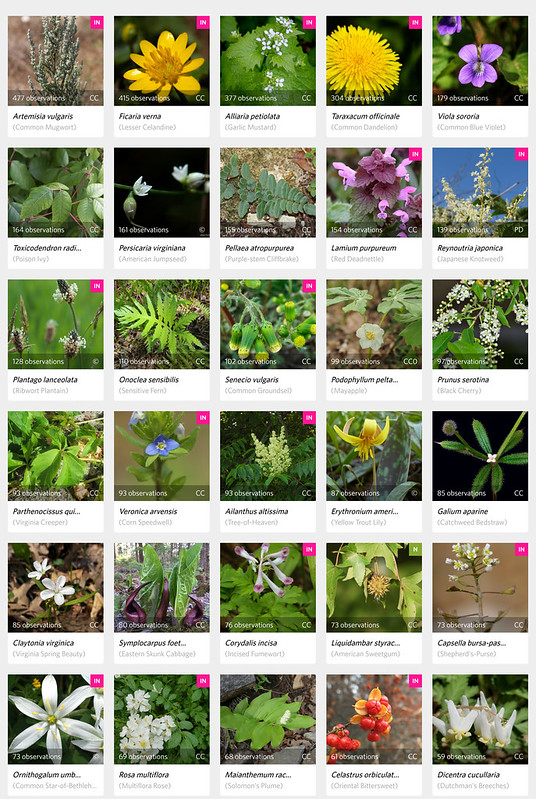
Screenshot of top 30 Species Observed during NYC's CNC 2021

Note that the information we present will be applicable to iNaturalist users and City Nature Challenge observers and identifiers anywhere in the world! So, whereever you are, please join us if you can.

Abstract

Unlike most other citizen science platforms, iNaturalist allows anyone to record their observations of any living thing anywhere in the world. As it approaches 100 million Observations worldwide, it has become increasingly important to botany and other biological sciences. City Nature Challenge, based on iNaturalist, engages community members in cities and urbanized areas around the world to make observations, and provides opportunities for taxonomic experts to identify them, all over the world. Last year over 400 cities participated, with over 50,000 people documenting over 45,000 species with over 1.2 million observations, the largest bioblitz in the world. In this Torrey Talk, two iNaturalist experts will show how you can participate in iNaturalist and this year’s upcoming City Nature Challenge.

Registration

Date: 2022-03-30
Time: 6pm EDT (GMT-04:00)
Duration: 1 hour
Registration: Zoom

The talk will be recorded and made available on the Torrey YouTube channel sometime after the event. Please subscribe to our channel and enable notifications so you get updated when we publish new recordings!

Related Content

Links

Torrey Botanical Society

2018-08-19

Plant Blindness and Urban Ecology

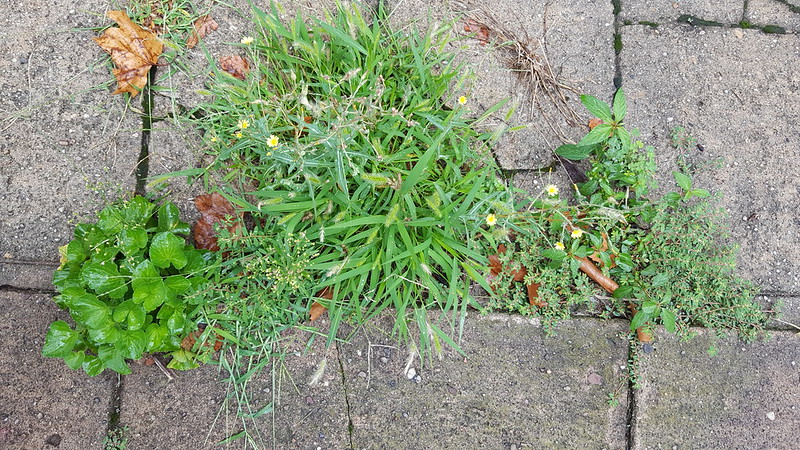
A small patch of biodiversity - i.e.: weeds - from my driveway.
Weeds in my driveway, August 2018

A recent article in the Wall Street Journal has people talking about it, e.g.: on the Twitter. The term "plant blindness" has been in use for a while, especially among those of us intensely interested in the subject of plants, from gardeners to botanists.

"Apps" and Social Media

I've seen folks get more interested in plants when they can reduce, or eliminate, the risk of being shamed by others for ignorance. (Which is nothing to be ashamed of, nor to shame others for. We all start out ignorant. Choosing to remain so, on the other hand ...)

2015-09-11

Former BBG Herbarium property for sale

Want to build next to the Brooklyn Botanic Gardens? This might be your one and only chance.
- Development Site Adjacent to Brooklyn Botanic Gardens Hits Market, Terrance Cullen, Commercial Observer, 2015-09-10
More like building on the grave of BBG's science and research mission. This is not just "walking distance from the Botanic Gardens;" it's the former site of Brooklyn Botanic Garden's Herbarium, known as BKL.
The 22,000-square-foot plot at 111 Montgomery Street in the Crown Heights section of Brooklyn is hitting the market for a potential developer looking to likely build condominiums.
According to the NYC Department of Buildings, the property is 109-111 Montgomery Street. BBG quietly announced almost a year ago that they would be "disposing" of:
... BBG’s building at 109 Montgomery Street, which has foundation problems and is not cost effective to repair.

The disposition is expected to generate significant revenue ...
- BBG Announces Disposition of Montgomery Street Building, 2014-10-24
Indeed. The Observer article gives "an asking price in the mid-$40 million."

BBG's October announcement made no mention of the herbarium. In their "Freedom is Slavery" double-speak, they claim the sale as "the first step in reintroducing a science research program at the Garden." "Reintroducing" because BBG removed science from their mission in September 2013, with no announcement, just a month after firing their remaining science staff,

BBG planned to transfer the herbarium - again, without announcement - out of state, either to the Missouri Botanical Garden (MOBOT) or the Smithsonian. This would have been a disaster for the natural history and cultural heritage of New York state. It was only through last-minute, behind-the-scenes advocacy and intervention in March of this year that the New York Botanical Garden (NYBG) instead accepted the contents on loan. That move was completed in April.

In June of this year, BBG sold the property to the holding company, 109 Montgomery LLC, for $24.5 million.

According to the president of the brokerage handling the sale of the herbarium property, “There’s a real need for families moving into Brooklyn to buy apartments within the $1 to $2 million range.” But no room for science, at any price.

Related Content

Brooklyn Botanic Garden's Slash and Burn "Campaign for the 21st Century", 2013-08-23
Brooklyn Botanic Garden removes science from its mission, 2014-01-20

Links

2013-08-23

Brooklyn Botanic Garden's Slash and Burn "Campaign for the 21st Century"

Sign the Petition to Restore Science to Brooklyn Botanic Garden! (Added 2013-09-16)

Updates:
2013-08-29: Added more links. I will continue to do so as this story begins to get more exposure.
2013-08-24: Expanded analysis. Added more external links to relevant sections of BBG's Web site.
2013-08-23 18:00: Added response from BBG.

Contents


I was alarmed to read the following on Twitter yesterday [2013-08-21]:
Brooklyn Botanic Garden suspends science program and lays off botany staff. Express concerns to president Scot Medbury scotmedbury@bbg.org.
- New York Flora Association, 2013-08-22, ~06:00 EDT

My Letter

For over a century, since its founding, science has been a foundation of the Brooklyn Botanic Garden. It is a primary reason why I have supported them. This morning [2013-08-23] I wrote the following email to Scot Medbury, President, Brooklyn Botanic Garden (BBG), and the Director of Major Gifts at BBG's Development Department:

2012-08-27

A Hudson River Riparian Plant Community

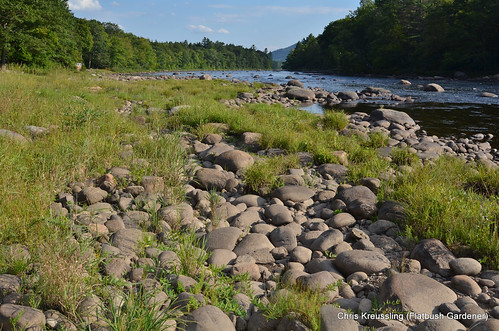
Part of the eastern bank of the Hudson River, just south of the Route 8 bridge at Riparius/Riverside in the Adirondacks of New York. A year ago, this was all underwater, inundated by flood waters from Hurricane Irene.
Riparian Plant Community, Hudson River, Riparius, NY

2009-01-09

BBG's Susan Pell in Papua New Guinea

The Louisiade Archipelao in Papua New Guinea, Oceania. Source: NASA Earth Observatory
Louisiade Archipelago

Dr. Susan Pell, Plant Molecular Systematist with the Brooklyn Botanic Garden, is leading an expedition to explore the Louisiade Archipelago of Papua New Guinea. The expedition team also includes researchers from the New York Botanical Garden, as well as the Botanical Research Institute of Texas, Conservation International, Old Dominion University, and the University of Papua New Guinea:
For five weeks in early 2009, BBG’s Dr. Susan Pell is leading a field research team in remote areas of Papua New Guinea. The team will work with local naturalists to survey the flora of the little-explored Louisiade Archipelago and compile a conservation assessment. ...
The botanical field reconnaissance will include both intensive collection of forest plants around Alotau and targeted species enumeration studies. The purpose of the fieldwork is to expand knowledge of the biodiversity of the Milne Bay Province. The Louisiade Archipelago is of specific interest because of its large number of native species.
- About the Expedition
I had the pleasure of meeting Dr. Pell as one of the instructors for the Plant Taxonomy class I completed at BBG in December. Thanks to her, I now have some idea of what a plant molecular systematist does! I would bet she's currently the most remote correspondent of the Brooklyn blogosphere. She started blogging about the expedition just three days ago:
I’ve spent five years planning a field expedition to Papua New Guinea—and it’s now underway.

Every time I go out into the field there are so many great stories to tell. So I’m going to try to use this web diary to share some of the things that come up over the course of our six-week exploration.

Once we head into the remote island areas I’ll be blogging by satellite phone, so the posts may get a little succinct. I’ll have time at the start and the finish to share some longer stories. Enjoy!
- Blogging PNG, 2008-01-07, Susan Pell, BBG
We'll be able to track the team's progress on a map on BBG's Web site. After 30 hours of travel, Dr. Pell is now in the capital of Port Moresby. From there, they'll travel to Alotau:
After convening in Alotau, PNG, to provision and confirm final plans, the team will depart January 15 on a charted boat for the three-week exploration of the three main islands of the Archipelago, Misima, Rossel [Yela], and Sudest [Vanatinai]. These islands are home to many species found nowhere else in the world. The expedition will wrap up outside of Alatou, the capital of Milne Bay Province, which located on the island of New Guinea.
- About the Expedition

Links

Expedition: Papua New Guinea, Brooklyn Botanic Garden

2008-12-10

ID that tree

A specimen of Abies fraseri, Fraser Fir, decorated as our Christmas/ Winter Holiday Tree for 2007-2008.
Christmas Tree

A reminder that the Brooklyn Botanic Garden has an online guide to identifying the species of your holiday tree.
Most people can tell a Wii from a PS3 in the shop windows at this time of year, but how many can tell whether that's a Scotch pine or a balsam fir in their living room? Our simplified key will help you identify your holiday tree.
- Holiday Tree Identification, Brooklyn Botanic Garden
For example, here are the keys to my annual choice, Abies fraseri, the Fraser Fir:
  • Leaves are needlelike, at least 4 times longer than wide.
  • Needles occur singly, not in clusters.
  • Buds are round or egg-shaped and have blunt tips.
  • Needles are attached directly to the stem.
  • Mature needles are 1/2 to 1 inch long.
  • Twigs have red hairs.
I also learned in my Woody Landscape Plant Identification class that you can quickly tell an Abies (Fir) from a Picea (Spruce) by trying to roll a needle between your fingers. Fir needles are flat and will not roll. Spruce needles are more cylindrical and will easily roll.

Since the guides include all species grown and sold commercially across the United States and Canada, they include some species you're unlikely to find at your local tree merchant in New York City, such as Cupressus arizonica, the Arizona Cypress. In addition to the online keys, they have a page for each species, and many links to other information about selecting, identifying, and enjoying your tree.

Related Posts

Brooklyn Mulchfest 2009

Links

Holiday Tree Identification, Brooklyn Botanic Garden
Long Live the Christmas Tree, 2008.12.04, from neighbor and fellow gardener at New York City Garden

2008-11-14

Steven Earl Clemants, 1954-2008

Steven Earl Clemants. Credit: Brooklyn Botanic Garden


The botanical world - especially New York State, New York City, and Brooklyn - suffered a great loss recently. Steven Earl Clemants, Ph.D., Vice President of the Science Department of the Brooklyn Botanic Garden, died suddenly and unexpectedly on Sunday, November 2, 2008. Funeral services were held last Friday, November 7. He was 54 years old.

I never met Steven, but I've known of his work. I've written about some of it on my blog. His contributions in several fields, including native plant conservation, invasive plants, and urban botany, are substantial. I can only summarize.

Dr. Clemants was Chair of the Board of the Invasive Plant Council of New York State. He was the Historian and past President for the Torrey Botanical Society, and Chair of the Local Flora Committee of the Long Island Botanical Society. He was a founder, coordinator and contributor for the New York Metropolitan Flora Project (NYMF), which is documenting all the flora within a 50-mile radius of New York City. He was Codirector of the Center for Urban Restoration Ecology (CURE), a collaboration between BBG and Rutgers University. He served on the Advisory Board and Atlas Committee of the New York Flora Association. He was a graduate faculty member of both Rutgers University and the City University of New York. He was also involved with the New York State Invasive Species Task Force, the Prospect Park Woodlands Advisory Board, and the American Institute of Biological Sciences, among many other efforts.

He was Editor-in-Chief of Urban Habitats, an open-science online journal dedicated to worldwide urban ecological studies. In addition to authoring and co-authoring numerous technical journals and articles, he was co-author, with Carol Gracie, of "Wildflowers in the Field and Forest: A Field Guide to the Northeastern United States."

The Dr. Steven Clemants Wildflower Fund

The Dr. Steven Clemants Wildflower Fund has been established to honor him. Steve's widow, Grace Markman, is working with the Greenbelt Native Plant Center to plan a living memorial that will foster the planting of native wildflower species in New York City parks.

If you would like to donate to the Fund, there's a PDF form to fill out and mail with your check. Email me at xrisfg at gmail dot com and I'll send you the form. Make out your check to “City Parks Foundation” and mail it with the form to:

City Parks Foundation
c/o Greenbelt Native Plant Center
3808 Victory Blvd.
Staten Island, NY 10314

As an alternative, here's an Amazon Associates link for the paperback edition of the Field Guide which Dr. Clemants co-authored. I will donate any proceeds I receive through this link to the Dr. Steven Clemants Wildflower Fund. The Field Guide is also available in both hardcover and paperback editions from BBG's online store.


Related Posts

Web Resource: New York Metropolitan Flora Project (NYMF), 2006-06-02

Links

Steven Earl Clemants:
Center for Urban Restoration Ecology (CURE)
Invasive Plant Council of New York State
Long Island Botanical Society
New York Flora Association
New York Metropolitan Flora Project (NYMF)
Science Department, Brooklyn Botanic Garden
Torrey Botanical Society
Urban Habitats

2007-06-13

News: Brooklyn Heights Fights for Botanical Accuracy

An assortment of caryopses. Credit: Fir0002


From Monday's New York Times, in an article about the slow season in New York State's legislature:
Earlier this year, Senator Michael F. Nozzolio, an upstate Republican, introduced legislation that would make sweet corn the state vegetable. ...

But when the bill came up for debate in the Senate on Tuesday, it quickly earned the disapproval of Senator Martin Connor, a Brooklyn Democrat.

“As everyone knows, corn is a grain,” he said. “And I would propose that we make sweet corn the New York State official grain.” ...

- As Legislative Session Wanes, So Does Leaders’ Momentum
“The criteria is whether it comes from the reproductive part of a plant or the vegetative part of the plant,” Dr. [Marvin P.] Pritts said. “If it comes from the reproductive part of the plant, it’s a fruit. If it comes from the vegetative part of the plant, it’s a vegetable.”

Botanically speaking, corn is a caryopsis, or dry fruit — popularly known as a grain.

Dr. Pritts allowed that corn, like a tomato, is eaten like a vegetable, “so to a normal, everyday person, it’s a vegetable.”
So what makes a grain, anyway?
In botany, a caryopsis is a type of simple dry fruit — one that is monocarpelate (formed from a single carpel) and indehiscent (not opening at maturity) and resembles an achene, except that in a caryopsis the pericarp is fused with the thin seed coat.

The caryopsis is popularly called a grain and is the fruit typical of the family Poaceae (or Gramineae), such as wheat, rice, and corn.

The term grain is also used in a more general sense as synonymous with cereal (as in "cereal grains", which include some non-Gramineae). Considering that the fruit wall and the seed are intimately fused into a single unit, and the caryopsis or grain is a dry fruit, it is not surprising that in general usage little concern is given to technically separating the terms "fruit" and "seed" in these plant structures. In many grains, the "hulls" to be separated before processing are actually flower bracts.

- Caryopsis, Wikipedia
Glad we cleared that up!

via Brooklyn Heights Blog