2013-04-19

A Busy Flatbush Gardener's Weekend

I'll be out and about in the community at two events this weekend. Stop by and say hello! And maybe pick up some tips and plants while you're at it.

Saturday, April 21, 9:30-1:30
Sustainable Flatbush Church Garden - Earth Day Open House
Flatbush Reformed Church
2121 Kenmore Terrace, off East 21st Street, one block south of Church Avenue

View Larger Map

Sunday, April 20, 12-3pm
Great Flatbush Plant Swap 2013
Flatbush Food Coop
1415 Cortelyou Road, corner of Marlborough Road

View Larger Map

Related Content

Great Flatbush Plant Swap 2013, Sunday, 4/21, Noon-3pm

Links

Sustainable Flatbush: Save the date for our Earth Day Open House!

2013-04-17

Great Flatbush Plant Swap 2013, Sunday, 4/21, Noon-3pm

This Sunday, April 21, from noon to 3pm, join your fellow green-thumbs, and brown-thumbs, for the 2013 Great Flatbush Plant Swap.

Got some extra seed-starts you don't need? Leftovers from dividing perennials? No place for that shrub you just dug out? Looking to start a new garden, and want some free plants? Looking to meet your gardening neighbors and pick up some tips?

Each year we've done this, we've re-distributed hundreds of plants. No plants? No problem: everyone can bring home a plant, even if you have none of your own to swap. You don't need to bring something to be able to take something away.

Co-sponsored by the Flatbush Food Co-op and Sustainable Flatbush, this is an opportunity to share or swap plants, meet your gardening neighbors, and get some free plants.

When: Sunday, April 21, 12noon-3pm, Rain or Shine
Where: Flatbush Food Co-op, 1415 Cortelyou Road, corner of Marlborough Road

2013 Plant Swap Flyer
Credit: Baly Cooley

Related Content


2011: Second Annual Great Flatbush Plant Swap
2010: The First Annual Great Flatbush Plant Swap, Saturday, April 24

Links

2013-03-25

Off-topic: 20 Years

Today is the 20th anniversary of my sobriety. Sobriety, abstinence, and recovery are often conflated. They're not the same things.

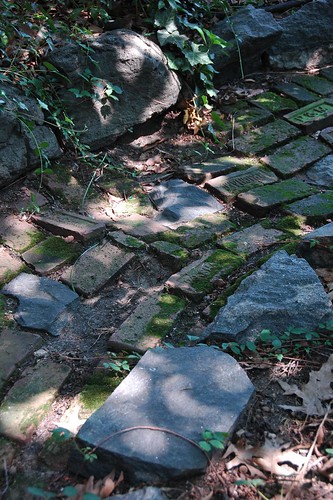
Salvage Path

I got sober because drinking was interfering with my recovery. I say "I got sober," not just "I stopped drinking." Abstinence was as necessary for my sobriety as sobriety was for my recovery, but I don't equate sobriety with abstinence. Today, I have the occasional glass of beer or wine with dinner. I am still sober.

2012-09-09

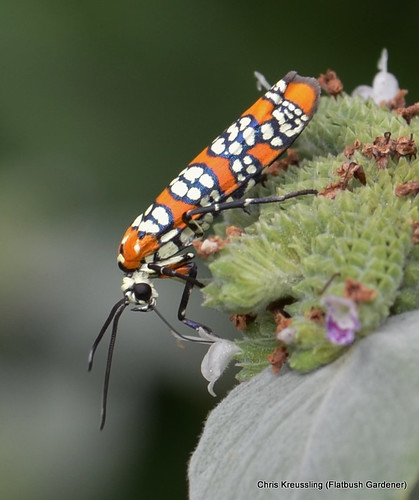
Atteva aurea, Ailanthus Webworm Moth

Atteva aurea, Ailanthus Webworm Moth, on Pycnanthemum, Mountain-Mint, in my garden last weekend. The intense colors are believed to be aposematic, a warning coloration to deter predators, probably because they would be distasteful.
Atteva aurea, Ailanthus Webworm Moth, on Pycnanthemum, Mountain-Mint

The larvae - caterpillars - feed in communal aggregations, like tent caterpillars. Around the globe, caterpillars in the genus Atteva are known to feed on plants from at least a half-dozen plant families. But they favor plants in the Simaroubaceae, the Quassia Family.

2012-09-06

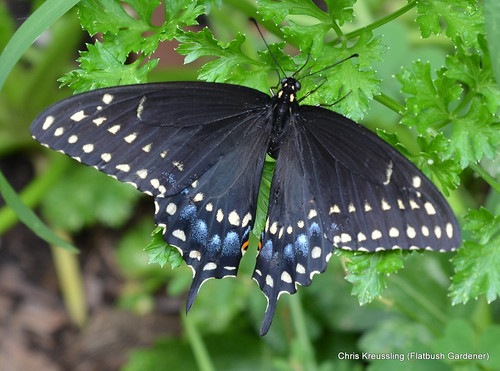
Papilio polyxenes, Eastern Black Swallowtail

Update 2012-09-10: Only one caterpillar remains.

The morning of the day we left on our last road trip - which led us to the Adirondack Hudson, among other places - I saw this in one of our vegetable beds:
Papilio polyxenes, Eastern Black Swallowtail

This is a female Eastern Black Swallowtail Butterfly, Papilio polyxenes. I caught her at the moment she discovered our group of parsley plants (Petroselinum hortense, or P. crispum). She was laying eggs, carefully placing just one under separate leaves of two of the plants.

2012-08-27

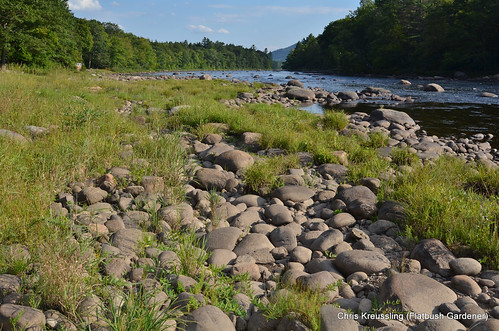
A Hudson River Riparian Plant Community

Part of the eastern bank of the Hudson River, just south of the Route 8 bridge at Riparius/Riverside in the Adirondacks of New York. A year ago, this was all underwater, inundated by flood waters from Hurricane Irene.
Riparian Plant Community, Hudson River, Riparius, NY

2012-08-21

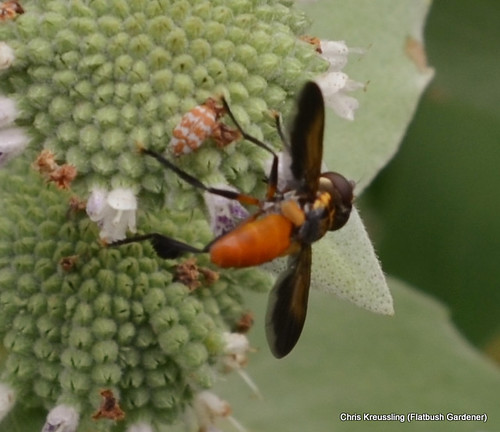
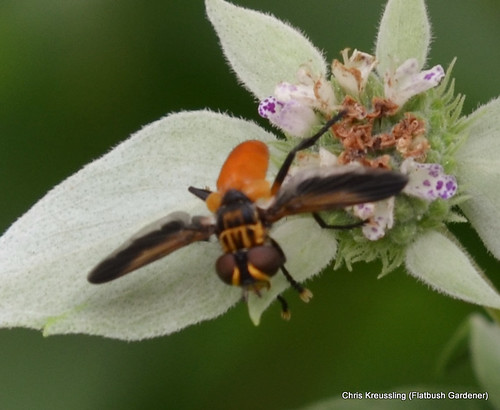
Trichopoda pennipes, Feather-legged Fly

Trichopoda pennipes, Feather-legged Fly, on Pycnanthemum, Mountain-Mint, in my garden yesterday. Although it's widespread and common, occurring throughout North America, this was the first time I've noticed this species in my garden.
Trichopoda pennipes, Feather-legged Fly, on Pycnanthemum, Mountain-Mint
This photo shows several of the keys to identifying this species:
  • "Feathered" fringes on the hindlegs, true of Trichopoda.
  • Orange abdomen. Females have a black-tipped abdomen. Males, such as this one, have a completely orange abdomen. 
  • Wings are completely black. This species has a transparent margin to the wing.
Trichopoda is a parasitoid of Hempitera, true bugs, including many agricultural and garden pests, such as squash bugs and stinkbugs. For this reason, it's considered a "beneficial" insect:

Each female fly lays on average 100 eggs, which are placed singly on the body of a large nymph or adult bug. Most of the small, white or gray, oval eggs are placed on the underside of the thorax or abdomen, but they can occur on almost any part of the bug. Many eggs may be laid on the same host, but only one larva will survive in each bug. The young larva that hatches from the egg bores directly into the host body. The maggot feeds on the body fluids of the host for about two weeks, during which time it increases to a size almost equal to that of the body cavity of its host. When it has completed its development, the cream-colored third instar maggot emerges from the bug between the posterior abdominal segments. The bug dies after emergence of the fly, not from the parasitoid feeding, but from the mechanical injury to its body. The maggot pupates about an inch down in the soil in a dark reddish-brown puparium formed from the last larval skin, and an adult fly emerges about two weeks later. There can be three generations per year depending on location.

The fly overwinters as a second instar larva within the body of the overwintering host bug. Adult flies emerge in late spring or early summer. The only bugs large enough to parasitize at this time are overwintered adults. Subsequent generations develop on both nymphs and adults of the next generation.
- Trichopodes pennipes, Parasitoid of True Bugs
Trichopoda pennipes, Feather-legged Fly, on Pycnanthemum, Mountain-Mint

Related Content

Flickr photo set: Trichopoda pennipes, Feather-Legged Fly

Links

BugGuide: Trichopoda pennipes
University of Wisconsin-Madison, Department of Entomology, Midwest Biological Control News, Trichopodes pennipes, Parasitoid of True Bugs
North Carolina State University, Raleigh, Dept. of Entomology, Biological Control Information Center, Trichopoda pennipes

2012-08-13

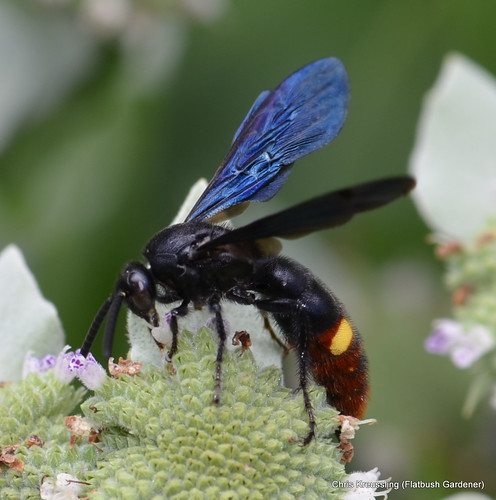
Scolia dubia, Blue-Winged Digger Wasp

Scolia dubia, Blue-winged Digger Wasp, on Pycnanthemum, Mountain-Mint, in my garden.
Scolia dubia, Blue-winged Digger Wasp, on Pycnanthemum, Mountain-Mint

Another little jewel of a wasp that is new to me this year. I've been seeing it on the Pycnanthemum, but was unable to get decent photos of it until yesterday. I've also seen it on the Clethra alnifolia, Summersweet in my garden, which just started blooming in the past week.

2012-05-15

Patent Lies: What's "Native"? And What's Not.

Echinacea pallida, Pale Coneflower, growing in my urban backyard native plant garden.
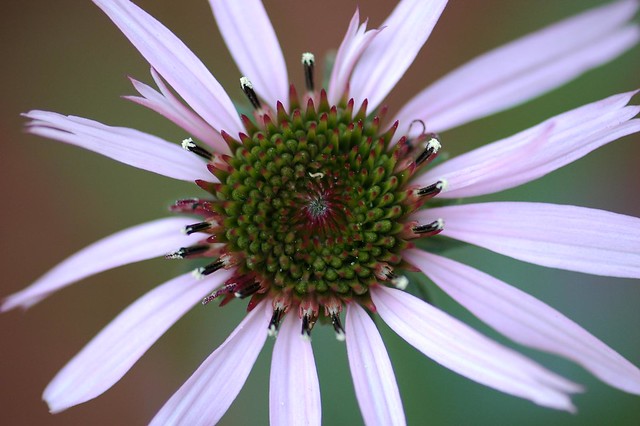
Echinacea pallida, Pale Coneflower

I was appalled to see the National Wildlife Federation publish on their Web site, without qualification or counter-point, a press piece by the "Brand Manager for American Beauties Native Plants." (Appalled, but unfortunately, not shocked, given NWF's mishandling of their Monsanto-Scotts-MiracleGro sell-out, and their ham-handed retraction only in the face of public outrage and opposition.)
The Brand Manager's puff piece includes this statement:
At American Beauties Native Plants, we take a slightly broader view in our definition of native plants–we include cultivars. A cultivar is a plant that has been selected and cultivated because of some unique quality, such as disease resistance, cold hardiness, height, flower form or color. Sometimes interesting varieties are found in nature and brought into cultivation making them cultivated varieties or cultivars. In my years as a research horticulturist I observed pollinators, birds and other wildlife interacting freely with cultivated plants.
This paragraph is immediately followed by a photograph of "[Echinacea] ‘Tiki Torch’ is a hybrid of Echinacea paradoxa and a cultivar of Echinacea purpurea."

A cultivar is a vegetatively propagated selection - a clone - of an individual from a population. But a hybrid is not a cultivar. More than that, 'Tiki Torch' is a patented plant. By definition, anything that is patented must be man-made, NOT natural, not native. One cannot obtain a patent on something that occurs naturally in the wild, even if you select it, propagate, and promote it as a cultivar. American Beauties greenwashing "native" with so broad a brush that they include patented plants is deceptive marketing. NWF blindly supporting such an association by publishing it unchallenged on their Web site is, at best, cluelessness.

In my urban backyard native plant garden, I grow plants from a range of sources, including cultivars, unnamed straight species of unknown geographic origins, and - my most-prized specimens - local ecotypes propagated by the Greenbelt Native Plant Center from wild populations in and around New York City. I also grow in container a beautiful specimen of the patented Heuchera 'Caramel' in this (otherwise) native plant garden. I use it to illustrate what is NOT native.

Related Content

Greenbelt Native Plant Center
Native Plants

Links

What Is a Native Plant?, Peggy Anne Montgomery, Brand Manager for American Beauties Native Plants, National Wildlife Federation