Showing posts with label Sources. Show all posts

2016-04-02

NYC-Regional Native Plant Sales, Spring 2016

2016-04-12: Added the LINPI Plant Sale dates.

Seasonal sales are one of the best ways to acquire a wide variety of native plants. It's best to do your homework before you go, so you have an idea of your conditions, the kinds of plants that would do well on your site, and your goals for your native plant garden, e.g.: habitat, fall foliage, flowers for cutting. If you're planting to attract insects and wildlife, prefer straight species over cultivars, and local growers over mass-market names.

All the events listed here are within a 90 minute drive from my home in the geographic center of Brooklyn. If you know of any that aren't listed here that you think should be, please let me know, either with a comment below, or by sending me a link to the event on Twitter.

Saturday, April 23, 2016

9am-2pm
Musconetcong Watershed Association (MWA) Native Plant Sale
MWA River Resource Center, 10 Maple Avenue, Asbury, NJ. 08802
Includes plants that are only distantly native, e.g. Midwest natives, and more cultivars than straight species. But they also offer plants from local growers.

11am-2pm
Pinelands Preservation Alliance (PPA) Earth Day Native Plant Sale
PPA Headquarters, 17 Pemberton Road, Southampton, NJ 08088
Growers include Pinelands Nursery and New Moon Nursery.
Hit or miss. Two years ago they had a great selection. Last year was a complete bust. They were already sold out of nearly everything when I arrived there shortly after they opened. For this reason, I'm reluctant to waste the time, fuel, and tolls to return on what's essentially a gamble. They have a members-only preview sale the day before, but that's a work day for me.

Sunday, April 24, 2016

Time TBA
Great Flatbush Plant Swap
Flatbush Food Co-op, 415 Cortelyou Road (between Rugby & Marlborough Roads), Brooklyn, New York 11226
You don't to bring anything to take home a plant, and all plants are free! Quantities are limited; bring plants or seedlings from own garden to add to the swap, and "earn points" to take home more plants!
I will bring native plants from my own garden, and curate the native plants contributed by others.

Saturday, April 30, 2016

10am-1pm
Manhattan Chapter of the North American Rock Garden Society (MCNARGS) Annual Plant Sale
El Sol Brillante Community Garden, 522-528 East 12th St (between Avenue A & B), New York, NY 10009
While not specifically a native plant sale, they have a wide selection of native plants. The garden is also beautiful in its own right, and worth a visit.

10am-1pm
Westchester Community College Native Plant Center Native Plant Sale
Westchester Community College, 75 Grasslands Road, Valhalla, NY 10595
Parking in Visitor Lot #1
Wide variety of plants, from many different sources. Many/most are cultivars, rather than straight species.

May 20 & 21

Friday, May 20, 3-6pm, Saturday, May 21, 9am-12noon
D&R Greenway Land Trust Spring Native Plant Sale
D&R Greenway Johnson Education Center, One Preservation Place, Princeton, New Jersey 08540

Saturday, May 21, 9am-1pm
Hudson Highlands Nature Museum Native Plant Sale
Outdoor Discovery Center, Muser Drive, across from 174 Angola Road, Cornwall, NY 12518

June 3-4

Friday&Saturday, June 3&4
Long Island Native Plant Initiative (LINPI) Native Plant Sale Fundraiser
Suffolk County Community College (SCCC) Eastern Campus, 121 Speonk-Riverhead Road, Riverhead, NY 11901
Offers Long Island regional ecotypes propagated by NYC Parks' Greenbelt Native Plant Center, the only retail source for these plants.

Saturday, June 4
New Jersey Audubon Native Plant Sales
Two sales the same day, at two different locations:
9am-4pm, NJ Audubon's Scherman Hoffman Wildlife Sanctuary, 11 Hardscrabble Rd, Bernardsville, NJ 07924
11am-3pm, NJ New Jersey Audubon's Plainsboro Preserve, 80 Scotts Corner Road, Cranbury, NJ 08512

June 10&11

Friday&Saturday, June 3&4
Long Island Native Plant Initiative (LINPI) Native Plant Sale Fundraiser
Suffolk County Community College (SCCC) Eastern Campus, 121 Speonk-Riverhead Road, Riverhead, NY 11901
Offers Long Island regional ecotypes propagated by NYC Parks' Greenbelt Native Plant Center, the only retail source for these plants.

Dates to be announced

Audubon Greenwich Native Plant Sale
613 Riversville Road, Greenwich, CT 06831
Pre-Orders due April 30

Long Island Native Plant Initiative (LINPI) Native Plant Sale

Related Content

Native Plants Planting Plan, 2015-04-18
FAQ: Where do you get your plants?, 2015-01-03

Links

Long Island Native Plant Initiative (LINPI) Plant Sale
Pinelands Preservation Alliance Plant Sale

Spring Native Plant Sales Near Fairfield County (Warning: Site has pop-ups), Kim Eierman, Norwalk Daily Voice, 2016-04-18

2015-01-03

FAQ: Where do you get your plants?

[First in what I hope will be a series of Frequently Asked Questions, FAQs. If you have any questions for me, I invite you to leave a comment, or ping me on Twitter.]

Question: Where do you get your plants?

Answer (short)

I specialize in gardening with native plants. I get my plants from a variety of sources, including mail-order nurseries, local and regional nurseries, annual plant sales, and neighborhood plant exchanges. My Native Plants page has a list of Retail Sources of Native Plants in and around New York City, extending to New England and the Mid-Atlantic.

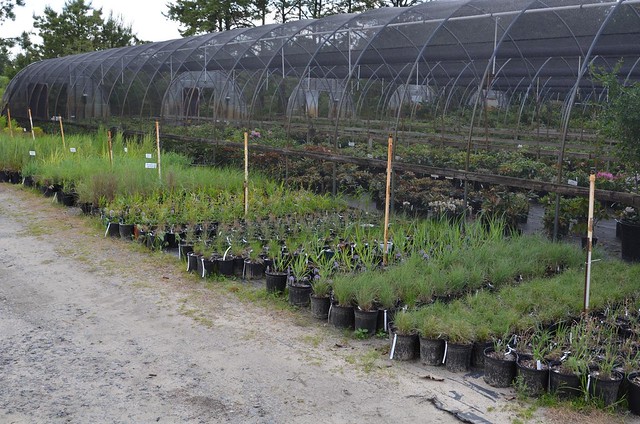
Grasses and Sedges at Rarefind Nursery in Jackson, New Jersey
Grasses and Sedges, Rarefind Nursery

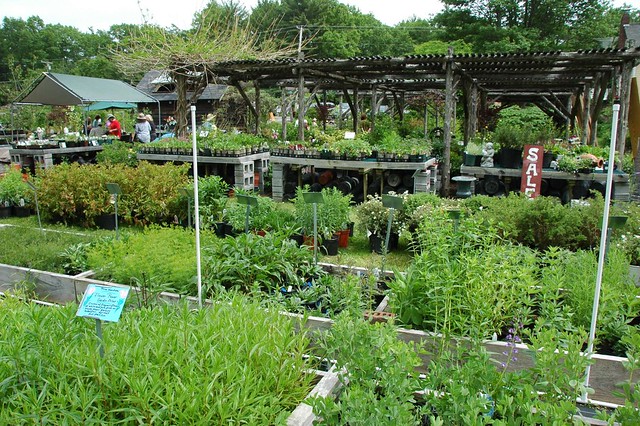
Catskill Native Nursery, Kerhonkson, NY

Answer (longer)

I've been gardening in New York City for over three decades, since 1981 or thereabouts in the East Village, since 1992 in Brooklyn. Each garden provided its own challenges, and lessons. The plants I seek out, and where I get them, has changed a lot over time.

The first 20 years: Shade, Concrete, and Invasives

The first garden, in the East Village, was surrounded by adjacent buildings and overtopped by two large Ailanthus altissima trees (the "tree that grew in Brooklyn"). There I learned, by necessity, about gardening in shade. Garden #2, in Park Slope, was nearly all concrete; there I learned to garden in containers. Garden #3, also in Park Slope, had been somewhat neglected; weeds and invasive plants, including Fallopia japonica, Japanese Knotweed, were the lessons there.

I've always included native plants in my gardens. In the East Village garden, I planted a small wildflower area that was, perhaps, my favorite spot. I added a small wildflower plot to the 3rd garden, as well. Out of necessity, most of these were cultivars, the only "native plants" commercially available at the time. I divided many of them and brought them to my current garden.

The 4th Garden

This Spring will be 10 years since we closed on our current home, and I started work on my fourth garden in New York City. Here the lessons have been about rehabilitation, and healing the land, if only in my small pocket of it.

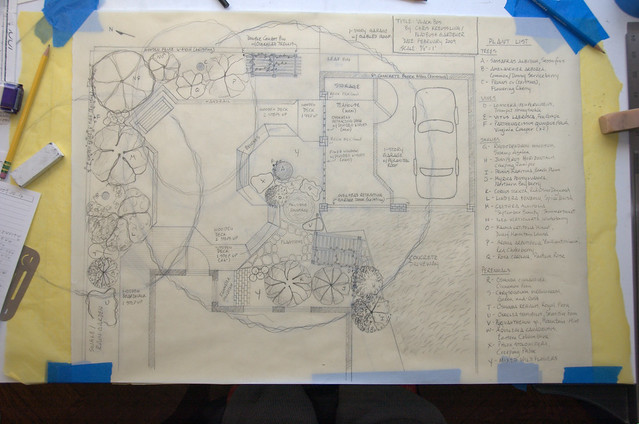
The backyard was the initial focus of my efforts. My goal here was to recreate a shady woodland garden, populated with native woodland plants. Four years in, it was my design subject for the Urban Garden Design class I took at Brooklyn Botanic Garden.
Final rendering, backyard garden design

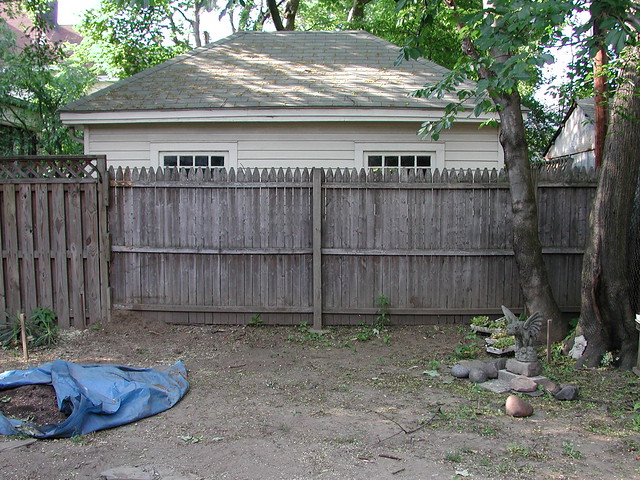
10 years ago, the backyard was a wasteland of dust and scraggly grass, shaded by multiple Norway maples.
Backyard, view away from garage, May 2005

The first month, I removed four trees from this small space. Over time, the remaining three trees failed and had to be removed. After 10 years, I'm still working on building up the soil to meet the needs of more specialized woodland plants. But I've been largely successful in rehabilitating this space.
The shrub border, pre-transplant, November 2014

Similarly, the front yard was, at best, barren: lawn and a few canonical evergreen shrubs.
Front Garden, April 2005

Our house was built in 1900. In keeping with the historical nature of our home, and the neighborhood, initially I focused on heirloom plants in the front garden.
The Front Garden

As my knowledge of and experience with gardening with native plants grew, I expanded the scope of their planting to include all areas around the house. The loss of our neighbor's street tree a few years ago to Hurricane Irene opened up - literally - the opportunity to grow more sun-loving species in the front yard. I started taking out the front lawn two years ago, gradually replacing it with a mixed wildflower meadow. The original lawn has been reduced to a less than a third of its original extent.
Morning Glory: The Front Garden this morning

Most recently, I've narrowed my plant acquisitions further. My most treasured plants in my gardens are local ecotypes, those that have been propagated - responsibly - from local wild populations. There are two regional plant sales where these are available, both organized by regional preservation groups: the Long Island Native Plant Initiative, and the Pinelands Preservation Alliance. These are currently my preferred sources for plants.
I have arrived! LINPI Plant Sale

It's my hope that more retail sources for local ecotypes will become available to urban gardeners. I recommend that gardeners who want to explore gardening with native plants choose straight species, not cultivars, from local growers, who are more likely to be growing plants propagated originally from local stock.

Related Content

Tags: Nurseries, Sources, Native Plants

Flickr photo sets:
The Front Garden
The Backyard

Catskill Native Nursery, Kerhonkson, NY
Rarefind Nursery, Jackson, NJ

Links

Long Island Native Plant Initiative (LINPI) Plant Sale
Pinelands Preservation Alliance Plant Sale

2013-06-05

Long Island Native Plant Sale, June 7&8, 14&15

2013-06-09: Updated from my visit on Saturday, 6/8.

The Sale

Long Island Native Plant Initiative (LINPI) Plant Sale

This Friday and Saturday, June 7 and 8, and next week as well, June 14 and 15, is a rare opportunity to purchase local ecotypes - plants propagated from local wild populations - of plants native to Long Island. The sale is organized by the Long Island Native Plant Initiative (LINPI). Proceeds benefit LINPI.

2013-04-29

My Plant Giveaway

2013-04-30 UPDATE: Full house! Sorry, but the response was enthusiastic. I already have all my availability booked for this weekend. If I have any time on subsequent weekends, I will post another update here.

I'm reorganizing some of my planting areas this Spring. I have many overgrown perennials taking up too much space in my garden. I would love to share them with you.

I'll be working in the garden this weekend, weather permitting, from Saturday May 4 about 12 noon on, and Sunday May 5. I'm on Stratford Road in Beverley Square West (between Cortelyou and
Beverly Roads). Email me at xr...@gmail.com to set a time to stop by and we'll dig the plants fresh out of the ground for you.

If you don't know what will grow, tell me what you have to garden in and I'll give you something that will grow well for you. I have plants for sun, shade, or anything in between:
  • Corydalis cheilanthifolia (ferny foliage, yellow flowers, blooming now)
  • Hemerocallis, Daylilies (mostly the common orange H. fulva, but also some fragrant yellow ones)
  • Iris siberica, Siberian Iris
  • Bearded Iris, Purple-flowering, smell like grape jelly
  • Hosta (plain green leaves, purple flowers)
I also have some native plants - my specialty - that have thrived enough for me to be able to give some away.
  • Asarum canadense, Wild Ginger
  • Helianthus, tall perennial sunflowers, including H. tuberosa, Jerusalem Artichoke
  • Onoclea sensibilis, Sensitive Fern
  • Phlox stolonifera, Creeping Phlox
  • Pycnanthemum, Mountain-Mint, a great pollinator plant
  • Viola, violets, both purple- and white-flowering
... and maybe others if we hunt around the grounds.

All of these are "outdoor" plants. They need the cold of Winter to rest each year. Some of them can be grown in containers; you don't need to have ground to garden!

Happy Gardening!

2013-04-17

Great Flatbush Plant Swap 2013, Sunday, 4/21, Noon-3pm

This Sunday, April 21, from noon to 3pm, join your fellow green-thumbs, and brown-thumbs, for the 2013 Great Flatbush Plant Swap.

Got some extra seed-starts you don't need? Leftovers from dividing perennials? No place for that shrub you just dug out? Looking to start a new garden, and want some free plants? Looking to meet your gardening neighbors and pick up some tips?

Each year we've done this, we've re-distributed hundreds of plants. No plants? No problem: everyone can bring home a plant, even if you have none of your own to swap. You don't need to bring something to be able to take something away.

Co-sponsored by the Flatbush Food Co-op and Sustainable Flatbush, this is an opportunity to share or swap plants, meet your gardening neighbors, and get some free plants.

When: Sunday, April 21, 12noon-3pm, Rain or Shine
Where: Flatbush Food Co-op, 1415 Cortelyou Road, corner of Marlborough Road

2013 Plant Swap Flyer
Credit: Baly Cooley

Related Content


2011: Second Annual Great Flatbush Plant Swap
2010: The First Annual Great Flatbush Plant Swap, Saturday, April 24

Links

2009-05-05

Plant Sale, Brooklyn Botanic Garden

BBG Plant Sale

This afternoon I attended the Members-Only Preview of the Brooklyn Botanic Garden's 2009 Plant Sale. The sale opens to the general public all day tomorrow, Wednesday, from 9am to 7pm, and continues Thursday morning, from 9am to 12noon.

I haven't been able to go for the past few years. I forgot how much fun it can be. It gets crowded at times, but it's the most pleasant crowd to be in. Everyone is smiling, checking out each other's little red wagons full of plants, offering advice and tips. The only potential meltdown I observed involved a young girl bringing an orchid to her mother, proudly sharing that this was the prettiest flower she could find. The orchid was not going into the wagon, and I moved on before things got ugly.

Because I was going to Soil Management class after the sale, I was limited to what I could carry by hand. Which was a good thing. Here are the six plants I came away with:
  • Fargesia rufa
  • Hakonechloa macra 'Aureola'
  • Polygonatum falcatum 'Variegatum'
  • Polystichum makinoi
  • Trillium erectum
  • Trillium grandiflorum
The two Trilliums are destined for the backyard native plant garden, of course. I've coveted a Fargesia for several years. I had one in the first garden, in the East Village. The genus was then known as Sinarundinaria; by any other name, still a lovely addition to a partially shaded location. This one, I think, will replace the Viburnum at the shady front of the house. The other three will go along the shady path on the north side of the house. There will be photographs of these in situ once they're planted.

Waiting
Waiting

Why?!
Why?!

Shade Plants
Shade Plants, BBG Plant Sale

The Big Tent
The Big Tent

Father and Son
Father and Son

[bit.ly]

Related Content

Plant sales this week in Brooklyn, 2009-05-01

Links

Brooklyn Botanic Garden 2009 Plant Sale

2009-05-01

Plant Sales this week in Brooklyn

Cobble Hill, May 2

Cobble Hill Tree Fund Plant Sale
Cobble Hill Park (at Clinton and Congress Streets)
Saturday, May 2. 10:30 a.m.-3 p.m. Rain date is Sunday, May 3.

Boerum Hill, May 2 & 3

Hoyt Street Association Annual Plant Sale
110 Hoyt Street (near Pacific Street)
Saturday, May 2 10 a.m.-6 p.m.
Sunday May 3. 11 a.m.-5 p.m.

Park Slope, May 2

PS 107 (Park Slope) Plant Sale
PS 107, 1301 8th Avenue (between 13th and 14th Streets)
Saturday, May 2 (rain date May 3). 10 am to 4 pm

Bay Ridge, May 3

Narrows Botanical Gardens Sneak Preview Sale
Narrows Botanical Gardens, 69th Street entrance
Sunday, May 3. 11:00 a.m. to 2:00 p.m.

Brooklyn Botanic Garden, May 5-7

Brooklyn Botanic Garden, Cherry Esplanade
Brooklyn Botanic Garden 2009 Plant Sale
Wednesday, May 6 | 9 a.m.–7 p.m.
Thursday, May 7 | 9 a.m.–Noon
Members-Only Preview Sale
Tuesday, May 5, 2009. 4:30–8:30 p.m. (Admission with BBG membership card only.)

Park Slope, May 9

615 Green Garden, 6th Avenue and 15th Street
6/15 Green Annual Spring Festival and Plant Sale
Saturday, May 9, 10am-3pm

Park Slope, May 10

Brooklyn Bear's Pacific Street Garden, Pacific Street and Flatbush Avenue
Brooklyn Bears Mother's Day Plant Sale
Saturday and Sunday, May 10 & 11 from 10am to 4pm

[bit.ly]

2008-05-11

Local ecotypes available from Oak Grove Farms at Union Square Greenmarket

Handing out shopping bags at the NYC Wildflower Week table at Union Square.
Handing out bags

First thing last Saturday, May 3, I went to Union Square in Manhattan to attend the kickoff of NYC Wildflower Week. There was a table where volunteers and Parks staff handed out tote bags with information about native plants. I didn't get to stick around for the tours of the native plant garden in Union Square Park. The highlights for me were meeting Marielle Anzelone, Parks Ecologist, and the opportunity to acquire local ecotypes of six native plant species from Oak Grove Farms (changed to Nature's Healing Farm), one of the Greenmarket vendors:
  • Eupatorium maculatum, Spotted Joe-Pye Weed
  • Helenium autumnale, Sneezeweed
  • Monarda fistulosa, Wild Bergamot
  • Panicum virgatum, Switch Grass
  • Penstemon digitalis, Tall White Beardtongue
  • Pycnanthemum virginianum, Mountain Mint
Local ecotype native plants for sale at Oak Grove Farms' Greenmarket stand
Native Plants at Oak Grove Farms

What's "native"?

A native plant species is one which grows naturally without human intervention. "Native" is both broad and relative. Native to where? And to what habitat? What ecosystem? Native to North America? The eastern United States? The Mid-Atlantic or New England? Is it native to New York City? To Brooklyn (Kings County)? Are they native to the "wooded plains" from which "Flatbush" got its name?

Most native plants commercially available, especially at the retail level, are selections or cultivars of species. Selecting for more compact forms is common, but selections are made for many reasons: the color of flowers, fruits or fall foliage, for example. In other words, they've been selected for their horticultural rather than ecological value.

What's a "local ecotype"?

Within a species, an ecotype is a genetically unique population that is adapted to its local environment [Wikipedia]. A local ecotype is propagated from local natural populations. In this case, the plants have been propagated by the Staten Island Greenbelt from natural populations of each species occurring in or around New York City.

Local ecotypes are not just geographically distributed. Other important factors are differences in moisture, exposure to sun or shade, extremes of winter or summer temperatures and humidity, and so on. Ecotypes may also differ along these ecological gradients.

Why grow native plants?

In the United States, native plants are enjoying a resurgence in interest and popularity. For the gardener, making choices about native plants comes down to examining and expressing one's reasons for wanting to grow native plants in the garden.

Growing native plants feeds my curiosity about and interest in the natural world. It's a way for me to converse with the genius loci, the spirit of the place, where I garden. Most of all, I hope to provide food and shelter for native wildlife, especially birds and insects.

The native plant garden I'm developing in my backyard has a wide range of "native" plants. Many of them are selections and cultivars; some of these, such as a variegated pokeweed, would never persist in the wild. Others are not native to New York City, or even New York state, but to larger ecological provinces such as New England or the Mid-Atlantic Coast.

From growing native selections and cultivars over more than 20 decades, I've learned from experience that wildlife value is often reduced or even lost when native plants are selected for their horticultural merits. I've grown several different cultivars of Lonicera sempervirens, the native (and non-invasive) trumpet honeysuckle. Hummingbirds have shown little interest in any of them; they may be drawn to my garden by the shape and color of my honeysuckle's flowers, but they feed on other nearby plants, if they stay at all.

Which is why I've always sought local ecotypes of native plants. Unknown millenia of co-evolution with local conditions and other species is encoded in their genetic material. If I want to garden for wildlife, I can do no better than attempt to recreate a microcosm of the natural world where I garden.

Oak Grove Farms

Note: Name changed to Nature's Healing Farm

Oak Grove Farms Greenmarket stand at the northwest corner of the Saturday Union Square Greenmarket, Broadway and West 17th Street.
Oak Grove Farms, Union Square Greenmarket

Oak Grove Farms, from Clinton Corners in upstate New York, is one of the founding members of the Greenmarket in New York City.
Oak Grove Farms is a family owned and operated nursery in the Hudson Valley. It was started by Lenore & Herman Carvalho as Carvalho Greenhouses over 30 years ago! Their son Tony joined them almost as soon as he could walk and carry a hose.

The farm was renamed Oak Grove Farms about 10 years ago, after the Carvalho name sake: Carvalho means Oak in Portuguese ...

Herman and Lenore, are ready to retire now, so Tony, and his new wife, Andrea are picking up the reins. Together they hope to expand, the nursery into a real organic farm, with animals and crops!
- About, Oak Grove Farms

Ethics

A final note: never remove plants from the wild. This is poaching.

Ask your sources how they obtain their plants. Early in my urban gardening, I ordered some plants for the wildflower section of the East Village garden. When they arrived, they clearly had been collected from the wild. Removed from their natural habitat to garden conditions, several of them didn't survive the first year. I might as well have planted cut flowers. I've regretted those purchases ever since.

Find and support nurseries and growers that are propagating and growing their own plants. That's the best way we can increase the demand for ethically-propagated native plants, foster their availability from commercial sources, and protect them in the wild.

Resources

Native Plant Database, Lady Bird Johnson Wildflower Center
PLANTS Database (Native and Introduced), U.S. Department of Agriculture

Related content

Other posts on native plants
My photos of the Native Flora Garden at the Brooklyn Botanic Garden

Links

Natural Resources Group, NYC Department of Parks and Recreation
NYC Wildflower Week
Oak Grove Farms
Staten Island Greenbelt
Torrey Botanical Society
Marielle Anzelone
Urban Habitats, Volume 5, May 2008: What is Local?

2008-05-02

Next Week: Plant Feeding Frenzy at BBG

Next week is the annual Plant Sale at the Brooklyn Botanic Garden, the largest on the East Coast. The Brooklyn Compost Project will also be on hand, selling compost bins and providing information about how to compost.

I've already bought waaaay too many plants this season, but I'm still planning to buddy up with a neighbor and be there for the Members-Only Preview portion of the sale. Part of the experience is just rubbing elbows with a couple hundred fellow plant-o-philes, ranging in knowledge and expertise from seedling to Ent. And I'll pick up a few additions as well, I'm sure. I'm taking the week off to devote to gardening and catching up with my Spring cleanup chores.

Members-Only Preview Sale
Tuesday, May 6 | 4:30 p.m.–8 p.m.
Admission with BBG membership card only.

Open to the public
Wednesday, May 7 (9:00 a.m.–7:00 p.m.)
Thursday, May 8 (9:00 a.m.– Noon)

Admission to Garden & Plant Sale
Members: free
Adults: $8.00
Seniors (65 and over): $4.00
Students with ID: $4.00
Children under 12 accompanied by an adult: free

Note that, with each paid admission, visitors will receive a coupon for free-admission to use on a return visit to the Garden.

Special 50¢ Plants for Children
Conveniently located adjacent to the Children's Garden. School classes may enter at 900 Washington Avenue or at the Flatbush Avenue gate. An ideal introduction to BBG's Children's Garden program. School groups are not permitted in main sale area. Admission is free for school classes.

FAQs

What do you sell?
Every kind of plant, both for indoors and outdoors: annuals, perennials, small trees and shrubs, roses, herbs, vegetables, all kinds of tomatoes (including many Heritage varieties), houseplants, orchids, hanging baskets…and more. Plants are the best quality at the best prices: unusually choice specimens, many rare varieties and native plants, handpicked and selected.

Will you have X (naming a specific plant)?
YES, we will have that or something very similar to it. Come to the sale, you'll be sure to find what you want. There will be a huge selection, largest on the East Coast, better than a catalog because what you see is what you get.

Are all your plants grown at BBG?
All our plants are specially grown for the sale by selected growers, most of them local. [Short answer: No.]

Will there be lots to choose from on Wednesday and Thursday?
YES! There will be thousands of first-rate plants. There will also be free special events throughout both days of the sale—lectures and demonstrations (details above).

How can I get my plants home?
There will be a free checkroom where you can leave plants overnight and pick them up the next day.

Can I bring my own cart?
Yes, please do. [Done!]

Tell me about the Member-Only Plant Sale Preview.
Only members will be allowed in. You can join the Garden on the spot (annual membership starts at $40) to attend the Plant Sale Preview.


2008-04-29

Sources of Plants for Brooklyn Gardeners

Left to right: Gowanus Nursery, Liberty Sunset Garden Center, Chelsea Garden Center, and Brooklyn Terminal Market
Gowanus NurseryLiberty Sunset Garden CenterChelsea Garden Center, Red HookFlats and racks of annuals at Whitey Produce, Brooklyn Terminal Market


Just a timely pointer to my post from last year, Sources of Plants for Brooklyn Gardeners, May 24, 2007. Since Blogspot doesn't give me any means of creating a standing topic page, I continue to keep that post up to date.

Related Posts

Liberty Sunset Garden Center, July 20, 2007
Brooklyn Terminal Market is NOT Closed, June 22, 2007
Chelsea Garden Center, June 16, 2007
Sources of Plants for Brooklyn Gardeners, May 24, 2007
Opening Day at Gowanus, March 31, 2007
A Visit to the Brooklyn Terminal Market, May, 2006


2008-04-07

Plant Delights order is on its way!

I just got an email notifying me that my Plant Delights order is on its way!

Honestly, I don't remember what I ordered. I know I ordered some exotic, marginally hardy (Zone 7ish) monsters for the long, sunny border. The tracking service tells me the package is 18.3 pounds, which is a lot of produce.

Unfortunately, Plant Delights' online ordering system generates no copy of what you ordered, and no confirmation of what gets shipped. If you don't print it out and file the page away, you'll never know until it arrives. Which is where I am now.

Links

Plant Delights Nursery

2008-01-14

Gardening Annoyances: "Virtual" Nurseries

Nurseries: Include your postal mailing address on every page of your Web site. At the worst, provide the link to a "Contact Us" page that has this information on every page of your Web site.

I value local sources of plants for several reasons:
  • Reduced shipping costs: It costs less to ship something to me from New England than California or Oregon, so it costs less for me to get a plant from local sources. Fuel and transportation costs will continue to increase, so this will become increasingly important.
  • Greater viability: It takes less time to ship something locally than across country, so the plants I receive from local sources are in better condition.
  • Suitability: Plants propagated and grown out locally are more likely to already be accustomed to my climate.
  • Selections: Small, local nurseries are more likely to have small quantities of specialty plants unavailable elsewhere.
  • Economics: It's more sustainable economically and culturally to support local business when and where I can.
Finding out where you are located should not become a treasure hunt. Case in point: Perennial Express, located (I eventually discovered) on Long Island.

Their home page contains no contact information. There's also no obvious link to such information, such as the usual ""Contact Us" or equivalent. It now becomes a "treasure hunt": keep clicking on every available link until you happen to stumble across one that looks like it might lead you to the information you want.

Neither of the links at the bottom of the page - Terms & Conditions, and Shipping Information - provide any information.

Their Catalog page (referred to elsewhere on their site as their "Online Store" - two different ideas, in my mind) tantalizingly, teasingly, provides a "Contact Us" link. However, that link leads to an online form which you can fill out to send a site-generated email. Again, no information about where they might be located.

In fact, nowhere on this site is there any information about how to contact them or where they might be located. Not even the state or area of the country is given anywhere. The only way to find out where they are is to leave their site.

Turns out they have a wholesale operation called The Plantage. There is one link to that buried at the end of their home page. Again, however, there is no obvious link to their contact information, even on their wholesale site.

There are five "fake" links across the top of the home page: Home, Sales, Information, Links, Gardening. "Fake" because they don't link to anything. They're just anchors for drop-down menus of links which only appear when you move your mouse over them.

Through this kind of "out of frustration I wave my mouse around the screen just to see what happens" exploration, I eventually discovered that there is a "Contact Us" link hidden beneath the "Information" anchor. There I found just what I was looking for: mailing addresses, with zip codes and everything.

For anyone who cares at this point, they're located in Mattituck and Cutchogue in far Eastern Long Island, near Orient Point, about 85 miles from where I live. That qualifies as a local source for me. But based on my frustrating experience trying to figure that out, I'm not going turn to them unless and until they can straighten our their retail end of things.

2007-09-04

Gowanus Nursery under threat

Updated 22:00 EDT: Added links, maps, and legend.

Gowanus Nursery, as it appeared on their opening day this Spring
Gowanus Nursery
I received the following email this afternoon through the Gowanus Nursery mailing list.
On Wednesday August 22, a small group of business owners, employees and clients attended a city planning meeting that was to decide the fate of a few parcels of land located on Summit and Carroll streets.

The likely outcome is that Gowanus Nursery (45 Summit Street) will be forced to move, once again.

Remarkably, this change is a thinly disguised 'spot zoning' to allow for a residential development in a grandfathered commercial zone. This action, in the words of Community Board 6, has been the most aggressive use of ULURP (re-zoning) procedures that the current board has ever seen, forcing out active and flourishing businesses to make way for residential development.

Borough President Marty Markowitz's recommendations suggest that the nursery occupied lot provides property owners the opportunity to lease under-developed land with minimal investment (part true since the only investment came in the form of our own labor and financial funding.) There seems something fundamentally wrong with labeling well-used open 'green' space as 'under-developed'.

On a personal note, I am frustrated not only by the futility of the work we have already logged here, but also by the casual way that zoning change is happening in 'our' neighborhood. Last year, you, my customers and colleagues came to offer your services during the first move. Now, I ask for your help to help save this 'green oasis' from perishing in the changes affecting all of Brooklyn.

One of the questions asked by the city planning commissioners was "We have heard a lot of testimony about how this is the 'best' nursery, could you please give some definite examples to support this statement?" Well, we hope that our garden making has been successful; stimulating ideas and offering advice, suggesting different ways of seeing plants and how they affect our environment directly and indirectly. Of course, something akin to a mission remains: providing to gardeners experience-based knowledge and the broadest selection of perennial plants for Brooklyn gardens.

We hope that you can take the time to email the following parties to let them know in a few words what makes us an important part of the neighborhood and the whole Brooklyn experience.

Council representative - Bill de Blasio, deblasio@council.nyc.ny.us;
City Council Speaker - Christine Quinn, quinn@council.nyc.ny.us;
Land Use Committee Chairperson - Melinda R. Katz, katz@council.nyc.ny.us;
Mayor Michael Bloomberg

The following are some statements to paste into your appeal:

It's impossible to run a nursery without land.

Businesses such as these provide necessary services to the community, and are the reason we choose Brooklyn.

Please help Gowanus Nursery to remain a Brooklyn institution.


I located a map of the proposed zoning change. This was certified to begin ULURP as far back as May 14th of this year.

Proposed Zoning Change Affecting Gowanus Nursery

The area enclosed by the dotted line is proposed to be rezoned by changing from an M1-1 District to an R6 District. The heavy solid lines indicate where the Zoning District Boundaries would like after the proposed zoning change. To become effective, the proposed changes must be approved first by the City Planning Commission, then the City Council.

Here's a map, courtesy of OASIS-NYC, that shows the current uses of 45 Summit Street and nearby properties:

Gowanus Nursery, 45 Summit Street

Legend:
Legend image1 & 2 Family Residential
Legend imageMulti-family Residential (3 or more Residential Units)
Legend imageMixed Use (Residential and Commercial)
Legend imageCommercial
Legend imageInstitutions
Legend imageTransportation & Parking
Legend imageIndustrial (corresponds to Zoning's "Manufacturing" designation)
Legend imageVacant Lots

Comparing these two maps, it appears that most of the properties along Carroll Street within the proposed zoning change are already in residential use. The proeprties along Summit Street, however, are in industrial use, consistent with their M-1 Zoning designation.

The question of whether or not Gowanus is "the best" nursery is a red herring. This seems like a suspiciously convenient carve-out for someone. Who is going to reap the windfall from eminent domain-style tactics that strip privileges from one group and class of residents to benefit another?

Links:


2007-07-24

Southern Exposure Nursery, Rutland, Massachusetts

Southern Exposure Nursery, Rutland, Massachusetts
DSC_3450

Cow and Chicken at Southern Exposure Nursery
Cow and Chicken

On our way back from Gardener, Massachusetts this weekend, we stopped at Southern Exposure Nursery in Rutland, at the recommendation of our hostess. The weather was perfect.

Even this late in the season, they had an excellent selection of perennials.

Southern Exposure Nursery, Rutland, Massachusetts

Sun Perennials at Southern Exposure Nursery

I love Hostas. It was hard to limit myself to just one. The task was made easier by the huge variety of other plants on hand.

Hostas (and other shade plants) potted up at Southern Exposure Nursery

The nursery beds were also beautiful, and provided a glimpse of how the mature plants might look in a garden setting.

Hostas planted out at Southern Exposure Nursery

Astilbes planted out at Southern Exposure Nursery

Even amidst this lushness, the chickens and Scottish Highland cattle were a distraction.

Scottish Highland cattle

Chicken at Southern Exposure Nursery

Detail, Scottish Highland cattle

Stare down

Links:

Southern Exposure Nursery
My Flickr set
Wikipedia: Highland cattle

2007-07-20

Liberty Sunset Garden Center

Liberty Sunset Garden Center, Pier 44, Red Hook, Brooklyn
Liberty Sunset Garden Center

Last Saturday I got to visit the Liberty Sunset Garden Center for the first time. Come for the selection. Stay for the views.

Statue of Liberty and New York Harbor viewed from Liberty Sunset Garden Center on Pier 41 in Red Hook, Brooklyn.
New York Harbor

They have the best selection of plants I've found at any nursery in Brooklyn. They have a lot of space, which they've put to use by providing greater variety. They had many perennials and annuals I couldn't identify without looking at their tags, which is saying something. (Woodies, not so much; I'm notoriously bad in their identification.)

The plants - even annuals - were all in good shape, clearly well-tended and cared for. Their prices also seemed generally lower than those at the nearby Chelsea Garden Center and Gowanus Nursery.

This orange Echinacea spoke to me, so I bought it.
Echinacea

A couple more views. More photos available in the Flickr set of my visit.

Indoor Waterfall, Liberty Sunset Garden Center

Liberty Sunset Garden Center

Harbor View, Liberty Sunset Garden Center

Affectionate Psycho Kitty

Related posts: