Showing posts with label Extinction. Show all posts

2022-11-30

Grief and Gardening: Extinct Plants of northern North America 2022

A Single Candle

As in past years, I'm limiting this list to northern North America for two reasons:

  1. Restricting this list geographically is in keeping with my specialization in plants native to northeastern North America.
  2. There are many more tropical plants, and plant extinctions, than I can manage.

In 2020, this paper:

Vascular plant extinction in the continental United States and Canada

caused me to expand my list from 6 to 59 species, including 7 extinct in the wild. The summary is terse, and grim:

2022-09-12

Grief and Gardening: Index

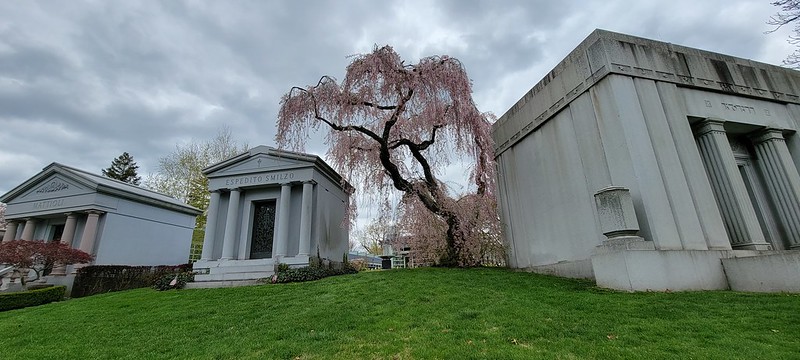
Green-Wood Cemetery, Brooklyn, NY, April 2021
Next Tuesday, September 20th, I will be the guest speaker for Green-Wood Cemetery's Death Cafe. Next week is also Climate Week; the topic is "Grief and Gardening", that title taken from the long-running series of blog posts here.

Listed below are my related blog posts, grouped by topic. For now, I'm omitting all the eulogies and remembrances for the deaths of family, friends, and pets.

Grief and Gardening: Ashes (Remembrance Day for Lost Species), published 2019-12-02, is one of my favorite writings on the subject of grief. It weaves together nearly all the topics below.

Biodiversity Loss

2021-11-30

Grief and Gardening: Extinct Plants of northern North America 2021

A Single Candle

As in past years, I'm limiting this list to northern North America for two reasons:

  1. Restricting this list geographically is in keeping with my specialization in plants native to northeastern North America.
  2. There are many more tropical plants, and plant extinctions, than I can manage.

Last year, this paper:

Vascular plant extinction in the continental United States and Canada

caused me to expand my list from 6 to 59 species, including 7 extinct in the wild. The summary is terse, and grim:

2020-11-30

Extinct Plants of northern North America 2020

Wanna know what's really scary? Extinction. #ExtinctSymbol #Resist

As in past years, I'm limiting this list to northern North America for two reasons:

  1. Restricting this list geographically is in keeping with my specialization in plants native to northeastern North America.
  2. There are many more tropical plants, and plant extinctions, than I can manage.

In past years, I've only been able to find records for 6 plant species that have gone extinct. This year's list is a major update: 59 extinctions, and 7 extinct in the wild. This is largely due to the research presented in this August 2020 paper:

Vascular plant extinction in the continental United States and Canada

The summary is terse, and grim:

2018-11-30

Extinct Plants of northern North America 2018

I'm limiting this list to northern North America for two reasons:
  1. Restricting this list geographically is in keeping with my specialization in plants native to northeastern North America.
  2. There are many more tropical plants, and plant extinctions, than I can manage; for example, Cuba alone has lost more plant species than I've listed on this blog post. 
If you have additions to this list, please let me know, and provide a link which I can research.
  • Astilbe crenatiloba, Roan Mountain false goat's beard, Roan Mountain, Tennessee, 1885
  • Narthecium montanum, Appalachian Yellow Asphodel, East Flat Rock Bog, Henderson County, North Carolina, before 2004?
  • Neomacounia nitida, Macoun's shining moss, Belleville, Ontario, 1864
  • Orbexilum macrophyllum, bigleaf scurfpea, Polk County, North Carolina, 1899
  • Orbexilum stipulatum, large-stipule leather-root, Falls-of-the-Ohio scurfpea, Rock Island, Falls of the Ohio, KY, 1881
  • Thismia americana, banded trinity, Lake Calumet, IL, 1916

Extinct in the wild (IUCN Red List code EW)

  • Franklinia alatamaha, Franklin Tree
  • Extinct versus Extirpated

    I often come across misuse of the word "extinct," as in: native plant extinct in New York City.
    • "Extinct" means globally extinct. No living specimens exist anywhere in the world, not even in cultivation. 
    • "Extirpated" means locally extinct, while the species persists in other populations outside of the study area. To correct the above example: extirpated in New York City. Any regional Flora lists many extirpated species.
    When a species is known only from one original or remaining population, as those listed above were, loss of that population means extinction for the species. In this case, extirpation and extinction are the same thing.

    Another category is "extinct in the wild," when the species still exists under cultivation, like an animal in a zoo. A famous example of this is Franklinia alatamaha.

    Related Content

    Extinct Plants of northern North America 2015, 2015-11-29
    Extinct Plants of northern North America, 2014-11-30

    Links

    Wikipedia: List of extinct plants: Americas
    IUCN Red List: List of species extinct in the wild
    The Sixth Extinction: Recent Plant Extinctions
    Extinct and Extirpated Plants from Oregon (PDF, 5 pp)

    2015-11-29

    Extinct Plants of northern North America 2015

    I'm limiting this list to northern North America for two reasons:
    1. Restricting this list geographically is in keeping with my specialization in plants native to northeastern North America.
    2. There are many more tropical plants, and plant extinctions, than I can manage; for example, Cuba alone has lost more plant species than I've listed on this blog post. 
    If you have additions to this list, please let me know, and provide a link which I can research.
    • Astilbe crenatiloba, Roan Mountain false goat's beard, Roan Mountain, Tennessee, 1885
    • Narthecium montanum, Appalachian Yellow Asphodel, East Flat Rock Bog, Henderson County, North Carolina, before 2004?
    • Neomacounia nitida, Macoun's shining moss, Belleville, Ontario, 1864
    • Orbexilum macrophyllum, bigleaf scurfpea, Polk County, North Carolina, 1899
    • Orbexilum stipulatum, large-stipule leather-root, Falls-of-the-Ohio scurfpea, Rock Island, Falls of the Ohio, KY, 1881
    • Thismia americana, banded trinity, Lake Calumet, IL, 1916

    Extinct in the wild (IUCN Red List code EW)


  • Franklinia alatamaha, Franklin Tree
  • Extinct versus Extirpated

    I often come across misuse of the word "extinct," as in: native plant extinct in New York City.
    • "Extinct" means globally extinct. No living specimens exist anywhere in the world, not even in cultivation. 
    • "Extirpated" means locally extinct, while the species persists in other populations outside of the study area. To correct the above example: extirpated in New York City. Any regional Flora lists many extirpated species.
    When a species is known only from one original or remaining population, as those listed above were, loss of that population means extinction for the species. In this case, extirpation and extinction are the same thing.

    Another category is "extinct in the wild," when the species still exists under cultivation, like an animal in a zoo. A famous example of this is Franklinia alatamaha.

    Related Content

    Extinct Plants of northern North America, 2014-11-30

    Links

    Wikipedia: List of extinct plants: Americas
    IUCN Red List: List of species extinct in the wild
    The Sixth Extinction: Recent Plant Extinctions
    Extinct and Extirpated Plants from Oregon (PDF, 5 pp)

    2014-11-30

    Extinct Plants of northern North America

    Updated 2014-12-22: Added years of extinction, where known. Started section for Extinct in the Wild (IUCN Red List code EW).

    I'm limiting this list for two reasons:
    1. Restricting this list geographically is in keeping with my specialization in plants native to northeastern North America.
    2. There are many more tropical plants, and plant extinctions, than I can manage; for example, Cuba alone has lost more plant species than I've listed on this blog post. 
    If you have additions to this list, please let me know, and provide a link which I can research.
    • Astilbe crenatiloba, Roan Mountain false goat's beard, Roan Mountain, Tennessee, 1885
    • Narthecium montanum, Appalachian Yellow Asphodel, East Flat Rock Bog, Henderson County, North Carolina, before 2004?
    • Neomacounia nitida, Macoun's shining moss, Belleville, Ontario, 1864
    • Orbexilum macrophyllum, bigleaf scurfpea, Polk County, North Carolina, 1899
    • Orbexilum stipulatum, large-stipule leather-root, Falls-of-the-Ohio scurfpea, Rock Island, Falls of the Ohio, KY, 1881
    • Thismia americana, banded trinity, Lake Calumet, IL, 1916

    Extinct in the wild

    Extinct versus Extirpated

    I often come across misuse of the word "extinct," as in: native plant extinct in New York City. "Extinct" means globally extinct. No living specimens exist anywhere in the world, not even in cultivation. "Extirpated" means locally extinct, while the species persists in other populations outside of the study area. To correct the above example: extirpated in New York City. Any regional Flora lists many extirpated species. When a species is known only from one original or remaining population, as those listed above were, loss of that population means extinction for the species. In this case, extirpation and extinction are the same thing. Another category might be "extinct in the wild" when the species still exists under cultivation, like an animal in a zoo. A famous example of this is Franklinia alatamaha.

    Related Content

    Links

    Wikipedia: List of extinct plants: Americas IUCN Red List: List of species extinct in the wild, The Sixth Extinction: Recent Plant Extinctions Extinct and Extirpated Plants from Oregon (PDF, 5 pp)

    2006-06-23

    Coleomegilla usurps Coccinella as New York State Insect

    [Update, 2006.08.15: Corrected the date to 2006 from 2005!]


    News, June 15, 2006, Albany, NY: The New York State Assembly bill A06247 passed and delivered to the Senate:
    PURPOSE OR GENERAL IDEA OF BILL : Alters terminology of the state insect.

    JUSTIFICATION : To change the official state insect from the Nine-spotted lady beetle (Coccinella novemnotata) species of the lady bug, which is no longer found in New York State, to another species of Lady Bug, the Spotted lady bug (Coleomegilla maculata).

    PRIOR LEGISLATIVE HISTORY : New Bill.

    FISCAL IMPLICATIONS : None.

    EFFECTIVE DATE : Immediately.
    Here's how the New York Times reported it today, June 23:
    The state's official insect, a nine-spotted ladybug, would no longer fly in that role: it is extinct in New York State. So legislators took a break from bickering over health care spending and property taxes in the waning days of the session and found common ground on the issue of designating a new state insect, making it the pink spotted ladybug instead.
    - A Few Things Lawmakers Can Agree On [requires subscription for viewing]
    I think the correct term would be "extirpated" in New York State. Regardless, the article goes on to quote Nancy Calhoun, Republican, sponsor of the bill:
    ... "I know it's not earth-shattering," said the assemblywoman, Nancy Calhoun, who represents parts of Orange and Rockland Counties.

    Ms. Calhoun says she was just trying to right a wrong. Lawmakers first adopted the state's official bug in 1989, but the nine-spotted ladybug had already become extinct in the state. Ms. Calhoun was alerted to the error by a reporter a couple of years ago and she submitted a bill to rectify the matter.

    "Why do we want to get something like this wrong?" Ms. Calhoun said. "It would be like having a dinosaur as our state reptile." ...
    It's an interesting question. In fact, New York State has a state fossil, the Sea Scorpion, which is an extinct relative of the Horseshoe Crab, which is not. So intentionally selecting an extinct state symbol is not out of the question. The comparison is not accurate, however. Dinosaurs were extinct before we got onto the scene; C. novemnotata was once common. A better question is: How did New York State get to have a once-native-but-no-longer-resident state insect?

    The back-story can be found in the Fall 2003 issue of Wings, the magazine of the Xerces Society: