Showing posts with label AIDS. Show all posts

2022-09-12

Grief and Gardening: Index

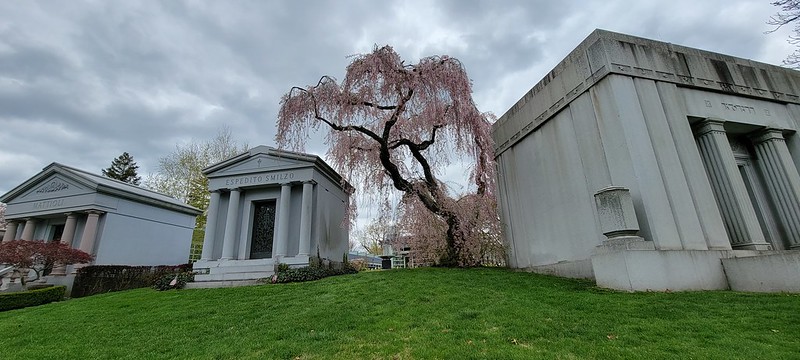
Green-Wood Cemetery, Brooklyn, NY, April 2021
Next Tuesday, September 20th, I will be the guest speaker for Green-Wood Cemetery's Death Cafe. Next week is also Climate Week; the topic is "Grief and Gardening", that title taken from the long-running series of blog posts here.

Listed below are my related blog posts, grouped by topic. For now, I'm omitting all the eulogies and remembrances for the deaths of family, friends, and pets.

Grief and Gardening: Ashes (Remembrance Day for Lost Species), published 2019-12-02, is one of my favorite writings on the subject of grief. It weaves together nearly all the topics below.

Biodiversity Loss

2021-12-01

Names

2022-12-01 (World AIDS Day): Added more Related Content links.

2022-09-20: Where available, added locations of panels in the AIDS Quilt.


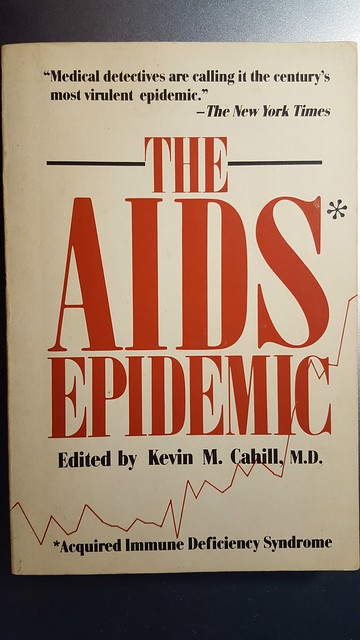
Book Cover, "The AIDS Epidemic," 1983, anthology of a NYC symposium 


These are some of the people, all men, I have lost over the years, nearly all to AIDS. With the exceptions of those additions noted, I stopped actively maintaining this list in 1994. In alphabetical order.

  • William "Wolf" Agress, a lover, died in 1990
  • Andre, a bartender at the Tunnel Bar in the East Village, now defunct
  • Vincent Barnes
  • Jerry Bihm
  • Bobby
  • Colin Curran
  • Erez Dror, co-owner and -founder of the Black Hound Bakery in the East Village, New York City, now defunct (AIDS Quilt Block #3452)
  • Jeffrey "Jeff" Glidden, 1958-1987, a lover (AIDS Quilt Blocks #0912 and #5320)
  • Paul "Griff" Griffin
  • Martin Noel Jorda
  • David Kirschenbaum, 1962-1993, community organizer with the New York City Gay & Lesbian Anti-Violence Project
  • Art "Artie" Kohn, 1947-1991, founder of the BackRoom BBS in New York City, now defunct (AIDS Quilt Block #2324)
  • John Larsen, a lover, died 2007 (Added 2021-12-01)
  • Jim Lewis
  • Luis
  • John Mangano, 1955-1991 (AIDS Quilt Block #3613)
  • Jeffrey Martin
  • Morris Matthews
  • David Mayer (Added 2021-12-01)
  • Karl Michalak, 1958-1997
  • Mark Melvin, 1962-08-27 - 1992-06-03 (AIDS Quilt Block #2828)
  • Norm
  • Tony Panico, my first lover in New York City, and the first person close to me to die from AIDS. His name appears twice on the AIDS Memorial Quilt, the first on Panel 05A when it was displayed in 1988. (AIDS Quilt Blocks #0046 and #0652)
  • Charles Pope, barfly extraordinaire
  • Gordon Provencher, 1955-1992 (AIDS Quilt Block #2291)
  • Tom Raleigh
  • Craig Rodwell, 1940-1993, founder of the Oscar Wilde Bookstore in Greenwich Village, NYC
  • Tony Rostron
  • Jurgen Schmitt
  • Giulio Sorrentino
  • Buddy Volani
  • Jeremy Wells
  • David Joseph Wilcox, 1957-1996

2020-05-06

Grief and Gardening: The Defiant Gardener

Rhododendron periclymenoides, pinxterbloom azalea, blooming in the backyard, May 2020

Normally, this time of year would be busy with garden tours, workshops, talks and lectures, plant swaps and sales. In past years, my garden has been on tour for NYC Wildflower Week. Two years ago I spoke at the Native Plants in the Landscape Conference in Millersville, Pennsylvania. Last June I hosted the most recent of my Pollinator Safaris in my garden.

I had multiple engagements planned for this Spring, and into the Summer. I was going to speak on a panel about pollinators in NYC. This past weekend would have been the 10th Anniversary of the Great Flatbush Plant Swap, of which I was one of the founders. I would have been doing hands-on workshops on gardening with native plants in community gardens.

This year there is none of that. The reason, of course, is the global pandemic, COVID-19, caused by the coronavirus known as SARS-CoV2.

As I write this, I have been working from home for 8 weeks. The same week I started working from home, the first death from COVID-19 was recorded in New York City. Now, less than 2 months later, nearly 20,000 are dead.


We still have 200 dying every day. This is not anywhere near "over".

The language and lessons of trauma - and recovery - are what we need to embrace right now.

2020-03-27

Drumbeat

2020-04-21: The McSweeney's piece was picked up by YES! Magazine. Search for "Flatbush". or "AIDS".
2020-03-30: I adapted some of this blog post, and several of my tweets on this subject, for a short post on McSweeney's:
Do Not Deny What You Feel
2020-03-29: Updated


As a child, even as I watched rockets launch from my bedroom window, the news kept us apprised of the ever-rising (American) casualties from the Vietnam War. As an adolesecent, I was fascinated and appalled by old issues of LIFE magazine published during World War II. Every article, every ad, devoted to the war. That terrified me the most: that there was no escape from it.

That's where we are: at war.

2019-12-02

Grief and Gardening: Ashes (Remembrance Day for Lost Species)

Detail, label, "Our Lady of Abundance," inside lid

My alarm wakes me Saturday morning. I go downstairs to the kitchen, nuke myself a cup of coffee, and get a fresh batch going. I didn’t sleep well. Today is the Remembrance Day for Lost Species.

2016-03-12

Off-Topic: The Conversation

I moved to NYC the first weekend of 1979. By Spring, I had moved to the East Village, an epicenter of what was first called "gay cancer," then "Gay-Related Immunodeficiency Disease," or GRID. Four years later, by 1983 - the year of the symposium that led to this anthology - it was being called AIDS.
Book Cover, "The AIDS Epidemic," 1983, anthology of a NYC symposium

2016-01-21

One Score Years Ago

David Joseph Wilcox at Wigstock in Union Square, early 1990s. Scan from original slide, date unrecorded.
David Joseph Wilcox - Wigstock, Union Square

20 years ago, on January 22, 1996, my friend, David Joseph Wilcox, died from AIDS.

The last time I saw him was December 12, 1995. I wrote this on my return trip home on the F train back to Brooklyn from the East Village.

2010-07-08

Hope Blooms

Part of Garden Bloggers Buffa10, Buffalo, NY, July 2010

Hope Blooms, The Victorian, 200 South Elmwood Avenue, Buffalo, New York
The Victorian, 200 South Elmwood Avenue, Buffalo, NY

Like Cary Street, The Victorian, at 200 South Elmwood Avenue, is also located just around the corner from the Buffa10 hotel. It's one of the headquarters for Garden Walk Buffalo. It's also one of the homes of AIDS Community Services of Western New York. Hidden behind the building is Hope Blooms, "a garden by, and for, people living with HIV/AIDS."
A complete volunteer effort, “Hope Blooms” was built as a unique garden “by and for” those living with HIV/AIDS. Having been featured in a full page photo in the Garden Walk Buffalo Book, it is recognized as one of Buffalo’s significantly beautiful gardens. Christopher Voltz, ACS’ Director of Marketing and Special projects volunteers his weekends, all summer long, to build and maintain this garden.

Clients and patients help plant the garden and its flowers are used to supply fresh bouquets of flowers to client services areas in our offices every week.

This simple gesture is greatly appreciated by ACS’ clients and patients. It is ACS’ belief that a warm and welcoming environment for its clients is of great importance. Whether one is living with cancer, diabetes or HIV disease, everyone deserves to be treated with the utmost respect. These bouquets and this garden are simple ways to demonstrate this to the thousands of individuals and families we serve.

Slideshow

2008-01-22

David Joseph Wilcox, 1957-1996

Update 2008.01.23: Added brief history of the Pink Panthers and bibliography of articles from the New York Times.


The jacket I wore while on patrol with the Pink Panthers in 1990 and 1991
Pink Panther Patrol Jacket, 1990-1991

My friend, David Joseph Wilcox, died 12 years ago, on January 22, 1996. He was 38 years old.

I'm actually writing this late at night, early in the morning of January 23. I can't sleep. I've post-dated this to January 22, Dave's mortiversary. We'll see if Blogger accepts it. [It did.]

Earlier this evening, I listened to a recording my partner, Blog Widow John, and I made, interviewing each other about our remembrances of Dave. Two years ago, on the 10th anniversary of his death, we went to the StoryCorps booth at the World Trade Center site - Ground Zero - in downtown Manhattan. In particular, we spoke about how Dave's death brought us closer together.

Dave moved in with John for the last year of his life. For many reason, it was a trying time for John, even apart from Dave's illness. When Dave died, John reached out to me, as someone who knew both of them for many years, for support. Though we had already known each other for over a decade, that was the beginning of greater intimacy between us than we had ever shared. Our relationship today arose, phoenix-like, out of our shared loss.

When I can figure out how to edit down the full 45 minutes we recorded into more manageable tracks and cohesive segments, I'll be able to make them available. What follows is the full text of the eulogy I wrote and read at one of Dave's memorial services. I have a VHS videotape of that which could be transcribed to digital video, but I can hardly be understood in it. I could barely speak.


In Memoriam: David Joseph Wilcox
b. 15 November 1957, d. 22 January 1996
  1. Prologue
  2. Gay Cancer
  3. Scapegoats
  4. Grace
  5. Panthers

2007-08-28

In the Shadow (How shall my heart be reconciled to its feast of losses?)

Updated 2007.09.12: Added brief bio and link for Renee Barret-Arjune.

Haddadada the gargoyle stands watch behind the maple in my backyard.
Haddadada

I'd rather be writing about something else, but this presents itself right now. Better I write it while it's fresh, and raw, and resist polishing the life from it.

Earlier this evening, I learned of the death of John Larsen, someone I knew from my old days in the East Village. We were neighbors, bar buddies, and, for a hot minute, boyfriends.

In March of 1996, I had just started reading Walt Odets' "In the Shadow of the Epidemic: Being HIV-Negative in the Age of AIDS", the first book I read which gave voice to feelings shared by many of my cohort, gay men of a certain age: survivor guilt, and a spiritual crisis which has ravaged many of us. I wrote:

March 1996

so far surviving
what will it mean to be alive
having outlived generation after generation
decades of death
the explosion widening until, finally
and yes, with some grim, righteous satisfaction
finally noone can truthfully say
they are not also affected

imagine how it will be
when your closest friends are strangers
when long ago you gave up hope
of growing old together
as everyone you've loved, and despised
has died, seven times over
when you've learned, and loved, and lost
and learned, loved, lost
and ...
When each new friend is met with the knowledge
that they too will leave soon
but it no longer matters
because, you think, you've already grieved their deaths too

the corpses pile up
against the walls you've built around yourself
walking along familiar streets
past the bars, your old haunts
you see tombstones, crosses, ashes
and you're not safe, even in your own mind
especially at night
when the walls must come down
and you must remember the dead

you want to believe you've come so far
but it hasn't even begun
I moved to Brooklyn in June of 1992. I'd lived 13 years in the East Village, in the epicenter of the AIDS epidemic. My move was neither well-planned nor well-executed. I knew I had to move. I didn't know how important it would be to me for my survival, for my recovery. Though I could not surface the thought at that time, let alone voice it, I was also running, trying to run, away. I couldn't face any more death.
January 25, 1994

ghosts

glimpsed in a stranger's gait
darting behind another's mask
in that moment

for how long
must I never forget?

the epicenter
reaches to numbers inconceivable
my heart implodes

when darkness falls
how should I greet it

for a moment
I thought I saw you
but you left long ago
Reminders of the upcoming 6th Anniversary of 9/11 are piling up. My first day back at work from my North Carolina trip, I walked by the Deutsche Bank building - ruined in the attacks, condemned, and only now being dismantled - where two firefighters had lost their lives the day before. I could see the blackened scaffolding and walls of the building. I smelled the smoke, startled for a few minutes, taken back to the months after the attacks, when the fires burned for months, when we walked every day through the crematory of downtown Manhattan. I know - knew, met a handful of times - a woman, Renee Barret-Arjune, who died from injuries she received in the World Trade Center attacks. It's how we measure our distance from such things: who we knew, how many, how close.

Earlier this summer, Eleanor Traubman of Creative Times gave me a little gem of a book, The Wild Braid: A Poet Reflects on a Century of Life in the Garden. It's by and about the poet, Stanley Kunitz (1905-2006), written with Genine Lentine and with photographs by Marnie Crawford Samuelson. When we met at the Flatbush meet-up, she recommended this book to me.

I've estimated that half of everyone I've ever known has already died: from AIDS, chemical dependence or overdose, or suicide. I should have expected to feel resonance with a centenarian gardener-poet writing at the end of his life. Here's an excerpt from Kunitz' "The Layers":

When I look behind,
as I am compelled to look
before I can gather strength
to proceed on my journey,
I see the milestones dwindling
toward the horizon
and the slow fires trailing
from the abandoned camp-sites,
over which scavenger angels
wheel on heavy wings.
Oh, I have made myself a tribe
out of my true affections,
and my tribe is scattered!
How shall the heart be reconciled
to its feast of losses?
In a rising wind
the manic dust of my friends,
those who fell along the way,
bitterly stings my face.
Kunitz closes more hopefully:
no doubt the next chapter
in my book of transformations
is already written.
I am not done with my changes.
This evening, fresh with the news of a death of a friend, I look behind. Nor am I done with my changes.


Renee Barrett-Arjune worked as a compensation accountant at Cantor Fitzgerald in Tower 1 of the World Trace Center. She grew up in Brooklyn and lived in Irvington, NJ. She was active in the church where Blog Widow John worked at the time; I met her a couple of times through him. She was 41.


Her name is inscribed in a bronze panel - #N-48 - along the North Pool of the National September 11 Memorial at Ground Zero. The names of Cantor Fitzgerald employees and consultants make up 34, nearly half, of the panels surrounding the North Pool.

2006-09-04

Grief & Gardening #1: 1, 5 and 25

[Updated 2006.09.09 02:45 EDT: Retitled; new URL. Cosmetic changes. Added link to Grief & Gardening #2.]
[Updated 2006.09.07 13:59 EDT: Updated Links section.]
[Updated 2006.09.06 17:17 EDT: Comments added.]

This may be a little long. It will come round to gardening. There's a connection. I promise.

A couple of anniversaries have been on my mind:

1 year ago last Tuesday: Katrina strikes Louisiana, Mississippi and Alabama.
5 years ago next Monday: Terrorists strike the United States.
25 years this past June: AIDS "strikes" with the first CDC report of a cluster of pneumonia cases among gay men in Los Angeles.

Each of these has been in the news recently. Each has reminded me of my own experience of these, my own shock, grief, and trauma.

The ways we observe anniversaries is arbitrary. For example, I was shocked to tears for weeks by the Indian Ocean Tsunami of 2004, which killed 100 times more people than Katrina. The earthquake which precipitated it left the entire planet ringing like a bell. The observation of "25 Years of AIDS" at this year's World AIDS Congress is pinned only to the first official report of a cluster of unusual deaths by the Centers for Disease Control in June of 1981. The timelines of epidemics don't follow our categorizations of them.

Katrina


NOAA radar loop of Katrina

The night before Katrina made landfall, I was tracking its development and watching its progress through the radar loops on NOAA's National Hurricane Center. I remember in particular the clearly visible eye. I knew this was bad, as this was an indication of the strength and organization of the storm. The morning after, I learned how bad it had been. The height of the storm surge, which hit Mississippi the worst, especially surprised me. The "secondary" impact following rupture of the levees in New Orleans underscored for me a truth I've learned from Zen: Pain is inevitable. People cause suffering.

9/11
HouseFallen

I work in downtown Manhattan, just two blocks from Ground Zero. The week of September 10, 2001, my partner and I were vacationing in upstate New York. The morning of 9/11, we learned the towers had been struck from another hiker on the trail. The first tower had not yet collapsed. I wrote the following on September 14, 2001:


Monday we drove to Mohonk Mountain House, a grand and rustic retreat in the Shawangunk Mountains outside of New Paltz. None of the rooms have televisions. Our room had a wood-burning fireplace. Our balcony looked over Mohonk Lake to the surrounding cliffs and mountains. Mostly I said "Wow" a lot.


Across the lake from the lodge a peak, called Sky Top, rises several hundred feet [not quite, maybe 150 feet] above the lake. On Sky Top is a stone observation tower which looks over the lake, the lodge, and the surrounding cliffs and mountains. Tuesday morning [we] hiked to the peak and climbed to the top of the tower. On the way to the trailhead I overheard one woman saying to another something about a plane being hijacked. I didn't think anything about it at the time. [We] were joyful to be together in such a beautiful setting. We were at peace with each other, and surrounded by nature.


As we climbed down the stairs inside the tower I was singing, "I love to go a-wandering ..." As we turned the third flight of stairs down, we met an old man climbing up. I joked to him "Don't mind me." He looked up at us. His eyes were welled with tears. He said to us "Did you hear what happened?" That's how [we] first learned that both towers of the World Trade Center had been struck by hijacked planes.


By the time we got back to the lodge, the staff had setup several televisions in public rooms. None of these went unattended before we left on Wednesday. Most of the afternoon and evening activities at Mohonk were cancelled. The evening's scheduled film, "Deep Impact," in which the world is struck by an asteroid, destroying the eastern seaboard cities of the United States, was replaced by "City Slickers." By sundown, the flag flying over Mohonk Mountain House's highest tower was at half-mast.


Sometime Tuesday morning the initial denial had broken and I was able to watch one of the large-screen videos setup in one of the rooms. I watched for the first of many times the South Tower explode and crumble.
Like most of the world, my initial experience of the events of that day was remote. However, I also worried about my colleagues downtown. I learned they were all okay, that none had been physically harmed, and our workplace was unscathed, though everything was closed down for the first week, and gradually resumed normal operations over the following weeks. I wrote the following on October 15, 2001:

I work two blocks from where the towers were. I've seen it from the street, from the roof of my office building, from our lunch room ... I try to approach my presence in the city at this time as a naturalist, observing and recording changes in the physical environment and the behavior of its inhabitants. I want to remain present without withdrawing, so I can bear witness.The fires still burn. [They burned for months, into the winter.] Smoke still scents the surrounding streets and buildings. While rain has rinsed most of the gutters, ash still coats statues, windows and rooftops. In low and sheltered areas, the rain and ash mixed with shredded documents from the towers to create a gray papier mache. The "Missing Person" posters - and only those closest to them held any hope they would be "found" - and sidewalk memorials of candles and the poetry of anguish, rage, and hope, are slowly eroding.

Ground Zero, September 27, 2001
9/11 memorials, Union Square Park, September 24, 2001
Missing Person Poster/Memorial, St. Vincent's Hospital, West Village, NYC

AIDS

Preceding all these singular events of recent history is the AIDS epidemic. I moved to New York City in the winter of 1979, and shortly thereafter settled in the East Village. This was an epicenter of what was first called "gay cancer," then GRID, Gay-Related Immunodeficiency Disease, and, finally, AIDS, Acquired Immune Deficiency Syndrome.

Years ago, I gave up trying to keep track of how many people I've lost to AIDS. Lovers, boyfriends, friends, neighbors, acquaintances, shopkeepers, bar buddies ... Where do you draw the line? I estimate that half of everyone I ever knew from that time of my life has died, but I will never know, and there is no way to know. A community, a way of life, was destroyed. I took solace in reading about the Black Death in Europe in the 14th Century, during which 30-50% of whole towns died. The devastation was so great and sudden that it led to the collapse of the feudal system: there simply were not enough people to work the land. That level of disruption was something I could relate to; I was living it.

This is a poem I wrote in July of 1993 on learning of the death of one of these friends, David Kirschenbaum, whom I knew from the New York City Gay & Lesbian Anti-Violence Project:

what would it mean
even to say goodbye
my words do not grant
another breath


searching for the grief
that must be felt
as I recall other men
other names


if I could let go
lose control
permit my tears
what would it change


it ends, it is final
no room for regrets
no hopes for another chance
it is over


helpless, in the face of death
living is the best revenge
Gardening

How does all this connect me to my garden, to gardening? The following also comes from my journal entry of October 15, 2001. I don't think I could say it better today:

As I tend my garden, I recall how it was a minute, a day, a year ago. That flower was, or was not, blooming yesterday. This plant has grown over the years and now crowds its neighbors. A label in the ground shows where another plant has vanished. Should I replace it, or try something new? I weed. I plant. I water. I sit. The garden asks me to see it as it really is, not just how I remember it, or how I wish it to be. Gardening continues to teach me many lessons. Gardening is my prayer.

So I must be in the world. Remembering what was. Observing what is. Hoping for what can be. Acting to bring it into being. When we struggle to understand, we question what is. Science can ask, and eventually answer, "What?" and "How?" It cannot answer the one question that matters, the question for which Man created God: "Why?" Now, as with each new loss, I ask again: Why am I here? Why am I alive?

The only answer I've come across which satisfies me at all comes from Zen: The purpose of life is to relieve suffering. Not to relieve pain, or grief, or loss. These cannot be avoided. But to relieve suffering, which we ourselves bring into the world. Because death is senseless, the only sense to be found is that which we manifest in our own lives. The only meaning there can be in life is what we impart.

Related Contents

Grief & Gardening #2
My journal of September 11, 2001

My photos from September 11, 2001 (flickr set)

Links

Katrina
Wikipedia article on Katrina
NOAA Katrina archive
September 11
Librarians' Internet Index compilation of 9/11 Web Sites
AIDS
An excellent "biography" (timeline) of AIDS in New York by New York magazine