2019-07-11

Grief and Gardening: Remains of the Day

Walking from my bus stop to work in the morning takes me across Broadway in Downtown Manhattan, the site of some celebration or other yesterday morning. Still this morning, littering the sidewalks, and especially the gutters, was "ticker tape". Of course, there are no tickers any more - it's all electronic. So this was all long, thin shreds of paper, individually unrecognizable in its drifts.

And in that moment, crossing Broadway, walking in to work, I was taken back 18 years.

The gutters were thick with shreds of paper, and ash, for weeks and months after 9/11. There was so much of it, it took that long for all of it to finally be washed away.

The gray ash was the last to go. In sheltered spots, it lingered for years. Even if you didn't want to know, certainly not think about it, you knew what it was.

Living and working in downtown after 9/11 was being in a crematorium. Every couple of years, you might hear about finding "remains". This is what they're talking about: some shards or shreds left behind, sheltered until uncovered by demolition or restoration of the ever-changing skin of the city.

And so did yesterday's remains, of a celebration, remind me of those weeks and months a lifetime ago. I wondered how few of those celebrating would understand the connection. How few around me had the same association.

Did they, too, feel alone in this?
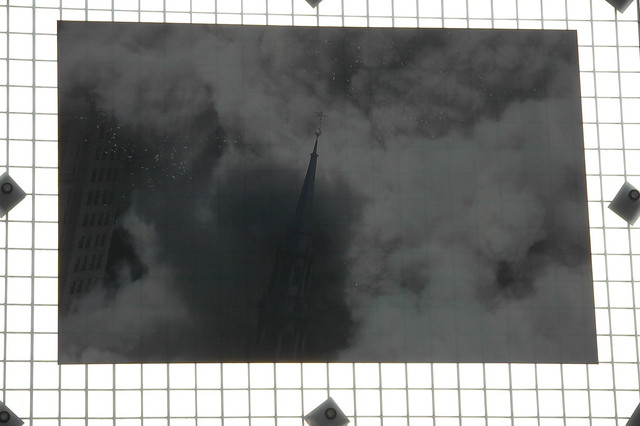
St. Paul's Enshrouded

Related Content

Written live in a series of tweets on Twitter, typos and all: https://twitter.com/xrisfg/status/1149480485090820096

Grief & Gardening #2: Five Years After, "Ths Transetorey Life"

Links

2019-06-08

Sunday 6/23: Pollinator Safari: Urban Insect Gardening with Native Plants

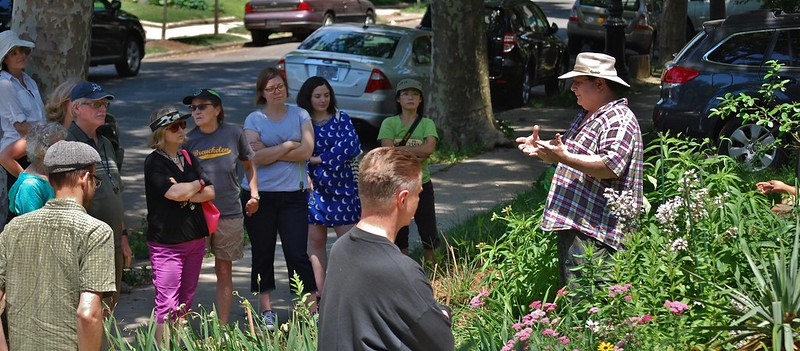
Me hosting the NYCWW Pollinator Week Safari in my Front Yard. Photo: Alan Riback

I'm pleased to announce that I'll be hosting a pollinator-focused garden tour and citizen science workshop in my garden for Pollinator Week, in association with NYC Wildflower Week.

Event Details

Date: Sunday, June 23, 2019
Time: 1-4pm
Location: Brooklyn, NY, corner of Stratford Road and Matthews Place
Cost: FREE!
RSVP: Eventbrite

1-2pm: I'll be focusing in using iNaturalist to observe and identify insects in the garden. Create a free account on iNaturalist, and install the app on your smart phone. I'll show you how to make observations in the garden with your phone!
2-4pm: We'll explore the garden, see examples of how to garden for insects and pollinators, look at insect-plant associations happening in the garden, and, optionally, make observations with iNaturalist.

These times are a rough guide. You can drop by any time.

2019-02-12

Charismatic Mesofauna

Over the weekend I was inspired to write a little tweet storm. I thought it would make a good blog post.

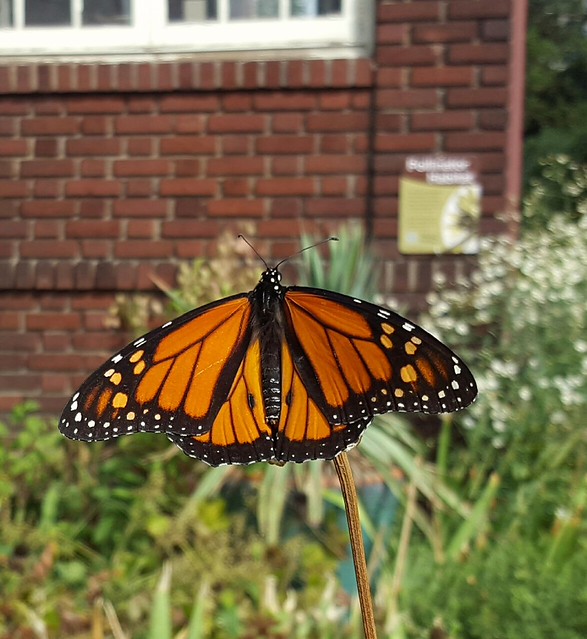
Danaus plexippus, monarch butterfly (male), with @XercesSociety Pollinator Habitat sign behind, in my front yard, September 2016

It started with a blog post by entomologist Eric Eaton, who goes by @BugEric on his blog, Twitter and other social media. Benjamin Vogt, a native plants evangelist (my word, bestowed with respect) tweeted a link, which is how it came to my attention.
The Monarch is the Giant Panda of invertebrates. It has a lobby built of organizations that stand to lose money unless they can manufacture repeated crises. Well-intentioned as they are, they are siphoning funding away from efforts to conserve other invertebrate species that are at far greater risk. The Monarch is not going extinct
- Bug Eric: Stop Saying the Monarch is a "Gateway Species" for an Appreciation of Other Insects

2018-12-21

Standing Still in 2018

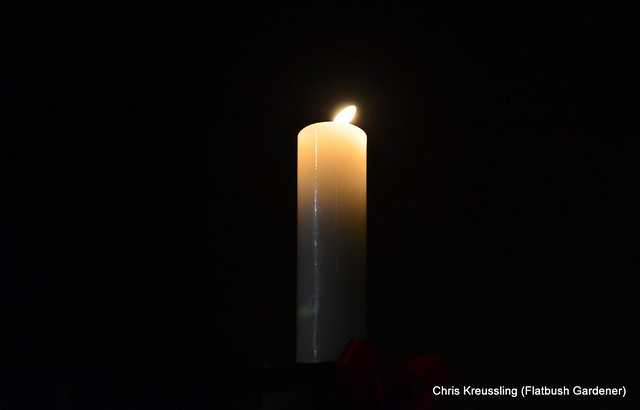
These days, I feel like a single candle, cursing the darkness, both literal and figurative.
A Single Candle

The Anthropocene weighs heavy on my mind, and heart:

2018-12-01

Grief and Baking: Rolled Holiday Butter Cookies

Today is World AIDS Day. By coincidence, the 41st president also just died, reminding me - and the cohort of survivors from his dark reign - how many more of us died on his watch from inaction, and more active hatred.

It's also my dad's mortiversary, the 10th anniversary of his death.

As I did ten years ago, I turned to baking. In anticipation of our upcoming tree-trimming party, and a hoped-for cookie-decorating side activity, I chose a rolling cookie recipe from King Arthur Flour. Since I'm unfamiliar with this type of cookie, I stayed as close as I could to the original recipe.

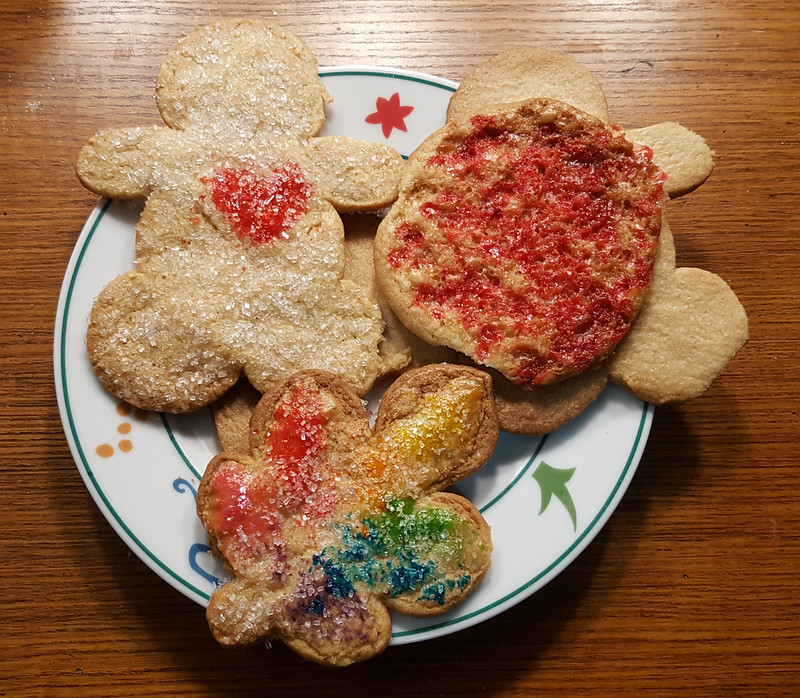
Holiday Butter Cookies, December 2018

I consider these a qualified success. There are some improvements I can make, mostly about technique. I'm happy with the basic recipe.

2018-11-30

Extinct Plants of northern North America 2018

I'm limiting this list to northern North America for two reasons:
  1. Restricting this list geographically is in keeping with my specialization in plants native to northeastern North America.
  2. There are many more tropical plants, and plant extinctions, than I can manage; for example, Cuba alone has lost more plant species than I've listed on this blog post. 
If you have additions to this list, please let me know, and provide a link which I can research.
  • Astilbe crenatiloba, Roan Mountain false goat's beard, Roan Mountain, Tennessee, 1885
  • Narthecium montanum, Appalachian Yellow Asphodel, East Flat Rock Bog, Henderson County, North Carolina, before 2004?
  • Neomacounia nitida, Macoun's shining moss, Belleville, Ontario, 1864
  • Orbexilum macrophyllum, bigleaf scurfpea, Polk County, North Carolina, 1899
  • Orbexilum stipulatum, large-stipule leather-root, Falls-of-the-Ohio scurfpea, Rock Island, Falls of the Ohio, KY, 1881
  • Thismia americana, banded trinity, Lake Calumet, IL, 1916

Extinct in the wild (IUCN Red List code EW)

  • Franklinia alatamaha, Franklin Tree
  • Extinct versus Extirpated

    I often come across misuse of the word "extinct," as in: native plant extinct in New York City.
    • "Extinct" means globally extinct. No living specimens exist anywhere in the world, not even in cultivation. 
    • "Extirpated" means locally extinct, while the species persists in other populations outside of the study area. To correct the above example: extirpated in New York City. Any regional Flora lists many extirpated species.
    When a species is known only from one original or remaining population, as those listed above were, loss of that population means extinction for the species. In this case, extirpation and extinction are the same thing.

    Another category is "extinct in the wild," when the species still exists under cultivation, like an animal in a zoo. A famous example of this is Franklinia alatamaha.

    Related Content

    Extinct Plants of northern North America 2015, 2015-11-29
    Extinct Plants of northern North America, 2014-11-30

    Links

    Wikipedia: List of extinct plants: Americas
    IUCN Red List: List of species extinct in the wild
    The Sixth Extinction: Recent Plant Extinctions
    Extinct and Extirpated Plants from Oregon (PDF, 5 pp)

    2018-11-01

    100 Years Ago

    On November 1, 1918, the worst transit disaster in New York City history occurred just outside Prospect Park and the Brooklyn Botanic Garden. The wooden cars of the Brighton Beach line of the Brooklyn Rapid Transit (B.R.T.) company left the tracks, crashing inside the tunnel beneath the busy intersection where Flatbush Avenue, Ocean Avenue and Malbone Street met [Google map]. The Malbone Street Wreck killed nearly 100 people and injured more than 250. Criminal trials and lawsuits arising from the accident dragged on for years, contributing to the bankruptcy of the BRT. The name "Malbone Street" became associated with the disaster; it's known today as Empire Boulevard.

    2018-08-19

    Plant Blindness and Urban Ecology

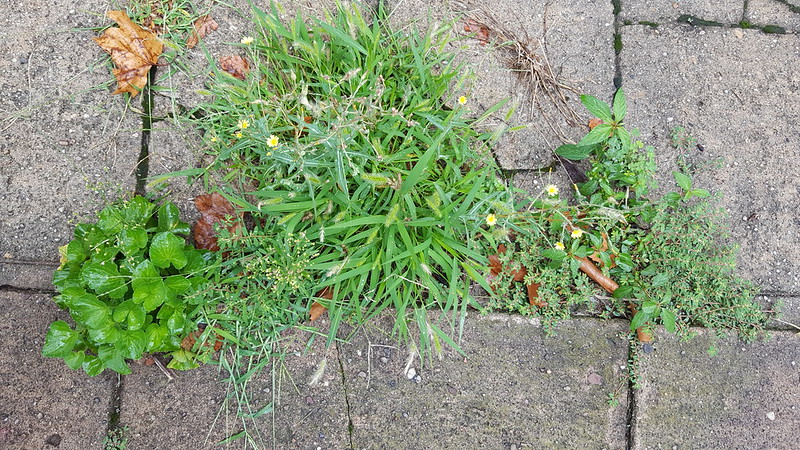
    A small patch of biodiversity - i.e.: weeds - from my driveway.
    Weeds in my driveway, August 2018

    A recent article in the Wall Street Journal has people talking about it, e.g.: on the Twitter. The term "plant blindness" has been in use for a while, especially among those of us intensely interested in the subject of plants, from gardeners to botanists.

    "Apps" and Social Media

    I've seen folks get more interested in plants when they can reduce, or eliminate, the risk of being shamed by others for ignorance. (Which is nothing to be ashamed of, nor to shame others for. We all start out ignorant. Choosing to remain so, on the other hand ...)

    2018-06-17

    NPILC 2018 - Speaker Notes and Handout

    2018-06-23: Updated with more links.

    Following is the outline, speaker notes, and references of my talk at this year's Native Plants in the Landscape Conference. This was to have been published as a speaker handout for attendees, but it never made it to the conference Web site. So I'm publishing it here.

    This isn't intended to stand alone. This post has many links to my blog posts and photos for further reading and viewing. And the presentation itself is available on Slideshare.

    2018-06-08

    NPILC 2018 - Books

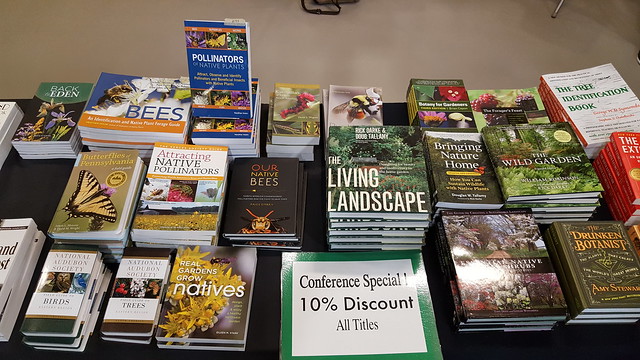
    I spoke this year at the Native Plants in the Landscape Conference at Millersville University in Lancaster County, Pennsylvania. The organizers asked speakers for a list of books we recommend.

    Just a few of the books for sale at the Native Plants in the Landscape Conference 2018

    This is my list, grouped roughly by category.