2015-09-11

Former BBG Herbarium property for sale

Want to build next to the Brooklyn Botanic Gardens? This might be your one and only chance.
- Development Site Adjacent to Brooklyn Botanic Gardens Hits Market, Terrance Cullen, Commercial Observer, 2015-09-10
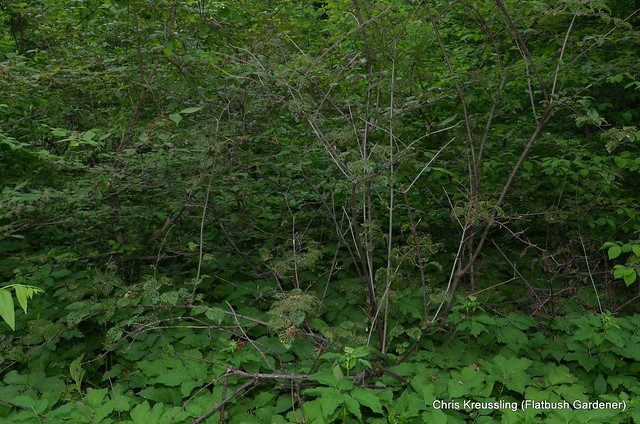
More like building on the grave of BBG's science and research mission. This is not just "walking distance from the Botanic Gardens;" it's the former site of Brooklyn Botanic Garden's Herbarium, known as BKL.
The 22,000-square-foot plot at 111 Montgomery Street in the Crown Heights section of Brooklyn is hitting the market for a potential developer looking to likely build condominiums.
According to the NYC Department of Buildings, the property is 109-111 Montgomery Street. BBG quietly announced almost a year ago that they would be "disposing" of:
... BBG’s building at 109 Montgomery Street, which has foundation problems and is not cost effective to repair.

The disposition is expected to generate significant revenue ...
- BBG Announces Disposition of Montgomery Street Building, 2014-10-24
Indeed. The Observer article gives "an asking price in the mid-$40 million."

BBG's October announcement made no mention of the herbarium. In their "Freedom is Slavery" double-speak, they claim the sale as "the first step in reintroducing a science research program at the Garden." "Reintroducing" because BBG removed science from their mission in September 2013, with no announcement, just a month after firing their remaining science staff,

BBG planned to transfer the herbarium - again, without announcement - out of state, either to the Missouri Botanical Garden (MOBOT) or the Smithsonian. This would have been a disaster for the natural history and cultural heritage of New York state. It was only through last-minute, behind-the-scenes advocacy and intervention in March of this year that the New York Botanical Garden (NYBG) instead accepted the contents on loan. That move was completed in April.

In June of this year, BBG sold the property to the holding company, 109 Montgomery LLC, for $24.5 million.

According to the president of the brokerage handling the sale of the herbarium property, “There’s a real need for families moving into Brooklyn to buy apartments within the $1 to $2 million range.” But no room for science, at any price.

Related Content

Brooklyn Botanic Garden's Slash and Burn "Campaign for the 21st Century", 2013-08-23
Brooklyn Botanic Garden removes science from its mission, 2014-01-20

Links

2015-09-01

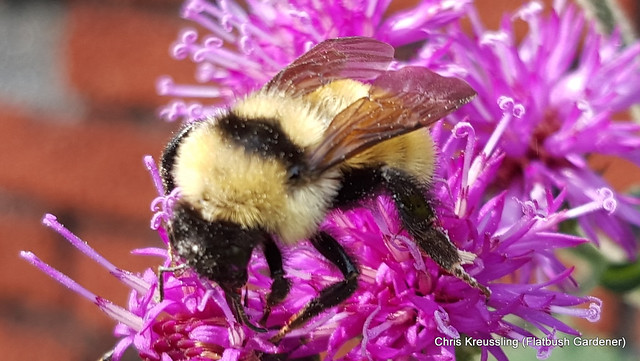
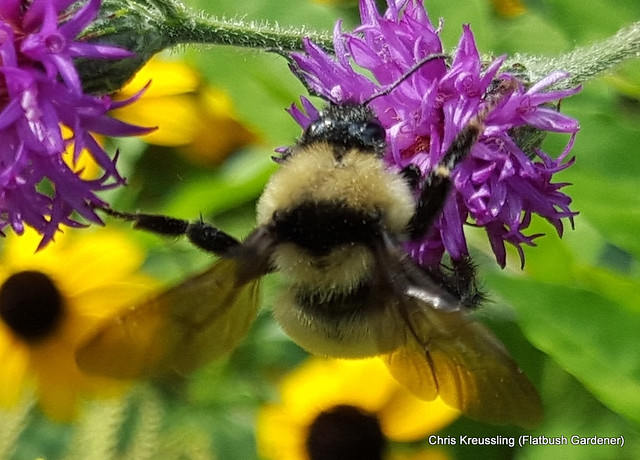
Bombus fervidus, golden northern bumblebee, yellow bumblebee

Sunday, while cutting up edited plants into my compost tumbler, I caught sight of something unusual out of the corner of my eye. It turned out to be Bombus fervidus, golden northern bumblebee, or simply, the yellow bumblebee.
Bombus fervidus, golden northern bumblebee, on Vernonia noveboracensis, New York ironweed, in my garden, August 2015

This is at least the 21st bee species I've found in my garden. And this brings to 20, or more, the number of new insect species I've identified in my garden this year alone.

Bombus fervidus, golden northern bumblebee

Related Content

Flickr photo set
All my bee photo albums

Links

BugGuide: Bombus fervidus, Golden Northern Bumble Bee
Discover Life: Bombus fervidus
Encyclopedia of Life: Bombus fervidus

2015-07-07

Garden Insect Species Records 2015

2015-09-19: Added Homeosoma, observed 10 days ago and just identified, bringing the total to 23.
2015-09-13: Two more Hymenoptera species identified from the last weekend in August: Bombus fervidus, golden northern bumblebee, and Gnamptopelta osidianator, an Ichneumon wasp. And a new Diptera species identified today: Hermetia illucens. That brings the number of species to 22.
2015-07-12: Added two I'd forgotten about: Orius insidiosus, and Anthrenus verbasci. That brings the number of species to 19.

These are the insect species I've discovered or identified in my garden for the first time this year.

Hymenoptera - Bees

  • Bombus fervidus, golden northern bumblebee, yellow bumblebee, 2015-08-30
  • Ceratina calcarata, spurred ceratina, small carpenter bee
  • Cerceris, two different species, not identified down to species.
  • Nomada, cuckoo bee
  • Osmia pumila, mason bee
  • Stelis louisae, Megachilid bee, cleptoparasite of Megachile campanuelae and perhaps related bees

    Stelis louisae (ID correction welcomed) on Heliopsis helianthoides, smooth oxeye, false sunflower, in the front garden, July 2015

2015-07-01

Pyrrhalta viburni, viburnum leaf beetle (VLB)

Pyrrhalta viburni, the viburnum leaf beetle, or VLB for short, is native to Europe. It was first discovered in North America barely two decades ago, in Maine in 1994. Both larvae and adults eat leaves. Our native Viburnum species are extremely vulnerable; they aren't adapted to this species of leaf beetle. With ample food supply, and no native predators to control its spread, VLB has rapidly expanded its range since.
The viburnum leaf beetle, Pyrrhalta viburni (Paykull), is an invasive, non-native beetle that first appeared in New York along Lake Ontario in 1996, and has steadily spread across the state and down the Hudson Valley. It is a voracious eater that can defoliate viburnum shrubs entirely. Plants may die after two or three years of heavy infestation, particularly when larvae strip plants after hatching out in spring followed by heavy adult feeding later in summer.
- Viburnum leaf beetle invading NYC?, Cornell Horticulture Blog, May 2009
It's been in New York City less than a decade. In Brooklyn, I first observed the damage on Viburnum dentatum, arrowwood, at the Brooklyn Botanic Garden in May 2012. Last year, I found it in Prospect Park; by May, arrowwoods there were shredded.
Pyrrhalta viburni, Viburnum leaf beetle, on Viburnum dentatum, arrowwood, Prospect Park, Brooklyn, May 2014

2015-06-22

What I'm About

Notice anything different about me? Until a few minutes ago, the by-line at the header of this blog read:
Adventures in Neo-Victorian, Wild, Shade, Organic and Native Plant Gardening, Garden Design, and Garden Restoration.
It now reads:
Urban Gardening with Native Plants
This better communicates the focus of my interests and expertise than the "anything goes" byline it replaces.

How I got here

We bought our house and garden 10 years ago. I started this blog 9 years ago.

The byline I just replaced reflected the experimental approach I was taking to having so much space to play with. Heirloom plants in the front yard, which might have been available to the original gardener of our home. Shade gardening because what urban gardener doesn't have to deal with shade somewhere? Wild, because something has to be left uncultivated. And always organic gardening.

I've gardened with native plants since my first garden in the East Village. Each of the 4 gardens I've worked on in New York City has incorporated native plants. When we bought our house 10 years ago, I had pretty much a blank slate to work with. I quickly decided that the backyard would be a woodland garden, populated with ephemerals, ferns, and others plants native to the forests of northeastern North America.

2015-06-14

Native Plant Acquisitions: LINPI 2015 Plant Sale

Saturday, June 13 was the last open day in 2015 for the Long Island Native Plant Initiative (LINPI) Plant Sale. I picked up another 13 species to add to my list, which has already grown this Spring to over 200 species of plants native to eastern North America. We'll see how many of them survive my, um "gardening."

As with all the plants available through LINPI, all are local ecotypes propagated by NYC Parks' Greenbelt Native Plant Center from wild populations on Long Island and Staten Island. It so happens all these species are also native to New York City.

Apocynaceae

(or Asclepiadaceae, depending on taxonomy)

Asclepias tuberosa, butterfly weed
I bought a 6-pack of these from the LINPI Plant sale two years ago. They are blooming now. I bought a flat (6 x 6-packs = 36 plants) this time. I want to have larger groups of them in several sunny areas to see where they thrive.

Asteraceae

Eupatorium hyssopifolium, hyssop-leaved throughwort, hyssop-leaved boneset

Eupatorium perfoliatum, common boneset, boneset thoroughwort
This species is only found in wetlands (Wetland indicator status OBL/"obligate"), so I'm planting this in and around the garage, for runoff, and planters, where it will benefit from overflow from watering.

Eupatorium serotinum, late-flowering thoroughwort
This was listed incorrectly as Eutrochium serotinum on LINPI's web site. This is the odd one out for nativity, which is challenged by some, e.g.: NEWFS.

Solidago nemoralis, gray goldenrod
One of the shade-tolerant goldenrods, I bought a flat of these to plant them all around the house as an experiment to see where/how they fare from sun to shade.

Solidago speciosa, showy goldenrod

Ericaeae

Vaccinum macrocarpon, cranberry
This is one of the species available on-site at the plant sale that wasn't listed on LINPI's web site. I already have two of these, one in each bog planter. I bought a 6-pack as an intentional duplicate. I planted 4 in the two bog planters I have. I need to fill in these planters so the squirrels won't keep digging them out. As an experiment, I planted the other two nearby, alongside the garage, where they'll get runoff from the roof and gutter downspout.

Fabaceae

Chamaecrista fasciculata, prairie senna, partridge pea, partridge sensitive-pea
Lespedeza hirta
Lespedeza virginica

Malvaceae

Hibiscus moscheutos, swamp rosemallow
Another obligate wetland species, I planted this by the side of the garage to benefit from runoff from the roof, and to server as a backdrop for this mixed shrub-perennial bed.

Poaceae

Panicum virgatum, switchgrass
Sorghastrum nutans, indian grass
Tridens flavus, purple top

Rosaceae

Rosa carolina, Carolina rose

Rubiaceae

Cephalanthus occidentalis, buttonbush

Related Content

Other blog posts about my native plant garden

Links

Long Island Native Plant Initiative (LINPI) Plant Sale

2015-05-21

Ripley, 2000-2015

Our Ripley died with us around 1:30 this morning.

It's still the middle of the night. We had an 8am appointment with the vet for an ultrasound exam to find out what was going on. Instead, I'll be taking his body in for cremation.

I need to try to get at least a few more hours sleep. I needed to write something first.

We adopted him when he was almost 8 years old.
Ripley

2015-05-14

Native New Yorkers: My Garden's NYC-Native Plant Checklist

This is a checklist of just the plant species native to New York City I'm growing in my garden. I'm posting this for the benefit of anyone attending the NYC Wildflower Week tour of my garden, Friday, May 15, from 1-3pm. It may also be of interest to those who attended Tuesday night's meeting of the Long Island Botanical Society. I only had time during that talk - Place, Purpose, Plants: Urban Gardening with Native Plants - to highlight a handful of plants I'm growing.

Visitors are also going to get to witness a rare treat: "My little bees", Colletes thoracicus, are actively nest-building in the garden right now. Most years, they would be finished by now, not to be seen until April of the next year. If we're lucky, we will also get to see the Nomada sp. cuckoo bees I just noticed in my garden for the first time this year.

2015-05-13

Place, Purpose, Plants: Urban Gardening with Native Plants

At last night's meeting of the Long Island Botanical Society, I spoke about my experiences gardening with native plants in an urban setting. These slides accompanied my talk.


Related Content

All my blog posts about My Garden
Other Native Plants blog posts, resources, and references
My insect photography on Flickr

Links


Bennington, J Bret, 2003. New Observations on the Glacial Geomorphology of Long Island from a digital elevation model (DEM) (PDF). Long Island Geologists Conference, Stony Brook, New York, April 2003.

2015-05-09

Garden Deeper

I had a visceral (in a good way) reaction to Adrian Higgins' writeup of a visit, with Claudia West, to Shenk's Ferry Wildflower Preserve.

I think I'll adopt "ecological horticulturist" to describe my own approach to gardening. Whether you specialize in gardening with native plants, as I do, or prefer to grow plants from around the world, studying their native habitats is, in my experience, the best way to learn how to grow them in a garden.

That doesn't mean you have to recreate the conditions exactly. In many cases, this is impossible, anyway. The native Aquilegia canadensis, eastern red columbine, thrives in the crumbling mortar of my front steps; this location recreates some aspects of the face of a limestone cliff where I saw, decades ago, a huge colony of them in full bloom.
Aquilegia canadensis, Eastern Red Columbine, growing out of my front steps, April 2012

This is why I'm trying to go on more botanical walks and hikes. Like many, if not most, gardeners, I've never seen most of the plants I grow in the wild. I visited Hempstead Plains for the first time in August 2013.
Hempstead Plains

That inspired me last year to remove most of the remaining lawn in the front yard and approach it as a meadow, instead.
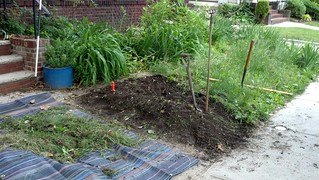
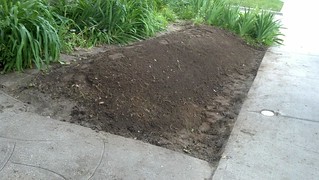
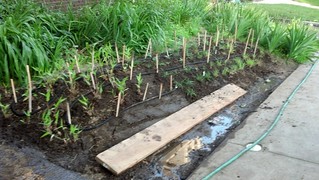
The Front Garden, before de-lawning, June 2014Weeding is Meditation: Removing the old "lawn" for the new short-grass "meadow" in the front yardFinal grading for the new front yard short-grass meadowThe berm, planted. Took 45 minutes, >2/min, including some rework for overly loose and linear spacing.


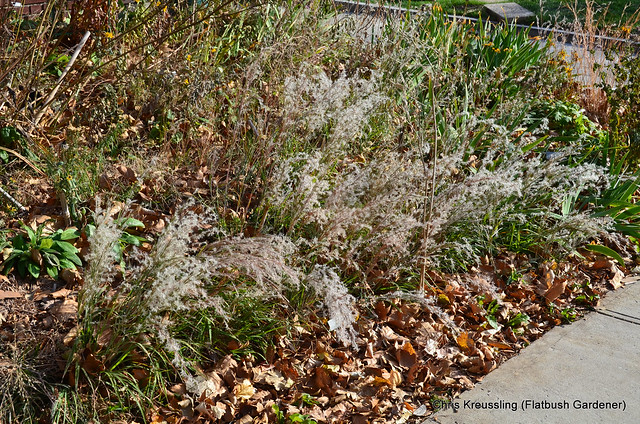
Schizachyrium scoparium, little bluestem (grass), in my front garden, November 2014

Rain gardens and rock gardens are both examples of creating gardens to grow plants requiring specific conditions, and to meet human needs. But we don't need to go to so much trouble. For all the "problem areas" in our gardens, there are plants that want nearly exactly those conditions. We need only think like a plant to see these as opportunities, and embrace the habitats waiting to emerge.

Related Content

Links

What you can learn from a walk through the woods (with Claudia West), Adrian Higgins, Washington Post Home & Garden