Showing posts with label Heirlooms. Show all posts

2013-07-02

Rainbow Garden

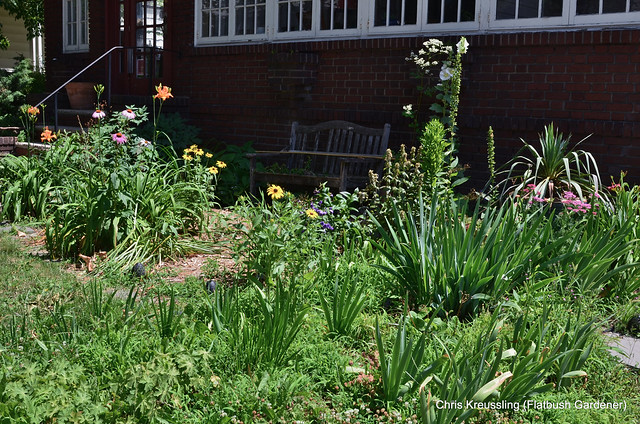
My front garden bloomed all the colors of the rainbow just in time for this past Pride Weekend.
Rainbow Garden

The plants in bloom include natives, heirlooms, passalongs from past plant swaps, and weeds. Not everything in bloom is visible in the photo. Some are too small to stand out at this scale. Others are just off-frame to the right.

2008-07-07

Some recent and current blooms in my garden

Hemerocallis, Daylily, June 21, 2008
Hemerocallis, Daylily

Just some quick photos of plants recently or currently blooming in my garden. The first few were taken two weeks aga.

Meta

I've changed my feedburner feed to remove the merged feed of photos from my Flickr site. I sometimes upload scores or hundreds of photos at a time. Also, often those photos are of events that are of more local community and less general gardening interest. For both these reasons, I think that including my photos interferes with the main use of the feed: subscribing to updates to this blog.

Those of you who want to keep tabs on my updated photos can still do so. My Flickr photostream has its own feed, available in either RSS or Atom format. You can subscribe to my photos directly from there.

Daylilies

I don't "collect" daylilies, at least not the way I try to collect Hosta or native plants. We inherited a few with the gardens when we bought the house. For that reason, I consider them to be "passalong" plants: dependable, sturdy, hardy, tolerant of neglect, vigorous, and so on. I gave away several clumps this Spring. I'll have more to give away over time.

Hemerocallis, Daylily, June 21, 2008
Hemerocallis, Daylily

Native Plants

Ascelpias incarnata, Swamp Milkweed, June 21, 2008
Ascelpias incarnata, Swamp Milkweed

Echinacea pallida, Pale Coneflower, June 21, 2008. This photo was used to illustrate "Coneflowers: America's Prairie Treasures", by Barbara Perry Lawton, in the Summer 2009 edition of the Brooklyn Botanic Garden's "Plants & Gardens News."
Echinacea pallida, Pale Coneflower

The Shady Path

In this short section of the shady path on the north side of the house, I have my two big-leaved monsters: Rodgersia pinnata, on the right, and Kirengeshoma palmata, on the left. The Rodgersia has a lot of drought damage from our heat wave a few weeks ago, but it's off-frame of this photo. I'm keeping a close watch on the Kirengeshoma, as it also crisps up at the slightest hint of drought. There are buds on it now, which mature very slowly into waxy yellow bells. It benefits here from its location next to my neighbor's mixed border, which gets watered by soaker hose.

Part of the Shady Path

Both of these plants are several years old, possibly even a decade. I've lost track of when I purchased them. They're slow-growing, but continue to increase in size every year, despite never being divided in all that time. They are well worth the wait.

I used to keep the Kirengeshoma in a large container, which I could never water enough. It's much happier in the ground. Both of these plants would prefer constant moisture. I have long-term plans to build a rain garden in the shady part of the front yard. When the time comes, both of these plants will be very happy there.

Nestled between them in the foreground is a small, yellow-leaved, purple-flowering Hosta. I've lost the id for this. I think it might be 'Little Aurora.' Any Hosta aficionados out there who can weigh in on what this might be?

Hosta 'Little Aurora'?

Hosta 'Little Aurora'?

Heirloom Canna

Last to share with you today is the Heirloom Canna 'Mme. Paul Caseneuve' blooming in a large, glazed container in the front yard. This is the same specimen that I grew for the first time last year. I overwintered it in the same container in an unheated, but enclosed, section of the front porch. I'm surprised it came back.

Heirloom Canna 'Mme. Paul Caseneuve'

It doesn't look as pink as I remember it from last year. The color is more apricot/salmony this year. At least it's got the same bronze foliage.

Heirloom Canna 'Mme. Paul Caseneuve'

Related Content

Heirloom Canna "Mme. Paul Caseneuve", August 17, 2007
The Shady Path (Flickr photo set)

2008-05-15

Garden Blogging Bloom Day, May 2008

2012-01-14: Corrected ID of Bearded Iris 'Gracchus', which I had incorrectly id'd as I. neglecta.


Part of my backyard native plant garden.
Part of the Native Plant Garden

It's Garden Blogging Bloom Day, the 15th of the month, when garden bloggers all over the world report on what's blooming in their gardens.

I've organized this by the four gardens, one for each side of the house: the native plant garden in the backyard, the shady and sunny borders on the north and south, and the heirloom garden in the front yard. The heirloom bulbs in the front yard are nearly done; just one Tulip lingers on. The wildflowers in the native plant garden have most of the action right now.

This is my first report for Garden Blogging Bloom Day. I didn't get to take any shots specifically for this post. I've uploaded an added what I have. If there's something in particular you're curious to see, let me know in a comment.

Native Plant Garden

Wildflowers in the native plant garden
Wildflowers in the Native Plant Garden

In alphabetical order by botanical name.
  • Amsonia tabernaemontana, Eastern Bluestar
  • Aquilegia canadensis, Eastern Columbine
  • Chrysogonum virginianum "Allen Bush", Green & Gold
  • Dicentra eximia "Aurora", white-flowering Eastern Bleeding Heart
  • Iris setosa canadensis
  • Lonicera sempervirens, Trumpet Honeysuckle
  • Phlox stolonifera "Sherwood Purple", Creeping Phlox
  • Stylophorum diphyllum, Celandine or Woodland Poppy
  • Tiarella "Running Tapestry"
  • Viola, white-flowering, unidentified species, possibly Viola striata, Creamy Violet
  • Zizia aurea, golden zizia
Iris setosa canadensis
Iris setosa canadensisIris setosa canadensisIris setosa canadensis

Lonicera sempervirens
Detail, Lonicera sempervirens

Here's the unknown violet. I think it's Viola striata, Creamy Violet. Any ids?
Violet, unknown white-flowering species

Zizia aurea
Zizia aurea

Shady Border

  • Corydalis cheilanthifolia
  • Corydalis "Berry Exciting"
  • Epimedium x versicolor "Sulphureum", Barrenwort
  • Rodgersia podophylla? This has a tall, 3-foot spike on it, and it's still only in bud.
Epimedium x versicolor "Sulphureum", Barrenwort
Epimedium x versicolor "Sulphureum"

Sunny Border

Part of the sunny/long border
Part of the Sunny Border
  • Geranium macrorrhizum, another pass-along.
  • Geranium macrorrhizum "Variegatum"
  • Bearded Iris "Dee's Purple." Not a real cultivar name, just what I call it. It's a tall, purple Beared Iris, a pass-along I got from Blog Widow John's mother's (Dee) house in upstate New York after she died several years ago.
  • Tradescantia, Spiderwort, a pass-along I got from a neighbor
Geranium macrorrhizum
Detail, Geranium macrorrhizum

Iris "Dee's Purple"
Iris "Dee's Purple"

Heirloom Garden

  • Heirloom Bearded Iris 'Gracchus', introduced 1884
  • Tulip "Clara Butt" (Heirloom, 1880)
  • The Tree Peony just finished up a few days ago.
Heirloom Bearded Iris 'Gracchus', introduced 1884
Iris neglecta

Related content

Flickr photo set
Growing a Native Plant Garden in a Flatbush Backyard, August 6, 2007
Native Plant Profiles
Aquilegia canadensis, Eastern Red Columbine, May 2006
Dicentra eximia, Bleeding-heart, May 2006

Links

GBBD, May 2008, May Dreams Gardens

2008-04-20

More Heirloom Bulbs in the Front Garden

The front garden Saturday morning
Front Garden

Lots of bulb action in the front garden lately. Just a couple days of warm weather and things really took off. This is what it looked a week ago:

The Front Garden

These photos of the Hyacinths are also from a week ago. Heirloom Hyacinth "Queen of the Blues" is the light blue one. It's hard to render the color accurately on-screen; it's a pale, powder blue which looks different depending on whether it's sunny or overcast, or in the shade or sun. It's been blooming for two weeks now. Today, it's just starting to flop over and fade.

Heirloom Hyacinths

Heirloom Hyacinth 'Queen of the Blues'

Heirloom Hyacinth 'Queen of the Blues'

The dark purple one is heirloom Hyacinth "King of the Blues."

Heirloom Hyacinth 'King of the Blues'

What the camera can't capture at all is the scent. These heirloom Hyacinths are intensely fragrant, especially "Queen"; those eight inflorescences perfume the entire front yard and the sidewalk in front of our house.

Two more bulbs opened up over the past week. An unidentified Daffodil obtained from the Daffodil Project, and the unbelievably red Tulipa linifolia, which I just planted this season.

Daffodils and Tulipa linifolia

Daffodils

Tulipa linifolia

Tulipa linifolia

Tulipa clusiana was just starting to open up today, but I didn't get any shots of that yet. Something to look forward to for later in the week.

Related Posts

Sprign has Sprung, March 2, 2008
The Front Garden Evolving, January 24, 2007

2008-03-02

Spring has Sprung

Eranthis hyemalis in the front garden
Eranthis hyemalis

The Winter Aconite (above) has had color for at least two weeks now, but hasn't opened up in the cold and snow. Today was a warm sunny day, so they could finally relax.

The Crocus tommasinianus agreed.

Crocus tommasinianus

2007-08-17

Heirloom Canna "Mme. Paul Caseneuve"

Heirloom Canna "Mme. Paul Caseneuve". Photo Credit: Blog Widow John


Earlier this week, while I've been in North Carolina, one of the heirloom bulbs in the front yard started to bloom. I was disappointed to miss its first flower. Blog Widow John was excited to see the bloom, and sent me this phonecam snapshot of it so I wouldn't miss it. This is his first guest post on the blog. Thanks, baby!

It's Canna "Mme. Paul Caseneuve", which I received from Old House Gardens (OHG) this Spring. This is the first time I've grown this variety of Canna. Introduced in 1902, it's growing about 3 feet high for me, not as tall as "Cleopatra" which I grew in the same container last year. OHG describes the flower as "heart-breakingly lovely" and it looks to fulfill that promise. The foliage has been attractive, dark bronze for me.

[Confidential to my readers: I'll get some proper photos of it after I return home this weekend.]

2007-03-02

Finally, Spring

Eranthis hyemalis, Winter Aconite, flowering in the front garden this afternoon.
Eranthis hyemalis, Winter Aconite

Everything is delayed about a month from where I'd expect it to be. I would have had the first bulbs blooming last weekend, were it not for the blast of ice and snow we got. The most recent storm reached us last night. It eased off this morning, giving way to partial sun and clouds and temperatures in the upper fifties. Perfect for the crocuses to open up.

Crocus tommasinianus

And here are two shots showing the flowers in situ in the front garden.

Crocus tommasinianus and Eranthis hyemalis

Crocus tommasinianus and Eranthis hyemalis

2007-01-24

The Front Garden Evolving

[Updated 2007.02.20: Added links to Related Posts at the end of this one.]

Here's a series of photos showing how the front garden has evolved so far, from when we closed on our house in Spring of 2005, to this past fall. This is one of the four gardens - one for each side of the house - I've written about previously. This will be the heirloom garden. The house was built in 1900. I'll be relying as much as possible on plants which were available in 1905 or earlier.

Front Garden, April 2005This is what the front yard looked like when we closed on the house. Half the depth is devoted to a small lawn. The planting bed held a boxwood, two yews, a few hostas, and nothing else. There was not even a single daffodil bulb.

There was also a full-grown white cedar at the corner of the front porch. You can see its foliage at the upper-right of this photo. The cedar was beautiful, and huge - taller than the house - but it was in the wrong place. The trunk was pressing against the porch roof, so it had to go. It was obviously planted as a foundation plant decades ago, without regard for how tall it would get.

Front Porch, Brick Detail, April 2005Here's a detail of the brickwork to the left of the front steps, in front of the mud room. Note the built-in planter on the porch wall. Another is visible in the photo above, and there's a third hidden behind the boxwood. One of my initial goals was to open up the plantings along the front of the house to expose and highlight the brickwork.

Front Garden, Spring 2005Here's the garden a month later. The boxwood and yews have been removed, as well as the cedar. You can now see the other planter, and the beautiful brickwork along the front of the house. The repetition in the windows and the horizontal lines of the brick details are more typical of Arts&Crafts than Victorian architecture. This is one of the reasons why I believe the front porch was enclosed early in the life of the house, and worth preserving.

On the right, the mulch on the ground is part of what's left of the cedar. I also kept four logs from the lowest section of the trunk. I'm using these now as seating in the backyard, which gives you some idea of the trunk this tree had. I hope to eventually incorporate the wood into something else for the garden.

Front Garden, June 2005And another month later, in June of 2005. There's some more plants which I moved from Garden #3. I put up the rainbow of silks to mark Gay Pride month.

Front and South Side Gardens, January 2006Winter of 2006. I had started playing around with some containers in the front yard. You can also see the south side of the house, which doesn't have too much going on yet. And of course the old-school big-bulb Christmas lights and garland.


Front Garden, May 2006May of 2006. More planters, especially on and around the steps. You can see the last of the heirloom Tulips to the right of the steps. The silks have faded a lot from the previous year.

I started putting in some stepping stones to edge the lawn and planting area, both as a shortcut path across the lawn, and to guide my push mower.

Front Garden, September 2006September of 2006. Lots of containers now. I've finished the path across the front lawn, and put in some hose guides. The red and yellow flowers in the large terra-cotta pot to the right of the front steps is Canna "Cleopatra". The Hosta are blooming. The tall pink and purple flowers are Cleome, Spider Flower, I grew from seed given to me by a gardener from Long Island.

I'm still working my way across the front yard. One reason I haven't finished more is that we have to replace the roof this year. A complete tear-down, which means lots of debris on all sides of the house. Which means lots of smushed plants. Hopefully we can get the roof replaced early enough in the year that I can still get a good growing season in, and finish the front garden.

Related Posts:

2006-08-19

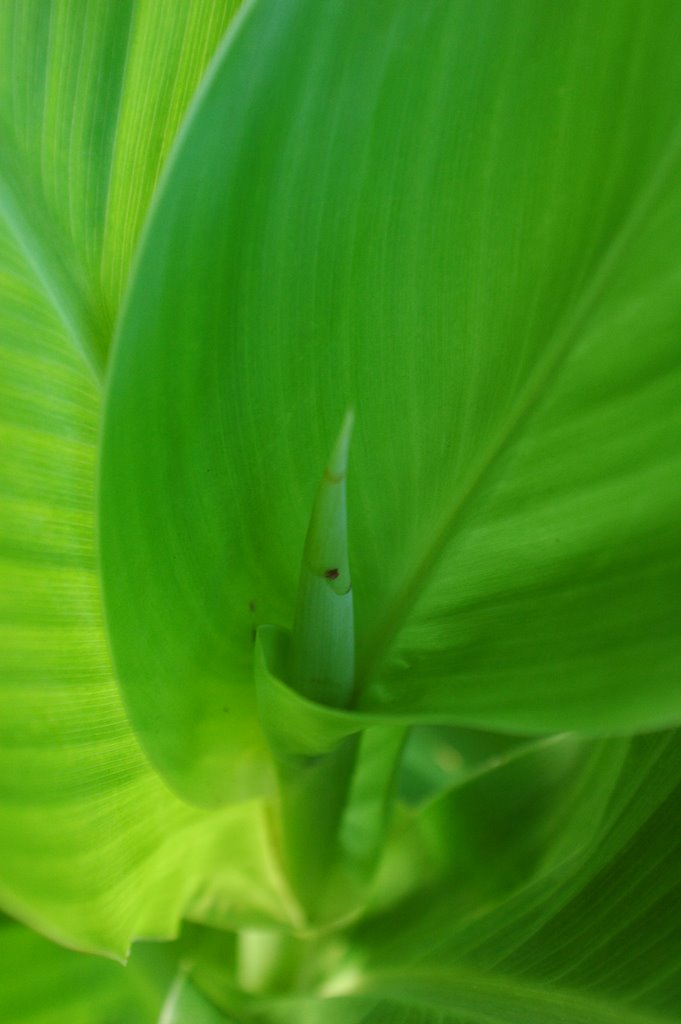
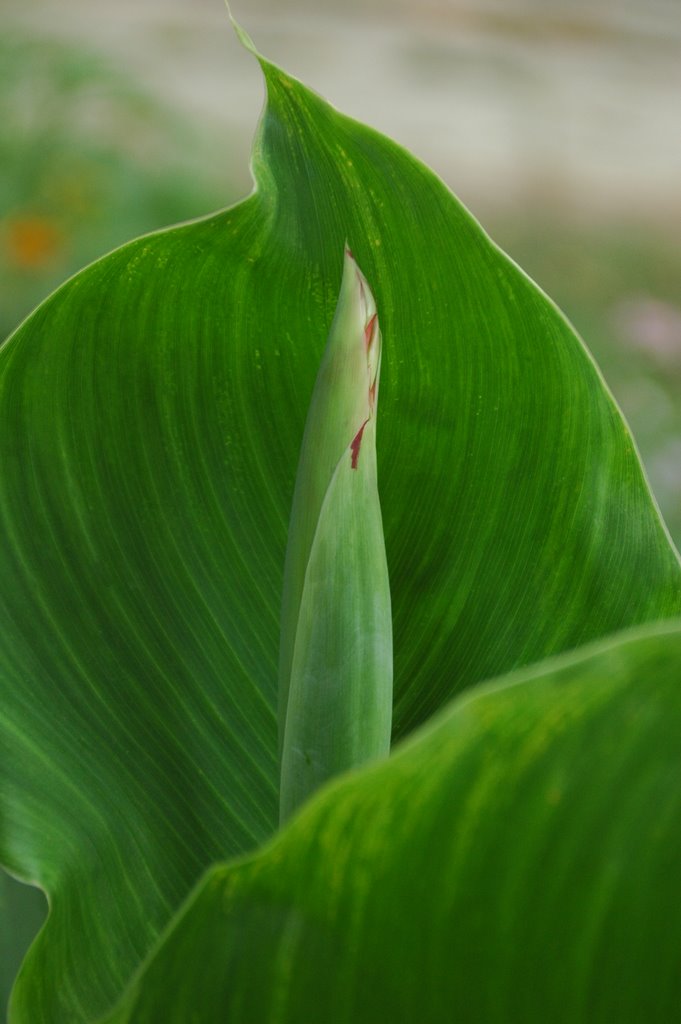
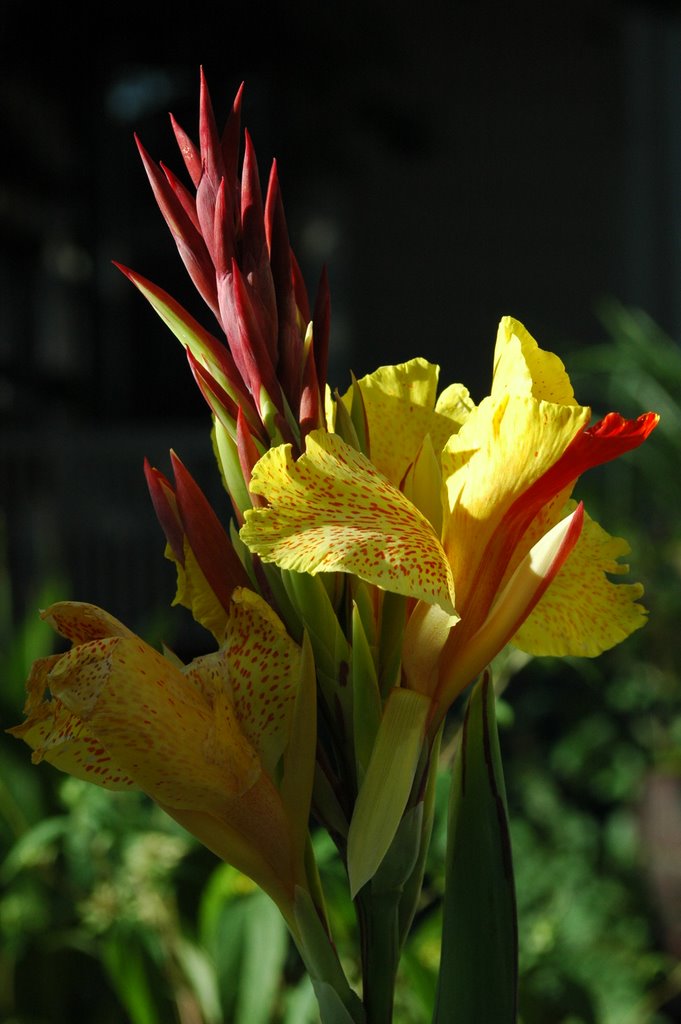
Heirloom Plant Profile: Canna "Cleopatra"

While last week I was obsessed with Amorphophallus titanum at the Brooklyn Botanic Garden, I've also been having my own plant watch here at home.

A month ago I blogged about ordering bulbs for next year. I noted that I had ordered Canna "Cleopatra" from Select Seeds this Spring, but I doubted whether that was what I had received. The leaves are supposed to be variegated green and bronze, but the leaves at that writing still showed only green.

July 16, 2006


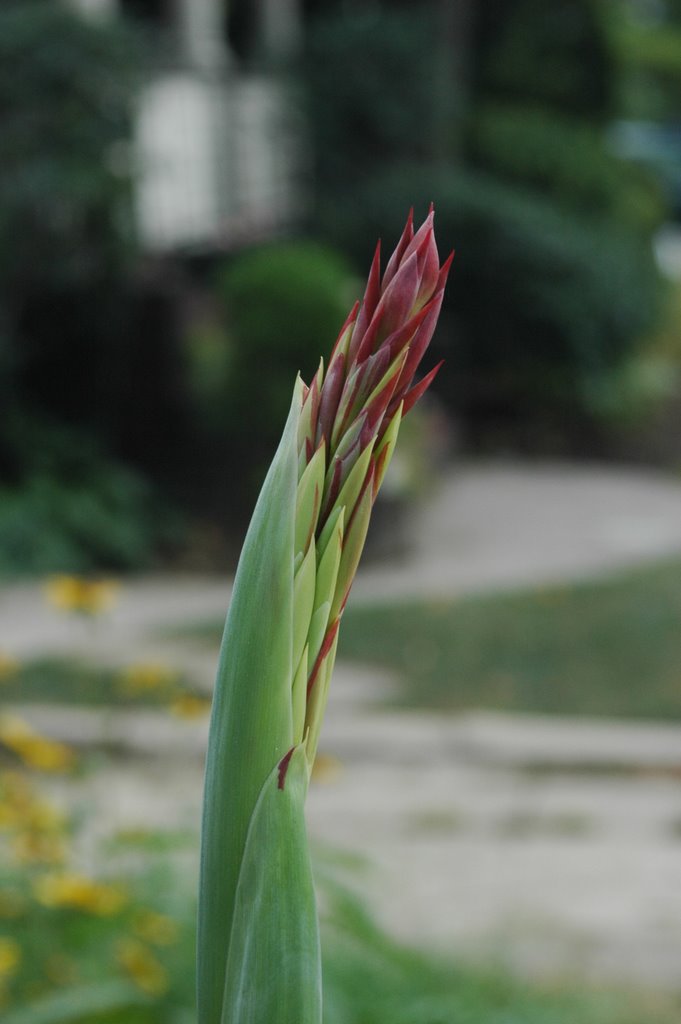
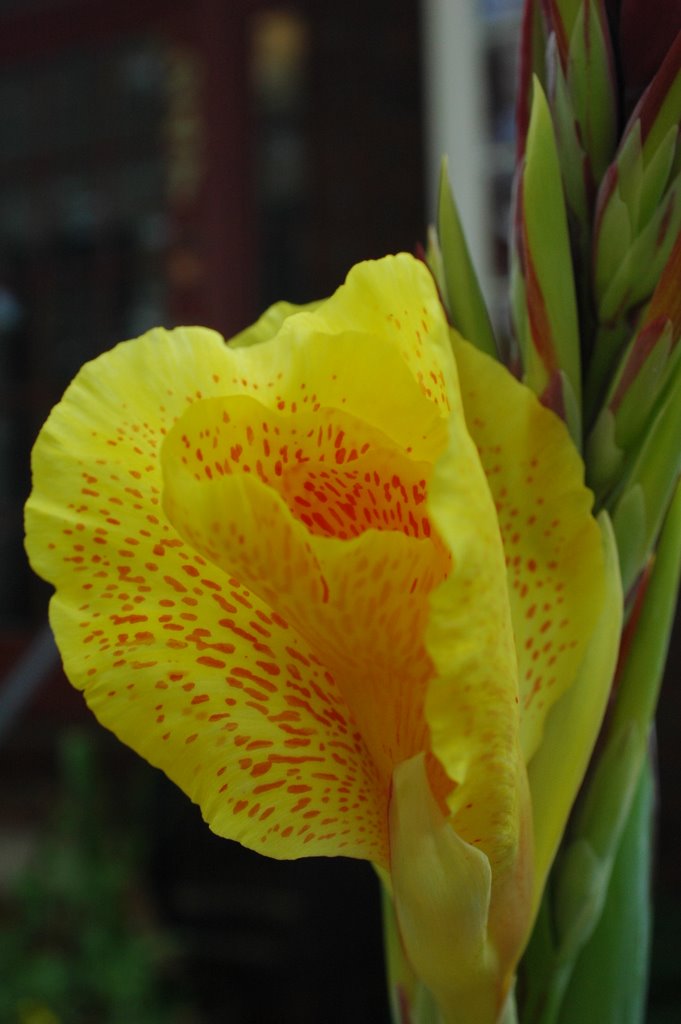
Thinking I didn't get what I wanted, I ordered replacement bulbs from Old House Gardens for next Spring. I just needed to be more patient. The sequence of photographs shows how quickly it transformed. I think the heat wave we had really got it going. I planted three bulbs in a large pot in the front yard. I've now got three flowering stalks. It's attracting comments from all the neighbors.

August 4, 2006


August 6, 2006


August 10, 2006


August 11, 2006


August 12, 2006


"Cleopatra" was introduced in 1895. It's also known as the "Harlequin Canna" for its variegated leaves and flowers. The variegation is unstable and unpredictable; you can see from the photos of my plant that the flowers appear different even on the same stalk of blooms. It seems to me it might be a chimera of two different varieties fused together. In other words, it's a freak, and a Victorian freak at that. That's why it will always have a place of honor in the heirloom garden at the front of our 105-year old Victorian house.

Sources: