2015-05-09

Garden Deeper

I had a visceral (in a good way) reaction to Adrian Higgins' writeup of a visit, with Claudia West, to Shenk's Ferry Wildflower Preserve.

I think I'll adopt "ecological horticulturist" to describe my own approach to gardening. Whether you specialize in gardening with native plants, as I do, or prefer to grow plants from around the world, studying their native habitats is, in my experience, the best way to learn how to grow them in a garden.

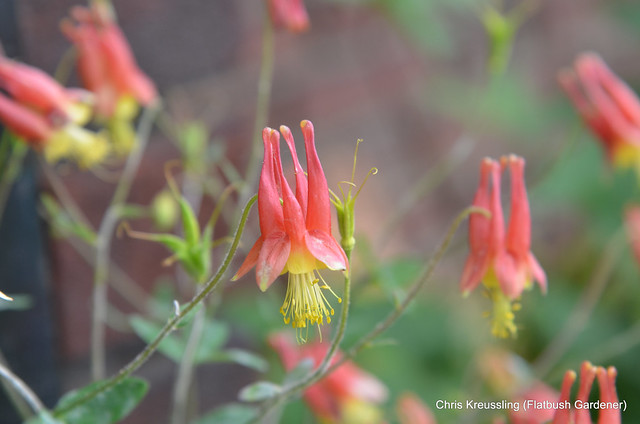
That doesn't mean you have to recreate the conditions exactly. In many cases, this is impossible, anyway. The native Aquilegia canadensis, eastern red columbine, thrives in the crumbling mortar of my front steps; this location recreates some aspects of the face of a limestone cliff where I saw, decades ago, a huge colony of them in full bloom.
Aquilegia canadensis, Eastern Red Columbine, growing out of my front steps, April 2012

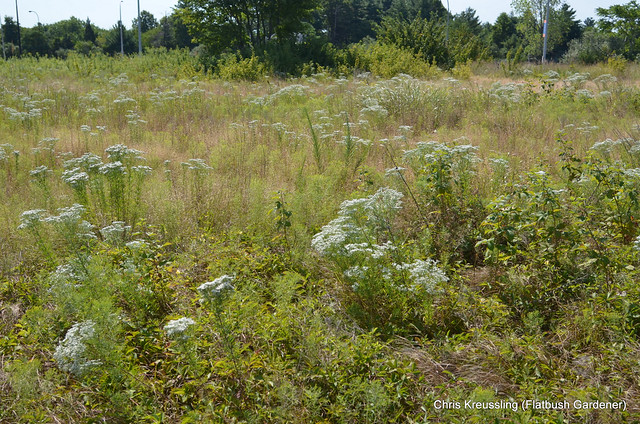
This is why I'm trying to go on more botanical walks and hikes. Like many, if not most, gardeners, I've never seen most of the plants I grow in the wild. I visited Hempstead Plains for the first time in August 2013.
Hempstead Plains

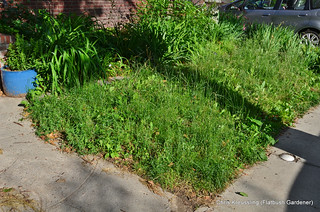
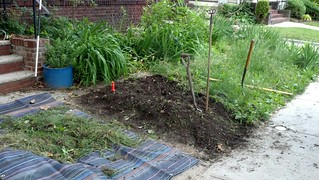
That inspired me last year to remove most of the remaining lawn in the front yard and approach it as a meadow, instead.
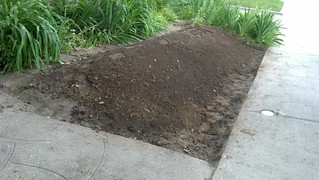
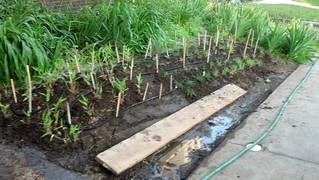
The Front Garden, before de-lawning, June 2014Weeding is Meditation: Removing the old "lawn" for the new short-grass "meadow" in the front yardFinal grading for the new front yard short-grass meadowThe berm, planted. Took 45 minutes, >2/min, including some rework for overly loose and linear spacing.


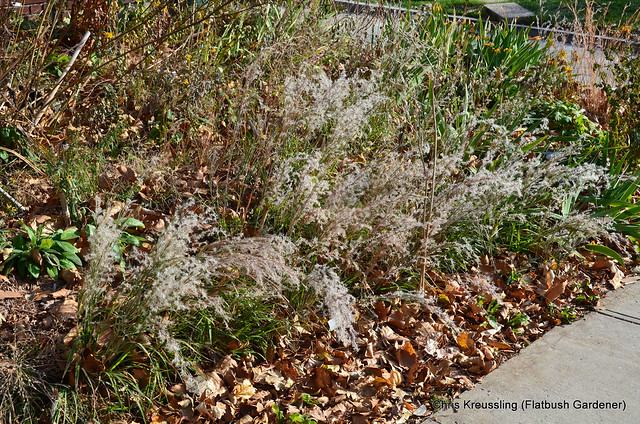
Schizachyrium scoparium, little bluestem (grass), in my front garden, November 2014

Rain gardens and rock gardens are both examples of creating gardens to grow plants requiring specific conditions, and to meet human needs. But we don't need to go to so much trouble. For all the "problem areas" in our gardens, there are plants that want nearly exactly those conditions. We need only think like a plant to see these as opportunities, and embrace the habitats waiting to emerge.

Related Content

Links

What you can learn from a walk through the woods (with Claudia West), Adrian Higgins, Washington Post Home & Garden

2015-05-03

Native Plant Profile: Adlumia fungosa, allegheny vine, climbing fumitory

A species new to me that I picked up at yesterday's plant sale for the Manhattan Chapter of the North American Rock Garden Society (MCNARGS). Since I don't know anything about it, I researched it to figure out what it wants and find a place for it in my garden.

Adlumia fungosa, climbing fumitory, scrambling into Clethra in the backyard in July 2015


Adlumia fungosa is a biennial vine in the Fumariaceae, the fumewort family, or Papaveraceae, poppy family, depending on the accepted taxonomy. It can grow up to 12 feet in length by scrambling over other plants and rocks in the moist, wooded slopes it requires. Common names include allegheny vine, climbing fumitory, and mountain fringe.

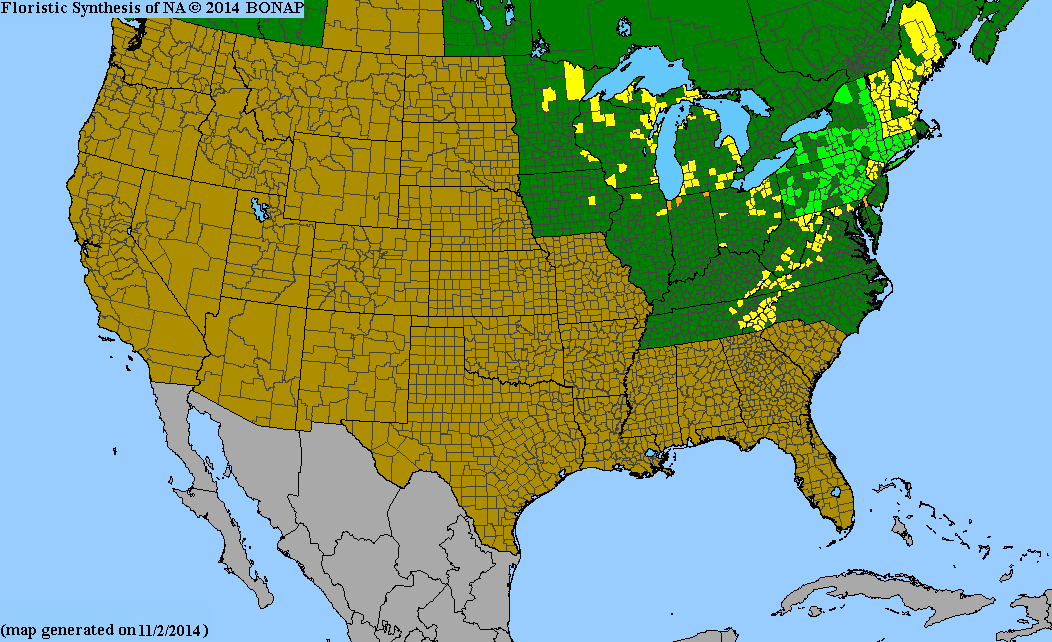
Its primary native range is New England and northeastern United States. Following the mountains, its range extends as far south and west as Tennessee and North Carolina. It's also found in scattered counties as far west as Minnesota and Iowa.

Biota of North America Program (BONAP) floristic synthesis county-level distribution map for Adlumia fungosa. In this map, yellow and light green highlights counties where specimens have been recorded. Dark green shows state-/province-level nativity.


Although not native to New York City, it is native to adjacent and nearby counties in NY, New Jersey, and Connecticut. The New York Flora Association (NYFA) Atlas lists its endangered/threatened status as as S4: Apparently secure in New York State. Other sources, including the New England Wildflower Society (NEWFS), list it as threatened or endangered throughout its range.

I'm going to try this plant on the north side of my garage. That area is consistently moist from runoff from the garage roof. There's no slope there, but it's densely planted with shrubs and perennials, so this plant should have lots to scramble over. If it's really happy, there's also the nearby arbor.

Related Content

Links

2015-04-26

Pine Barrens Soil Horizons

Yesterday, I transplanted a small piece of Carex pensylvanica, Pennsylvania sedge, from my sister's property in Ocean County, New Jersey. This species is common on her property.

She lives in the pinelands of New Jersey. The canopy is pine and oak. The duff layer - the natural "mulch" of dead plant material deposited on top of the soil - is composed of mostly pine needles, with some oak leaves.

Here's a view of the clump I extracted.


2015-04-18

April 2015: Native Plants Planting Plan

2015-04-26 Update: Finally finished planting everything.

Took me most of the day to figure out where all of the 63 plants I received this week are going. Better late then never.

Bog Planters

Plant in the bog planters. I've only seen Iris versicolor, but never grown it. The other species are new to me.
  • Geum rivale, water avens
  • Iris prismatica, slender blue flag
  • Iris versicolor, blue flag
  • Mimulus alatus, winged monkey-flower
  • Mimulus ringens, square-stemmed monkey-flower

2015-04-02

This Season's Schedule

Lots of native plant events from April to June which I hope to attend. And I'll be speaking, hosting, or tabling at three of them.

Me in my front yard last year, hosting a NYC Wildflower Week Pollinator Safari during Pollinator Week 2014. Photo: Alan Riback.

2015-02-23

Invasive Plant Profile: Chelidonium majus, Celandine, Greater Celandine

Revised 2015-02-23: This was one of my earliest blog posts, first published in June 2006. I've overhauled it to 1) meet my current technical standards, and 2) improve the content based on the latest available information.


Chelidonium majus, Celandine or Greater Celandine, is a biennial (blooming the second year) herbaceous plant in the Papaveraceae, the Poppy family. It is native to Eurasia. It's the only species in the genus.

It's invasive outside its native range, and widespread across eastern North America. It emerges early in the Spring, before our native wildflowers emerge, and grows quickly to about 2 feet. That's one of the clues to identification. It's also one of the reasons why it's so disruptive. The rapid early growth crowds and shades out native Spring ephemerals.

An Elegy for Biophilia

I was moved to write this by a short missive from Reverend Billy:
When I go to pray, which is sometimes difficult being so without any god, I think of that time in my life, because the natural world was overwhelming the god that my family insisted was all-powerful and all-knowing. Creation was overwhelming the Creator and it came in the form of undulating prairie grasses.

I was raised in temperate and tropical suburbia. Even in those landscapes, the woods in the backyard, or the palmetto swamp at the end of the road or the canal, drew me to them. They were my expanse. Yet, compared to what existed before the forests were razed and the swamps drained, the landscapes of my childhood were impoverished.

The shifting baseline degrades further. More than half the world now lives in cities, with less ready access to nature than ever before in the history of our species. Biodiversity is an environmental justice issue.

I've chosen to live my adult live in a city. Even here, those childhood experiences guide me. I garden because it connects me to nature, it nourishes me. The beauty I invite is not of my making, but larger, deeper, and older than I can comprehend.

I believe it everyone's right to have that connection for themselves. Not only a right, but necessary. Not only for our own health, but to have some hope for the future health of our planet.

That hope, however impoverished, is what keeps me going.

2015-02-20

Pollinator Gardens, for Schools and Others

I got a query from a reader:
I’m working on a school garden project and we’d like to develop a pollinator garden in several raised beds. Can you recommend some native plants that we should have in our garden? Ideally we’d like to have some perennials and maybe a few anchor bushes. Are there any flowers that we might be able to start inside this spring then transplant? Also, because the students will be observing the pollinators, butterfly attracting plants are preferable to the teachers.
Whole books have been written on this topic, but here are some quick thoughts and references for further research.

2015-02-02

World Wetlands Day

Not only is it Imbolc, aka Groundhog Day (Flatbush Fluffy did NOT see his shadow today. You're welcome.), it's also World Wetlands Day. After seeing some of the photos shared by others on Twitter, I thought I would share my Flickr photo albums of some memorable wetlands I've had the privilege of visiting.


Cattus Island Park, Toms River, Ocean County, New Jersey


Cranberry Bog Preserve, Riverhead, Suffolk County, New York


The Hudson River, Riparius, Adirondacks, New York


Related Content

Links

2015-01-03

FAQ: Where do you get your plants?

[First in what I hope will be a series of Frequently Asked Questions, FAQs. If you have any questions for me, I invite you to leave a comment, or ping me on Twitter.]

Question: Where do you get your plants?

Answer (short)

I specialize in gardening with native plants. I get my plants from a variety of sources, including mail-order nurseries, local and regional nurseries, annual plant sales, and neighborhood plant exchanges. My Native Plants page has a list of Retail Sources of Native Plants in and around New York City, extending to New England and the Mid-Atlantic.

Grasses and Sedges at Rarefind Nursery in Jackson, New Jersey
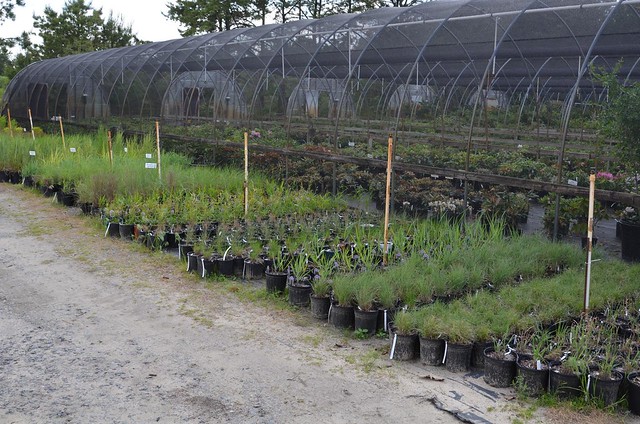
Grasses and Sedges, Rarefind Nursery

Catskill Native Nursery, Kerhonkson, NY
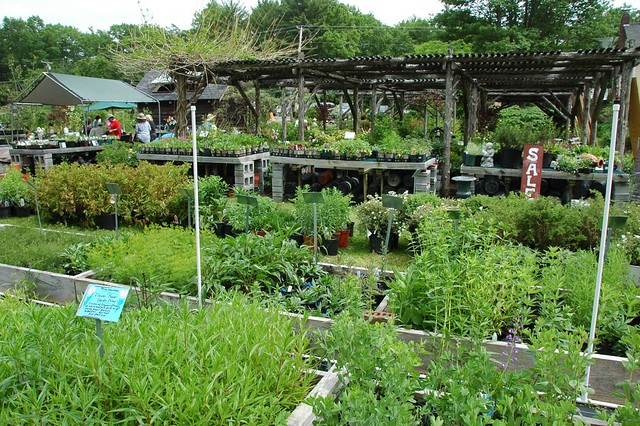

Answer (longer)

I've been gardening in New York City for over three decades, since 1981 or thereabouts in the East Village, since 1992 in Brooklyn. Each garden provided its own challenges, and lessons. The plants I seek out, and where I get them, has changed a lot over time.

The first 20 years: Shade, Concrete, and Invasives

The first garden, in the East Village, was surrounded by adjacent buildings and overtopped by two large Ailanthus altissima trees (the "tree that grew in Brooklyn"). There I learned, by necessity, about gardening in shade. Garden #2, in Park Slope, was nearly all concrete; there I learned to garden in containers. Garden #3, also in Park Slope, had been somewhat neglected; weeds and invasive plants, including Fallopia japonica, Japanese Knotweed, were the lessons there.

I've always included native plants in my gardens. In the East Village garden, I planted a small wildflower area that was, perhaps, my favorite spot. I added a small wildflower plot to the 3rd garden, as well. Out of necessity, most of these were cultivars, the only "native plants" commercially available at the time. I divided many of them and brought them to my current garden.

The 4th Garden

This Spring will be 10 years since we closed on our current home, and I started work on my fourth garden in New York City. Here the lessons have been about rehabilitation, and healing the land, if only in my small pocket of it.

The backyard was the initial focus of my efforts. My goal here was to recreate a shady woodland garden, populated with native woodland plants. Four years in, it was my design subject for the Urban Garden Design class I took at Brooklyn Botanic Garden.
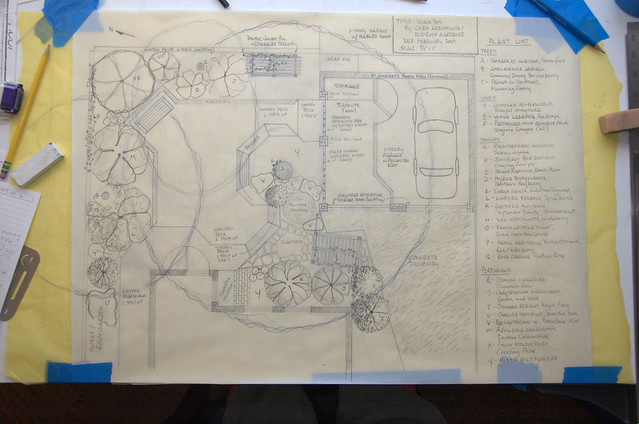
Final rendering, backyard garden design

10 years ago, the backyard was a wasteland of dust and scraggly grass, shaded by multiple Norway maples.
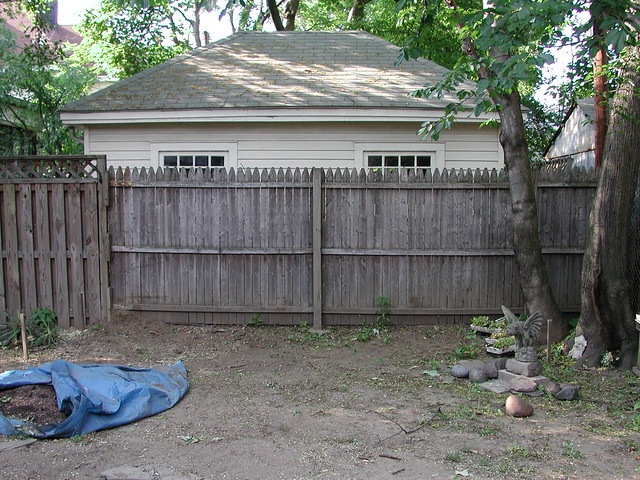
Backyard, view away from garage, May 2005

The first month, I removed four trees from this small space. Over time, the remaining three trees failed and had to be removed. After 10 years, I'm still working on building up the soil to meet the needs of more specialized woodland plants. But I've been largely successful in rehabilitating this space.
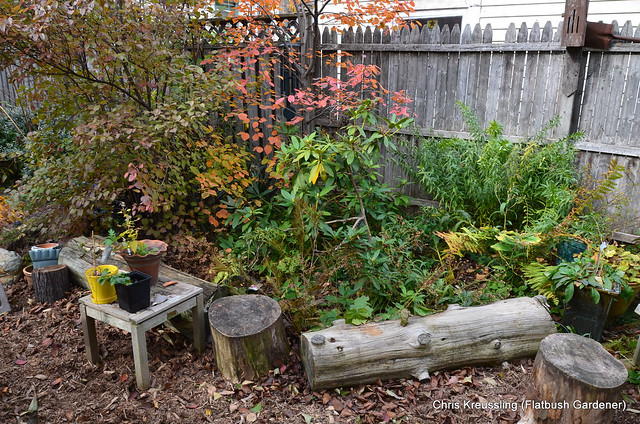
The shrub border, pre-transplant, November 2014

Similarly, the front yard was, at best, barren: lawn and a few canonical evergreen shrubs.
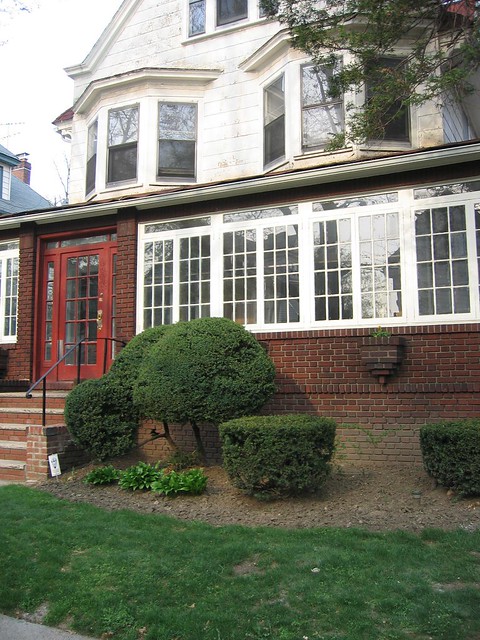
Front Garden, April 2005

Our house was built in 1900. In keeping with the historical nature of our home, and the neighborhood, initially I focused on heirloom plants in the front garden.
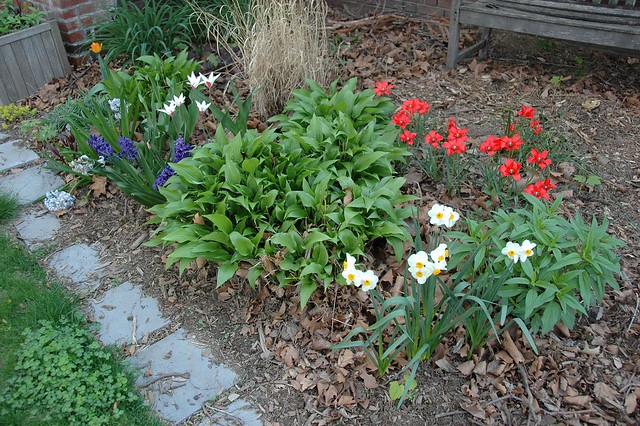
The Front Garden

As my knowledge of and experience with gardening with native plants grew, I expanded the scope of their planting to include all areas around the house. The loss of our neighbor's street tree a few years ago to Hurricane Irene opened up - literally - the opportunity to grow more sun-loving species in the front yard. I started taking out the front lawn two years ago, gradually replacing it with a mixed wildflower meadow. The original lawn has been reduced to a less than a third of its original extent.
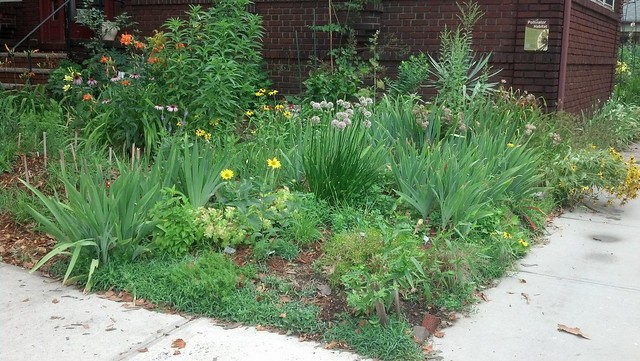
Morning Glory: The Front Garden this morning

Most recently, I've narrowed my plant acquisitions further. My most treasured plants in my gardens are local ecotypes, those that have been propagated - responsibly - from local wild populations. There are two regional plant sales where these are available, both organized by regional preservation groups: the Long Island Native Plant Initiative, and the Pinelands Preservation Alliance. These are currently my preferred sources for plants.
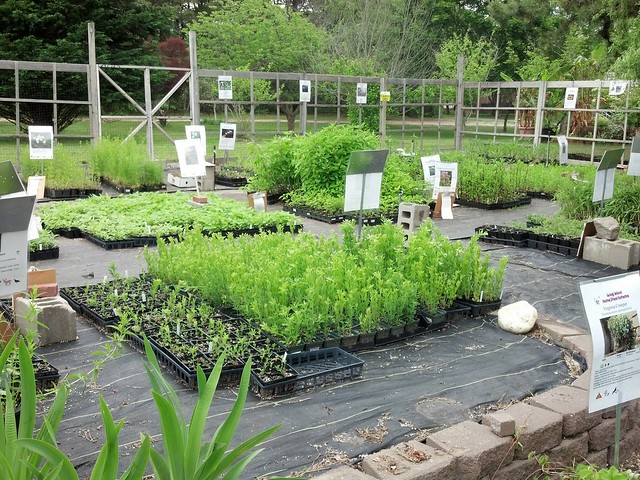
I have arrived! LINPI Plant Sale

It's my hope that more retail sources for local ecotypes will become available to urban gardeners. I recommend that gardeners who want to explore gardening with native plants choose straight species, not cultivars, from local growers, who are more likely to be growing plants propagated originally from local stock.

Related Content

Tags: Nurseries, Sources, Native Plants

Flickr photo sets:
The Front Garden
The Backyard

Catskill Native Nursery, Kerhonkson, NY
Rarefind Nursery, Jackson, NJ

Links

Long Island Native Plant Initiative (LINPI) Plant Sale
Pinelands Preservation Alliance Plant Sale