Showing posts sorted by relevance for query extinct plants. Sort by date Show all posts

2022-11-30

Grief and Gardening: Extinct Plants of northern North America 2022

A Single Candle

As in past years, I'm limiting this list to northern North America for two reasons:

  1. Restricting this list geographically is in keeping with my specialization in plants native to northeastern North America.
  2. There are many more tropical plants, and plant extinctions, than I can manage.

In 2020, this paper:

Vascular plant extinction in the continental United States and Canada

caused me to expand my list from 6 to 59 species, including 7 extinct in the wild. The summary is terse, and grim:

2021-11-30

Grief and Gardening: Extinct Plants of northern North America 2021

A Single Candle

As in past years, I'm limiting this list to northern North America for two reasons:

  1. Restricting this list geographically is in keeping with my specialization in plants native to northeastern North America.
  2. There are many more tropical plants, and plant extinctions, than I can manage.

Last year, this paper:

Vascular plant extinction in the continental United States and Canada

caused me to expand my list from 6 to 59 species, including 7 extinct in the wild. The summary is terse, and grim:

2018-11-30

Extinct Plants of northern North America 2018

I'm limiting this list to northern North America for two reasons:
  1. Restricting this list geographically is in keeping with my specialization in plants native to northeastern North America.
  2. There are many more tropical plants, and plant extinctions, than I can manage; for example, Cuba alone has lost more plant species than I've listed on this blog post. 
If you have additions to this list, please let me know, and provide a link which I can research.
  • Astilbe crenatiloba, Roan Mountain false goat's beard, Roan Mountain, Tennessee, 1885
  • Narthecium montanum, Appalachian Yellow Asphodel, East Flat Rock Bog, Henderson County, North Carolina, before 2004?
  • Neomacounia nitida, Macoun's shining moss, Belleville, Ontario, 1864
  • Orbexilum macrophyllum, bigleaf scurfpea, Polk County, North Carolina, 1899
  • Orbexilum stipulatum, large-stipule leather-root, Falls-of-the-Ohio scurfpea, Rock Island, Falls of the Ohio, KY, 1881
  • Thismia americana, banded trinity, Lake Calumet, IL, 1916

Extinct in the wild (IUCN Red List code EW)

  • Franklinia alatamaha, Franklin Tree
  • Extinct versus Extirpated

    I often come across misuse of the word "extinct," as in: native plant extinct in New York City.
    • "Extinct" means globally extinct. No living specimens exist anywhere in the world, not even in cultivation. 
    • "Extirpated" means locally extinct, while the species persists in other populations outside of the study area. To correct the above example: extirpated in New York City. Any regional Flora lists many extirpated species.
    When a species is known only from one original or remaining population, as those listed above were, loss of that population means extinction for the species. In this case, extirpation and extinction are the same thing.

    Another category is "extinct in the wild," when the species still exists under cultivation, like an animal in a zoo. A famous example of this is Franklinia alatamaha.

    Related Content

    Extinct Plants of northern North America 2015, 2015-11-29
    Extinct Plants of northern North America, 2014-11-30

    Links

    Wikipedia: List of extinct plants: Americas
    IUCN Red List: List of species extinct in the wild
    The Sixth Extinction: Recent Plant Extinctions
    Extinct and Extirpated Plants from Oregon (PDF, 5 pp)

    2020-11-30

    Extinct Plants of northern North America 2020

    Wanna know what's really scary? Extinction. #ExtinctSymbol #Resist

    As in past years, I'm limiting this list to northern North America for two reasons:

    1. Restricting this list geographically is in keeping with my specialization in plants native to northeastern North America.
    2. There are many more tropical plants, and plant extinctions, than I can manage.

    In past years, I've only been able to find records for 6 plant species that have gone extinct. This year's list is a major update: 59 extinctions, and 7 extinct in the wild. This is largely due to the research presented in this August 2020 paper:

    Vascular plant extinction in the continental United States and Canada

    The summary is terse, and grim:

    2015-11-29

    Extinct Plants of northern North America 2015

    I'm limiting this list to northern North America for two reasons:
    1. Restricting this list geographically is in keeping with my specialization in plants native to northeastern North America.
    2. There are many more tropical plants, and plant extinctions, than I can manage; for example, Cuba alone has lost more plant species than I've listed on this blog post. 
    If you have additions to this list, please let me know, and provide a link which I can research.
    • Astilbe crenatiloba, Roan Mountain false goat's beard, Roan Mountain, Tennessee, 1885
    • Narthecium montanum, Appalachian Yellow Asphodel, East Flat Rock Bog, Henderson County, North Carolina, before 2004?
    • Neomacounia nitida, Macoun's shining moss, Belleville, Ontario, 1864
    • Orbexilum macrophyllum, bigleaf scurfpea, Polk County, North Carolina, 1899
    • Orbexilum stipulatum, large-stipule leather-root, Falls-of-the-Ohio scurfpea, Rock Island, Falls of the Ohio, KY, 1881
    • Thismia americana, banded trinity, Lake Calumet, IL, 1916

    Extinct in the wild (IUCN Red List code EW)


  • Franklinia alatamaha, Franklin Tree
  • Extinct versus Extirpated

    I often come across misuse of the word "extinct," as in: native plant extinct in New York City.
    • "Extinct" means globally extinct. No living specimens exist anywhere in the world, not even in cultivation. 
    • "Extirpated" means locally extinct, while the species persists in other populations outside of the study area. To correct the above example: extirpated in New York City. Any regional Flora lists many extirpated species.
    When a species is known only from one original or remaining population, as those listed above were, loss of that population means extinction for the species. In this case, extirpation and extinction are the same thing.

    Another category is "extinct in the wild," when the species still exists under cultivation, like an animal in a zoo. A famous example of this is Franklinia alatamaha.

    Related Content

    Extinct Plants of northern North America, 2014-11-30

    Links

    Wikipedia: List of extinct plants: Americas
    IUCN Red List: List of species extinct in the wild
    The Sixth Extinction: Recent Plant Extinctions
    Extinct and Extirpated Plants from Oregon (PDF, 5 pp)

    2014-11-30

    Extinct Plants of northern North America

    Updated 2014-12-22: Added years of extinction, where known. Started section for Extinct in the Wild (IUCN Red List code EW).

    I'm limiting this list for two reasons:
    1. Restricting this list geographically is in keeping with my specialization in plants native to northeastern North America.
    2. There are many more tropical plants, and plant extinctions, than I can manage; for example, Cuba alone has lost more plant species than I've listed on this blog post. 
    If you have additions to this list, please let me know, and provide a link which I can research.
    • Astilbe crenatiloba, Roan Mountain false goat's beard, Roan Mountain, Tennessee, 1885
    • Narthecium montanum, Appalachian Yellow Asphodel, East Flat Rock Bog, Henderson County, North Carolina, before 2004?
    • Neomacounia nitida, Macoun's shining moss, Belleville, Ontario, 1864
    • Orbexilum macrophyllum, bigleaf scurfpea, Polk County, North Carolina, 1899
    • Orbexilum stipulatum, large-stipule leather-root, Falls-of-the-Ohio scurfpea, Rock Island, Falls of the Ohio, KY, 1881
    • Thismia americana, banded trinity, Lake Calumet, IL, 1916

    Extinct in the wild

    Extinct versus Extirpated

    I often come across misuse of the word "extinct," as in: native plant extinct in New York City. "Extinct" means globally extinct. No living specimens exist anywhere in the world, not even in cultivation. "Extirpated" means locally extinct, while the species persists in other populations outside of the study area. To correct the above example: extirpated in New York City. Any regional Flora lists many extirpated species. When a species is known only from one original or remaining population, as those listed above were, loss of that population means extinction for the species. In this case, extirpation and extinction are the same thing. Another category might be "extinct in the wild" when the species still exists under cultivation, like an animal in a zoo. A famous example of this is Franklinia alatamaha.

    Related Content

    Links

    Wikipedia: List of extinct plants: Americas IUCN Red List: List of species extinct in the wild, The Sixth Extinction: Recent Plant Extinctions Extinct and Extirpated Plants from Oregon (PDF, 5 pp)

    2022-09-12

    Grief and Gardening: Index

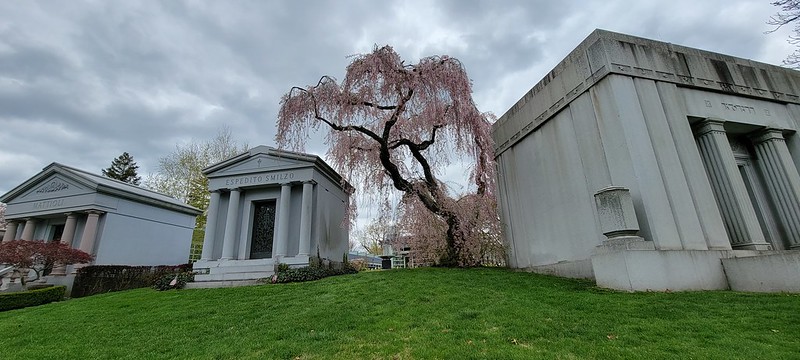
    Green-Wood Cemetery, Brooklyn, NY, April 2021
    Next Tuesday, September 20th, I will be the guest speaker for Green-Wood Cemetery's Death Cafe. Next week is also Climate Week; the topic is "Grief and Gardening", that title taken from the long-running series of blog posts here.

    Listed below are my related blog posts, grouped by topic. For now, I'm omitting all the eulogies and remembrances for the deaths of family, friends, and pets.

    Grief and Gardening: Ashes (Remembrance Day for Lost Species), published 2019-12-02, is one of my favorite writings on the subject of grief. It weaves together nearly all the topics below.

    Biodiversity Loss

    2010-04-08

    The Plight of NYC's Native Flora

    Local ecotypes - propagated from local sources by the Staten Island Greenbelt - for sale by Oak Grove Farms (now Nature's Healing Farm) at the Union Square Greenmarket during the first annual NYC Wildflower Week in 2008. I bought one of each; two years later, all are thriving in my backyard native plant garden.
    Native Plants at Oak Grove Farms

    Earlier this week, the Brooklyn Botanic Garden issued a press release summarizing findings from 20 years of research through their New York Metropolitan Flora Project (NYMF). The results are not surprising, but disheartening nevertheless:
    At least 50 varieties of native plants are locally extinct or nearing elimination, say project scientists. Nuttall’s mudflower (Micranthemum micranthemoides), last collected from the region in 1918, is likely extinct throughout its former range. Scarlet Indian paintbrush (Castilleja coccinea), pennywort (Obolaria virginica), sidebells wintergreen (Orthilia secunda), and sundial lupine (Lupinus perennis) are among the wildflower species to have seriously declined in the region. Black crowberry (Empetrum nigrum) is locally extinct, without a trace of a population remaining today in the New York City metropolitan area.
    - Some Plants Native to NYC Area Have Become Locally Extinct As New Flora Has Moved In, Finds Brooklyn Botanic Garden, Press Release, 2010-04-05
    The story has been widely covered in blogs and other media, including New York Times Science. I've included the complete press release below for reference.

    I first wrote about NYMF in June of 2006, shortly after I launched this blog, four years ago next month. I've written about native plants countless times (see: , ). I have a lifelong interest in the nature around me, especially that which is right around me, where I live. Learning about and understanding the ecosystems where I live is part of finding my place in the world. I come to feel this connection deeply. Without it, my life is impoverished, and I am lost.

    The greatest threat to native plants, and the ecosystems they support, is habitat loss. The second is competition and displacement, and further habitat loss, from invasive species, whether they be insects, infectious organisms, or other plants. Roughly half of invasive plant species were deliberately introduced, through agriculture, for civil engineering purposes such as erosion control, and for horticultural purposes.

    2019-12-02

    Grief and Gardening: Ashes (Remembrance Day for Lost Species)

    Detail, label, "Our Lady of Abundance," inside lid

    My alarm wakes me Saturday morning. I go downstairs to the kitchen, nuke myself a cup of coffee, and get a fresh batch going. I didn’t sleep well. Today is the Remembrance Day for Lost Species.

    2010-06-29

    BBG Celebrates Native Plants Throughout July

    Native Rhododendrons blooming in BBG's Native Flora Garden, May, 2009
    Native Flora Garden


    Press Release

    Celebrating Our Backyard: Brooklyn Botanic Garden Presents Native Plant Month, July 2010

    Brooklyn, NY—June 29, 2010—This spring, the results of a 20-year study of the flora of the New York metropolitan region by Brooklyn Botanic Garden (BBG) found many native species locally extinct or in precipitous decline. During the month of July, BBG will highlight the region’s native flora, displaying its beauty, explaining its importance, drawing attention to its plight, and providing simple ways to help in its restoration. BBG’s knowledgeable horticulturists and scientists will offer a behind-the-scenes look at the power of the native plant through field trips, workshops, and other insightful classes and lectures.

    In 1911, the “Local Flora Section” was the first garden to open to the public at BBG. Since then, the Garden has maintained its commitment to the study and conservation of locally native plants, most recently through its multiyear New York Metropolitan Flora project (NYMF), in which nearly every species growing within a 50-mile radius of the city was cataloged and mapped. Many of the native plants in the study—which found a significant number of species in perilous decline—are propagated in the Native Flora Garden, as the Local Flora Section is known today, in an effort to conserve them.

    2018-06-17

    NPILC 2018 - Speaker Notes and Handout

    2018-06-23: Updated with more links.

    Following is the outline, speaker notes, and references of my talk at this year's Native Plants in the Landscape Conference. This was to have been published as a speaker handout for attendees, but it never made it to the conference Web site. So I'm publishing it here.

    This isn't intended to stand alone. This post has many links to my blog posts and photos for further reading and viewing. And the presentation itself is available on Slideshare.

    2019-02-12

    Charismatic Mesofauna

    Over the weekend I was inspired to write a little tweet storm. I thought it would make a good blog post.

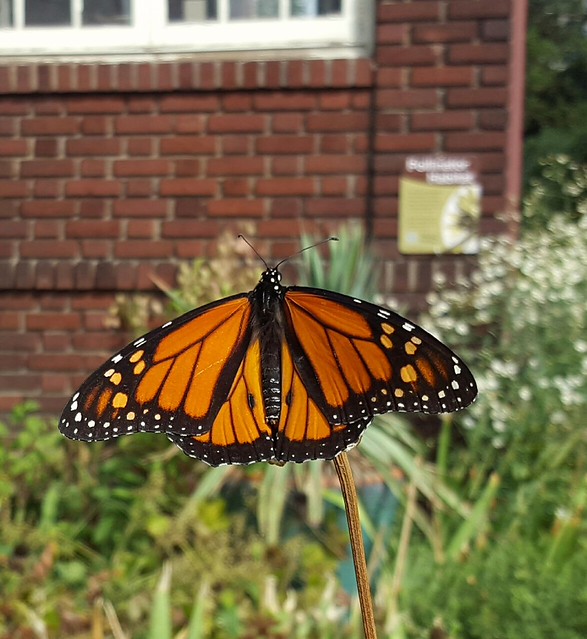
    Danaus plexippus, monarch butterfly (male), with @XercesSociety Pollinator Habitat sign behind, in my front yard, September 2016

    It started with a blog post by entomologist Eric Eaton, who goes by @BugEric on his blog, Twitter and other social media. Benjamin Vogt, a native plants evangelist (my word, bestowed with respect) tweeted a link, which is how it came to my attention.
    The Monarch is the Giant Panda of invertebrates. It has a lobby built of organizations that stand to lose money unless they can manufacture repeated crises. Well-intentioned as they are, they are siphoning funding away from efforts to conserve other invertebrate species that are at far greater risk. The Monarch is not going extinct. 
    - Bug Eric: Stop Saying the Monarch is a "Gateway Species" for an Appreciation of Other Insects

    2007-09-13

    News: IUCN Releases 2007 Red List of Endangered Species

    Blog Widow John has a hard time watching any nature shows. We go "awwww" for the first 45 minutes at cute furry, feathery, scaly critters. Then they bring you down with "But time is running out ..."

    I hope he doesn't read this.
    Gland, Switzerland, 12 September, 2007, World Conservation Union (IUCN) – Life on Earth is disappearing fast and will continue to do so unless urgent action is taken, according to the 2007 IUCN Red List of Threatened Species.
    - IUCN Press Release, September 12: Extinction Crisis Escalates
    One in four mammals, one in eight birds, one third of all amphibians and 70% of the world’s assessed plants on the 2007 IUCN Red List are in jeopardy.
    There are now 41,415 species on the IUCN Red List and 16,306 of them are threatened with extinction, up from 16,118 last year. The total number of extinct species has reached 785 and a further 65 are only found in captivity or in cultivation.
    o The number of threatened species is increasing across almost all the major taxonomic groups.
    o Most threatened birds, mammals and amphibians are located on the tropical continents – the regions that contain the tropical broadleaf forests which are believed to harbour the majority of the Earth’s terrestrial and freshwater species.
    o Of the countries assessed, Australia, Brazil, China and Mexico hold particularly large numbers of threatened species.
    o Estimates vary greatly, but current extinction rates are at least 100-1,000 times higher than natural background rates.
    o The vast majority of extinctions since 1500 AD have occurred on oceanic islands, but over the last 20 years, continental extinctions have become as common as island extinctions.
    There are now 12,043 plants on the IUCN Red List, with 8,447 listed as threatened. The Woolly-stalked Begonia (Begonia eiromischa) is the only species to have been declared extinct this year. This Malaysian herb is only known from collections made in 1886 and 1898 on Penang Island. Extensive searches of nearby forests have failed to reveal any specimens in the last 100 years.

    The Wild Apricot (Armeniaca vulgaris), from central Asia, has been assessed and added to the IUCN Red List for the first time, classified as Endangered. The species is a direct ancestor of plants that are widely cultivated in many countries around the world, but its population is dwindling as it loses habitat to tourist developments and is exploited for wood, food and genetic material.

    Links:

    IUCN 2007 Red List Home Page
    Fact Sheet

    2008-06-09

    Aphid control

    Updated 2008.06.10: Expanded section on biological controls. Added more references.


    An aphid viewed through a microscope, taken the first night of my IPM class at BBG
    Aphid viewed through a microscope

    Why are aphids so hard to control? Here's one answer:
    Most species of aphids overwinter in the egg stage. The eggs hatch in the spring to produce a generation of females. These female aphids give birth to living young. Generally the first young aphids are wingless and when a colony becomes too crowded winged forms may be produced. The winged forms migrate to new host plants and begin colonies. Enormous populations are built up from these overlapping generations all summer long.
    - Aphids Factsheet, Insect Diagnostic Laboratory, Cornell University
    So, to sum up:
    • Overwintered eggs hatch females.
    • Females give birth to live young (first instar), up to 70 at once.
    • They have multiple generations during the year.
    • The population responds to overgrazing by flying to new locations. They can fly several miles on the wind.
    • They start all over again the next year.
    To this I can add that, the earlier you catch and deal with them, the less effort it will be. A week can make a huge difference. But more on techniques below.

    This post is actually a homework assignment for my Pest Management class at the Brooklyn Botanic Garden. I had a choice of three insect pests - spider mites, aphids, and hard scale insects - to answer the question:
    What makes [your pest here] so difficult to control?
    I chose aphids because a neighbor wrote recently about her problem with aphids on her cilantro and an encounter with a vicious ladybug. She complained that her ladybugs always flew away. I suggested lacewings as an alternative predator, and additional plantings to attract, and keep, "beneficial" insects.

    Managing Aphids

    Understanding a pest's life cycle and monitoring for it are important aspects to managing it. I'll highlight a few categories of techniques for controlling aphids: horticultural, physical, biological, and chemical. I'll address biological controls last, and spend most of the time on that topic.

    Since eggs overwinter, horticultural practices such as removing dead plant material before aphids hatch in the spring is a first step. Clearly, this will be most effective when it's done before the first aphids emerge. Another important horticultural strategy is to plan and plant diversity in the garden. More on this in the section about biological controls, below.

    Physical controls can be effective, especially earlier in the spring when populations are still relatively small. This could include washing them off with a stream of water, removing infested parts of the plant, and, for the non-squeamish, squishing them and picking them off by hand. Some sources even suggest mulching with foil to repel aphids and other pests.

    Chemical controls really are a last resort. Insecticides poison both the target and its predators. It's generally not a good strategy to poison the things that eat the things you're trying to control. For aphids, insecticidal soap can be used to target just the affected areas of the plant.

    Biological controls

    My preference is for biological controls. There are many naturally occurring predators and diseases of aphids, including:
    • lady beetles (lady "bugs" are really beetles, not bugs)
    • lacewings
    • predatory midges
    • flower fly larvae
    • pirate beetles
    • Braconid wasps
    • parasitic fungi
    Given this list of natural enemies, it's no wonder aphids have evolved a strategy of rapid, massive reproduction. One can even see the value of having some aphids in the garden, since they're important food sources for so many other insects!

    In the past, I've introduced both ladybugs and lacewings to my gardens. These days, I try instead to keep a balance of plants in my gardens, including plants that provide alternative food sources or refuge for insect predators. There are plenty of natural predators around, even in city gardens. There are also fungal diseases that occur naturally, but are not commercially available, which attack aphids.
    Learn to recognize and conserve insects that prey on or parasitize pests. Small wasps, for example, parasitize aphids, leaving bloated gold to bronze "mummies." Immature lady beetles and lacewings, which look like tiny alligators, also frequent gardens. Other "beneficials" include spiders, predatory mites, predatory bugs, predatory flies, and ground beetles.
    - Managing Insect Pests in Vegetable Gardens, Home Gardening Resources, Cornell Univers
    Biological controls are not a panacea. For example, most of the commercially available ladybugs are species not native to North America. They are commercially available because they are amenable to raising in the large numbers needed for economic viability, not necessarily because they are the best choices. These can become pests in their own right when they swarm and overwinter in homes to emerge in the Spring.

    In addition, native species have become scarce, even endangered. Two years ago, New York state changed its official insect from one ladybug species to another because the original species had become extinct in the state. This reduction in population coincides with the spread of non-native species in the wild.
    The New York State insect is essentially no more. Once among the most common ladybugs in the eastern United States, the nine-spotted lady beetle has not been seen since 1984. This comely reddish-orange beetle with four spots on each wing and a shared one in the middle has been displaced by a voracious cousin with seven spots, imported by the millions from Europe in the 1970s as a biological control agent.

    The idea made sense at the time. Entomologists had observed that lady beetles eat aphids, so thought that a more aggressive species would be only that much more effective in controlling these common crop pests. They were, so much so it turned out, that the imported beetles monopolized the food source and apparently starved the natives out.
    - Invaasion of the Species Snatchers, College of Agricultural and Life Sciences, Cornell University
    So how can we take advantage of naturally occurring species? Plant a diverse garden, and plant for beneficial insects. For example, clovers are attractive to several kinds of insects which prey on aphids, including, wasps, pirate bugs, aphid midges, and of course, ladybugs. Buckwheat attracts lacewings, in addition to wasps and ladybugs. Plants in the Apiaceae (Umbelliferae) and Asteraceae (Compositae) support a wide range of insect species.

    A heavy outbreak of aphids on Swamp Milkweed, Asclepias incarnata, in my backyard in October of last year.
    Aphids on Milkweed

    Related Content

    Links

    The Bug's No Lady, Brooklynonmetry, June 6, 2008

    Aphids Factsheet (also available as a PDF), Insect Diagnostic Laboratory, Cornell University
    Managing Insect Pests in Vegetable Gardens, Home Gardening Resources, Cornell University
    Sucking insects: Aphids, Integrated Pest Management, University of Connecticut
    Use of Cover Crops and Green Manures to Attract Beneficial Insects, IPM, UConn

    Wikipedia: Aphid
    The Lost Ladybug Project
    The Decline of C-9 - New York's State Insect
    Invaasion of the Species Snatchers, College of Agricultural and Life Sciences, Cornell University
    New York's state insect, the nine-spotted lady beetle, rediscovered in eastern U.S. after 14 elusive years, April 17, 2007

    2008-05-21

    (Magi)Cicada Watch

    Note: I'll continue to update this as I learn more.


    Photo of Brood XIV Magicicada septendecim taken May 18, 2008 in West Virginia by Jason Scott Means
    Photo of 2008 Brood XIV Megacicada from West Viriginia by Jason Means

    I just learned (from News12 Brooklyn) that the 17-year cicadas are about to return to Brooklyn. There have already been sightings on Long Island, in Otsego Park in Deer Park. There have also been sightings to the north of the city, along the Hudson Valley.
    Magicicada is the genus of the 13- and 17- year periodical cicadas of eastern North America. These insects display a unique combination of long life cycles, periodicity, and mass emergences. They are sometimes called "seventeen-year locust"s, but they are not locusts.
    - Magicicada, Wikipedia
    13 and 17 are prime numbers. Evolution "discovered" prime numbers.

    Periodical Cicadas appear earlier in the year than our regular, annual "dog-day" Cicadas, which don't show up until later in the summer. If they are still here, we should begin to see signs of them now, certainly by the end of May. They can be readily distinguished by their red eyes (dog-day Cicadas have black or dark brown eyes), darker bodies, and smaller size. For comparison, here's a photograph I took of a dog-day cicada, Tibicen canicularis, in my backyard last October.

    Dog-day cicada - Tibicen canicularis, Flatbush, Brooklyn, October 2007
    Dog-day cicada - Tibicen canicularis

    17 years ago, in 1991, I still lived in the East Village in Manhattan. We didn't have them there. I didn't move to Brooklyn until the next year, 1992, so I just missed the last cycle. They won't be here again until 2025. I'm hoping - yes, hoping - that I'll be in the thick of things here: detached houses, lots of open ground, and just a half-mile or so from Prospect Park.

    Periodical cicadas are identified by broods categorizing the species, cycle, and years and range of a particular emergence:
    In any given area, adult periodical cicadas emerge only once every 13 or 17 years, they are consistent in their life cycles, and populations (or "broods") in different regions are not synchronized. Currently there are 7 recognized species, 12 distinct 17-year broods, and 3 distinct 13-year broods, along with 2 known extinct broods, found east of the Great Plains and south of the Great Lakes, to the Florida Panhandle.
    - Magicicada Mapping Project
    Brooklyn is part of Brood XIV (Brood 14), one of the 17-year broods. We can expect to see (and hear) any or all of the three 17-year species in Brood XIV:
    Three 17-year cicada species exist, each with distinctive morphology (shape and color), behavior, and calling signals:
    - Magicicada species, Magicicada Mapping Project
    All three species are on the IUCN Red List of Threatened Species as low risk, but near threatened, ie: close to being "promoted" to vulnerable species. Because they spend most of their lives underground, periodical cicadas are at risk from development which covers their routes to emergence at the surface. When they emerge, without sufficient woody plants - trees and shrubs - upon which to feed and lay their eggs, that generation will be irreversibly reduced for at least another 17 (or 13) years. Some broods are already extinct. Consider, for example, this observation from an unidentified entomologist:

    Have you an ideal of the absolute in hopelessness? Well, let it be said that the house in which you live is comparatively new - built within 17 years. The ground on which ti stands was originally woodland. In the Summer of 1902 all the tree thereabouts were full of seventeen-year locusts. Eggs were deposited in the branches, the larvae came out, dropped lightly to the ground, and dug in. The long period of subterranean existence is almost ended. In the summer of this year the insects will start toward the light and air - and will come in contact with the concrete floor of your cellar! There may be another situation as hopeless, but certainly none more so.
    - New York Times, June 23, 1919

    You can help

    If you see or hear periodical cicadas, you can report your observations online. The reporting page has photos so you know what to look for. Adult periodical cicadas are easily distinguished from our annual, "dog-day" cicadas by their red eyes, as shown in the lead photo above. The species pages, listed above, also have audio recordings so you know what to listen for.

    [goo.gl]

    Links

    Brood XIV, Massachusetts Cicadas

    magicicada.org
    Cicada Central, University of Connecticut
    Cicada Web Site, College of Mount St. Joseph, Cincinnati, OH
    Chicago Cicadas
    Magicicada, Wikipedia
    Mathematicians explore cicada's mysterious link with primes, Michael Stroh, Baltimore Sun, May 10, 2004

    News

    Hear that cicada chorus, taste that cicada crunch, Cape Cod Times, June 11, 2008
    Cape is again abuzz, Boston Globe, June 10, 2008
    New brood on its way to the top, Jennifer Smith, Newsday, June 8, 2008
    Dogs rejoice, people duck: Cicadas are back, Columbus Dispatch, Ohio, June 7, 2008
    City's Giant Insect orgy, NY Post, June 5, 2008
    After 17 years, cicadas ready to rumpus, Cape Cod Times,
    Massachusetts, May 31, 2008
    It's the year of the cicada, South Coast Today, Massachusetts, May 24, 2008
    Noisy return of cicadas expected after 17 years, Jennifer Smith, Newsday, Long Island, May 22, 2008
    Amorous singing cicadas grate on nerves, News & Record, Greensboro, North Carolina, May 20, 2008
    Cicadas looking for love, Centre Daily Times, State College, Pennsylvania, May 19, 2008
    Singing cicadas emerge in 13 states, USA Today, May 18, 2008
    The cicadas are coming! The cicadas are coming ... again!, Wilimington News Journal, Ohio, May 14, 2008
    Cicadas coming to Clermont County, Community Press & Recorder, Kentucky, May 14, 2008
    Coming Soon: The song of the cicada, New Albany Tribune, Indiana, May 10, 2008
    The Kentucky Derby: Beware the Year of the Cicada, Minyanville, New York, May 2, 2008
    Scientist awaits cicadas' noisy return, UPI, April 25, 2008

    2008-04-19

    The Values and Ethics of Plant Propagation

    A neighbor of mine got his question published in Randy Cohen's weekly column, The Ethicist, in Sunday's New York Times:
    "I’m told it is illegal to propagate and sell this tree because the National Geographic Society (NGS) has exclusive rights to it in the United States, but would I be unethical to do so?"
    - Pine Away, The Ethicist, NY Times, April 20, 2008
    The tree in question, Wollemia nobilis, the Wollemi™ Pine (and note the trademark), is critically endangered in the wild:
    The pine was known solely from fossil records and presumed extinct until it was discovered in 1994 in the Wollemi National Park, just outside Sydney, Australia. Dubbed the botanical find of the century, the Wollemi pine is now the focus of extensive research to conserve this ancient species.

    Fewer than 100 mature trees are known exist, growing in small groves on moist ledges in a deep rainforest gorge surrounded by rugged mountains and undisturbed forest.
    - Wollemi Pine (Wollemia nobilis) at Brooklyn Botanic Garden
    The trademarked name situation arises - ironically, to my mind - from efforts to protect and conserve the species:
    Through National Geographic's licensing partnership with Floragem, a portion of the sales will go directly to Wollemi Pine International Pty. Ltd., whose mission is to conserve the Wollemi Pine for future generations and to raise awareness of conservation internationally. Through public participation, Wollemi Pine International will repopulate the Wollemi Pine and return royalties to fund conservation of these trees and other threatened and endangered species.
    - Press Release, National Geographic Society, September 19, 2006
    The Ethicist, Randy Cohen, responded:
    Liz Nickless, a spokeswoman for the society, says that “there are no exclusive agreements for the distribution of the Wollemi pine.” There is a U.S. trademark, she adds, “so anyone wanting to use the name will need permission.” That is, you may become a Johnny Wollemi Seed, disseminating this fine fir under its scientific name, Wollemia nobilis, or for that matter as Sexy Slender Tree or Pinetacular, but not (without consent) as a Wollemi Pine.
    While trademarks govern the use of the name, plant patents proscribe unlicensed propagation:
    A plant patent is granted by the Government to an inventor (or the inventor's heirs or assigns) who has invented or discovered and asexually reproduced a distinct and new variety of plant, other than a tuber propagated plant or a plant found in an uncultivated state. The grant, which lasts for 20 years from the date of filing the application, protects the inventor's right to exclude others from asexually reproducing, selling, or using the plant so reproduced.
    [emphasis added]- What is a plant patent?, Overview of Plant Patents, U.S. Patent and Trademark Office
    This example comes from the U.S. Patent Office; similar laws and regulations govern in other countries.

    More and more of the varieties I see available for sale are labelled "PPAF" (Plant Patent Applied For) or "PP #XXXXXX", the plant patent number. So what happens when I need to divide my patented perennial?
    Asexual reproduction is the propagation of a plant to multiply the plant without the use of genetic seeds to assure an exact genetic copy of the plant being reproduced. ... asexual reproduction would include but may not be limited to:
    • Rooting Cuttings
    • Grafting and Budding
    • Apomictic Seeds
    • Bulbs
    • Division
    • Slips
    • Layering
    • Rhizomes
    • Runners
    • Corms
    • Tissue Culture
    • Nucellar Embryos
    - Asexual reproduction, Overview of Plant Patents
    When I divide my patented perennial - or god forbid, share it with a neighbor - I'm breaking the law. I could choose to disregard it, or I could choose not to support this system and boycott patented plants altogether.

    That F1 hybrid vegetable is a manufactured product and won't come true from seed; its selection and use maintains a dependency on its manufacture and distribution. An open-pollinated heirloom variety can be propagated indefinitely, and shared with others;, a model for sustainable gardening.

    As gardeners, the choices we make affect our world, however indirectly. With some reflection, we can reduce the risk of unintended consequences in conflict with out intents. We can choose gardening practices to express our values through action.

    Links

    Press Release, National Geographic Society, September 19, 2006
    The Wollemi Pine Conservation Club
    Wollemi Pine (Wollemia nobilis) at Brooklyn Botanic Garden
    Overview of Plant Patents, U.S. Patent and Trademark Office
    Name that Plant - The Misuse of Trademarks in Horticulture, Tony Avent, Plant Delights Nursery, 2007.12.25 [Added 2008.05.31]